| Journal of Clinical Medicine Research, ISSN 1918-3003 print, 1918-3011 online, Open Access |
| Article copyright, the authors; Journal compilation copyright, J Clin Med Res and Elmer Press Inc |
| Journal website https://jocmr.elmerjournals.com |
Original Article
Volume 18, Number 12, December 2026, pages 912-920

Sodium-Glucose Cotransporter-2 Inhibitor–Associated Ketoacidosis in the Real World: Not a Rare Complication
Amit Richter Malamuda, b, Nael Lahhamc, d, Snait Ayalond, e, Gilat Ron Avrahama, h, Lee Hilary Goldsteinf, g
aEmek Medical Center, Afula, Israel
bAdelson School of Medicine, Ariel University, Ariel, Israel
cInternal Medicine A, Emek Medical Center, Afula, Israel
dBruce Rappaport School of Medicine, Technion, Haifa, Israel
eResearch Authority, Emek Medical Center, Afula, Israel
fInternal Medicine C, Emek Medical Center, Afula, Israel
gFaculty of Medicine, Technion Israel Institute of Technology, Technion, Haifa, Israel
hCorresponding Author: Gilat Ron Avraham, Emek Medical Center, Afula, Israel
Manuscript submitted May 11, 2026, accepted October 20, 2026, published online November 27, 2026
Short title: SGLT2i-Associated Ketoacidosis
doi: https://doi.org/10.14740/jocmr6615
| Abstract | ▴Top |
Background: Sodium-glucose cotransporter-2 inhibitors (SGLT2is) are used for the treatment of diabetes mellitus, heart failure, and chronic renal failure. SGLT2i-associated ketoacidosis (SGLT2i-KA) may present with euglycemia or hyperglycemia and is a rare, life-threatening medical emergency. The aim of the study was to characterize adults hospitalized with SGLT2i-KA and compare their presentation and outcomes with those of patients hospitalized with diabetic ketoacidosis (DKA) unrelated to SGLT2i exposure.
Methods: This retrospective single-center study included 74 adults with SGLT2i-KA and 283 adults with DKA admitted between January 1, 2017, and April 1, 2023. Demographic characteristics, precipitating factors, laboratory findings, treatment complications, length of stay, missed clinical recognition, and in-hospital mortality were compared.
Results: Patients with SGLT2i-KA were older than those with DKA (median 65.0 vs. 34.0 years; P < 0.001) and were more often male (54.1% vs. 34.6%; P = 0.002). Infection was the predominant precipitating factor (60.8% vs. 26.5%; P < 0.001). Presenting glucose was lower in the SGLT2i-KA group (median 240 vs. 467 mg/dL; P < 0.001), while bicarbonate and anion gap did not differ significantly. Hospitalization was longer (median 6.11 vs. 3.83 days; P < 0.001), and unadjusted in-hospital mortality was higher (9.5% vs. 1.4%; P < 0.001). Ketoacidosis was not recognized by the treating team in 27 of 74 SGLT2i-exposed patients (36.5%), however with no effect on length of hospital stay or mortality.
Conclusion: SGLT2i-KA accounted for a substantial proportion of ketoacidosis admissions in this cohort and was frequently unrecognized. Ketone and acid-base assessment should be considered in acutely ill patients receiving SGLT2i even when marked hyperglycemia is absent.
Keywords: SGLT2 inhibitors; Diabetic ketoacidosis; Euglycemic ketoacidosis; Dapagliflozin; Empagliflozin; Type 2 diabetes mellitus
| Introduction | ▴Top |
The sodium-glucose cotransporter-2 (SGLT2) located in the early segment of the proximal renal tubule is responsible for 80–90% of the filtered glucose reabsorption [1].
SGLT2 inhibitors (SGLT2is) prescribed to treat hyperglycemia in type 2 diabetes mellitus (T2DM) prevent renal glucose reabsorption, thereby increasing urinary glucose excretion and lowering blood glucose concentrations. Their indications now extend beyond glycemic management to prevention of cardiovascular and kidney outcomes in patients with T2DM, heart failure, and chronic kidney disease [2].
Adverse effects reported for this group of medications include hypoglycemia, hypovolemia, urinary tract infections, necrotizing fasciitis of the perineum, and SGLT2i-associated ketoacidosis (SGLT2i-KA), which may present with euglycemia or hyperglycemia.
In clinical trials where SGLT2is were used to treat T2DM, heart failure, and chronic kidney disease, the incidence of ketoacidosis was slightly increased [2–7]. In April 2015, the FDA issued a warning about ketoacidosis as a potential side effect of SGLT2i. In a study conducted between March 2013 (the date of approval of the first drug) and May 2015, 73 cases of ketoacidosis following the use of SGLT2i were reported, requiring emergency treatment and/or hospitalization. FAERS data indicated a sevenfold increase in diabetic ketoacidosis (DKA) risk among SGLT2i users compared to non-users, with metformin and insulin being commonly co-administered [8].
Real-world studies suggest that the DKA incidence could be higher than clinical trial data, potentially due to stricter participant selection in trials [9]. Meta-analyses and real-world data indicate that SGLT2i therapy is associated with an increased risk of ketoacidosis [10]. However, there is problem with clinical trials and observational studies evaluating the association between SGLT2i use and SGLT2i-KA due to the absence of univocal diagnostic criteria, the heterogeneity of the study populations, and the fact that few studies differentiate between SGLT2i-KA and classical DKA, thereby restricting meaningful comparison [11].
Recent evidence helps clarify the difference between randomized clinical trials and real-world observational studies. A 2024 network meta-analysis of randomized trials reported an increased DKA risk with SGLT2i therapy compared with placebo or standard care (odds ratio (OR) 1.83, 95% confidence interval (CI) 1.35–2.46), although the absolute number of events remained low [12]. In comparison, a systematic review of real-world active-comparator studies reported a hazard ratio (HR) of 1.33 (95% CI 1.14–1.55) [13]. Randomized trials provide greater control of confounding but have limited power for rare adverse events, whereas observational studies include broader populations but may be affected by residual confounding and differences in case definition.
Risk factors for SGLT2i-KA include insulin omission or reduction, severe acute illness, dehydration, metabolic stress, surgery, ketogenic or very low-carbohydrate diets, excessive alcohol consumption, autoimmune diabetes in adulthood, pregnancy, pancreatitis, chronic liver diseases, glycogen storage diseases, and female gender [1, 11, 14–16].
Acute infection, surgery, fasting or reduced food intake, dehydration, vomiting, and insulin omission or reduction are well-established precipitating factors. More recently proposed susceptibility factors include prior DKA, insulin use, poor glycemic control, low body mass index, latent autoimmune diabetes in adults, and reduced endogenous insulin reserve. Recent prediction studies support prior DKA, insulin treatment, and elevated HbA1c as the most consistent baseline predictors, while the remaining factors require further validation [17, 18].
The mechanism by which SGLT2is induce ketoacidosis involves a metabolic shift from carbohydrate utilization to lipolysis. Increased urinary glucose excretion lowers plasma glucose concentrations, leading to a reduction in endogenous insulin levels. This in turn results in elevated glucagon levels and a transition toward lipolysis-driven metabolism with enhanced hepatic ketone body production [1]. In addition, SGLT2is may reduce renal clearance of ketone bodies, thereby further contributing to ketonemia [19]. This happens during fasting, however more rapidly with SGLT2 inhibition [20]. Of the patients on SGLT2i who developed ketoacidosis, 71% were euglycemic [1].
The median time to develop SGLT2i-KA after initiating SGLT2i is 2 weeks (ranging 1 to 175 days), and 50% of the cases are associated with concomitant events such as acute illnesses (including infections and surgeries) and reduced food intake [21]. Less than 0.1% of individuals with T2DM develop SGLT2-induced ketoacidosis, yet in the presence of insulin or in patients with type 1 diabetes, percentages rise to 4–6% [1]. Additionally, the risk of developing fatal ketoacidosis increases in the presence of SGLT2i therapy compared to all patients who develop ketoacidosis [16].
Post-marketing reports have shown a wider prevalence of the phenomenon in clinical practice: FDA analysis indicates that the incidence of SGLT2i-KA events in patients with T2DM is seven times higher than in other patients balanced with dipeptidyl peptidase-4 inhibitors.
The 2024 international consensus report recommends diagnosing DKA based on diabetes or hyperglycemia, ketosis, and metabolic acidosis. Direct blood β-hydroxybutyrate measurement is preferred when available. Current prevention and management recommendations include withholding SGLT2i during acute illness, prolonged fasting, and the perioperative period; stopping the medication when ketoacidosis is suspected; and treating with fluids, insulin, electrolytes, and early dextrose when glucose is not markedly elevated [22, 23].
The aim of the study was to characterize patients treated with SGLT2i who were hospitalized at Emek Medical Center (EMC) with a diagnosis of ketoacidosis between January 1, 2017, and April 1, 2023, and compare them to patients not treated with SGLT2i and hospitalized with DKA. A secondary aim was to characterize SGLT2i-associated cases that were not recognized as ketoacidosis by the treating team.
| Materials and Methods | ▴Top |
This was a retrospective study based on data from patients hospitalized at the EMC, a 700-bed hospital located in Afula, northern Israel, between January 1, 2017, and April 1, 2023. Since this adverse event is rare and may be underdiagnosed or missed, an extensive search was conducted to identify patients diagnosed with ketoacidosis, or wide anion gap metabolic acidosis, which we suspected was missed ketoacidosis. We identified all patients hospitalized at the EMC who met one of the following criteria: (1) patients prescribed with SGLT2i, and diagnosed with DKA during hospitalization; (2) patients prescribed with SGLT2i, and diagnosed with high anion gap metabolic acidosis during hospitalization; (3) patients prescribed with SGLT2i and treated with intravenous insulin during hospitalization; (4) patients diagnosed with DKA not previously prescribed SGLT2i.
Diagnostic criteria for DKA followed the American Diabetes Association guidelines, including hyperglycaemia, arterial pH < 7.3, bicarbonate < 18 mmol/L, and positive ketones [18]. Since plasma ketone measurements were unavailable, urinary ketones detected by dipstick were used as a surrogate. SGLT2i-KA was defined as ketoacidosis in patients prescribed SGLT2is; the study group was not restricted to euglycemic presentations. Each case was manually reviewed to exclude alternative causes (e.g., alcoholic or starvation ketoacidosis). For patients who met criteria (1)–(3), a search for metabolic acidosis events during hospitalization was conducted. Each event was examined, and the possibility of the effect of SGLT2i treatment was assessed. If a potential link was found, the patient was included in the data collection. We excluded patients with alcoholic or fasting ketoacidosis.
Subsequently, a comparison was made to a group meeting criterion (4) based on information collected from patient records.
Statistical analysis
Continuous variables were assessed for distributional form. Variables compared with the Mann–Whitney U test are reported as median and interquartile range (IQR); variables compared with Student’s t-test are reported as mean ± standard deviation. Categorical variables are reported as number and percentage and were compared using Pearson’s chi-squared test or Fisher’s exact test when expected cell counts were small. Variable-specific denominators are reported when data were missing. All tests were two-sided, and P < 0.05 was considered statistically significant.
Multivariable logistic regression was used to explore factors associated with missed recognition of SGLT2i-KA. Results are reported as adjusted ORs with 95% CIs. An exploratory multivariable logistic regression model assessed in-hospital mortality. Because only 11 deaths occurred, adjusted mortality estimates were considered imprecise and hypothesis-generating. Analyses were performed using R version 4.1.3.
Ethics approval was granted by the local Internal Review Board (EMC 0029-23).
| Results | ▴Top |
Between the years 2017 and 2023, 83,021 adults were admitted to the EMC. A total of 679 patients were admitted with metabolic acidosis or with ketoacidosis. After meticulous review of the medical records, 328 patients were diagnosed with DKA associated with type 1 diabetes mellitus, and classified as DKA group. Of the latter 351 we excluded patients with metabolic acidosis of other causes and patients with ketoacidosis due to starvation or alcohol abuse, thus 74 patients were classified as the SGLT2i-KA group (Fig. 1).
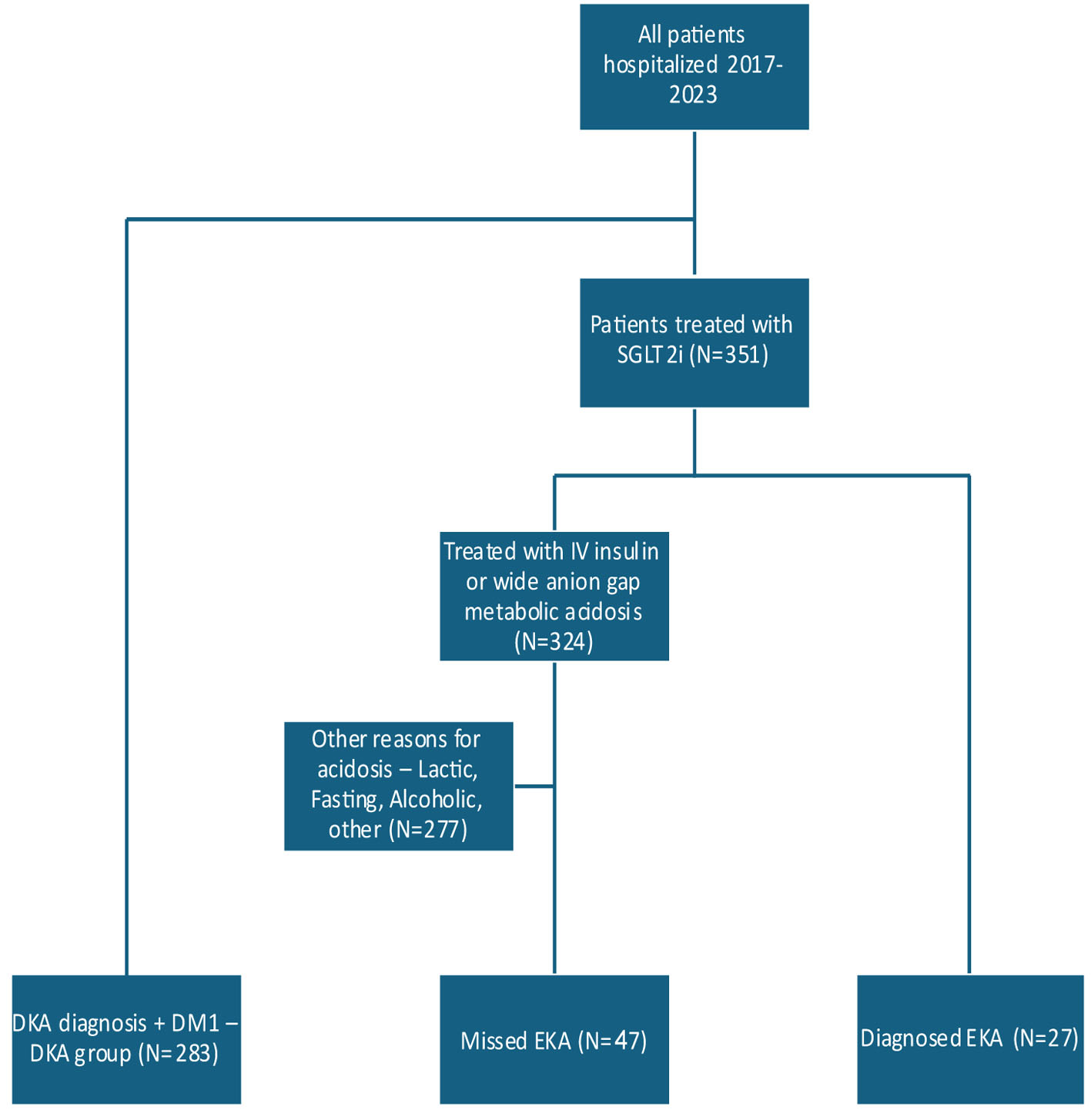 Click for large image | Figure 1. Patient selection, inclusion, and exclusion. DKA: diabetic ketoacidosis; EKA: euglycemic ketoacidosis; SGLT2i-KA: SGLT2i-associated ketoacidosis. |
In the SGLT2i-KA cohort, 20 patients (27%) received dapagliflozin, 52 patients (70.2%) received empagliflozin, and one patient received ertugliflozin. The administered doses were 5 and 10 mg for both agents, and 12.5 mg for empagliflozin, with an approximately equal distribution of dosages within this group (30.1%, 34.2%, and 35.6%, respectively). In this cohort, 30 patients (40.5%) were on chronic insulin therapy. Information regarding the duration of exposure or adherence to these agents was not available in the present study. SGLT2 was indicated for T2DM in most patients. Seventy-two patients (97.3%) had a previous diagnosis of T2DM, and two patients (2.7%) had congestive heart failure (CHF) without T2DM.
Patients with SGLT2i-KA were older than patients with DKA (median 65.0 (IQR 55.0–72.0) vs. 34.0 (21.0–52.0) years; P < 0.001). They were also more often male (54.1% vs. 34.6%; P = 0.002).
Presenting glucose was lower in the SGLT2i-associated group (median 240 (175.0–358.8) vs. 467 (363.5–586.0) mg/dL; P < 0.001), and pH was slightly higher (7.24 (7.13–7.32) vs. 7.18 (7.07–7.26); P = 0.004). Bicarbonate and anion gap did not differ significantly. Urea was higher and albumin was lower in the SGLT2i-associated group (Table 1).
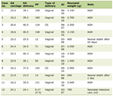 Click to view | Table 1. Characteristics and Outcome by Diagnosis |
Ketoacidosis was treated with intravenous insulin in both groups. There was no difference in days of intravenous insulin therapy; however, the SGLT2i-KA patients were hospitalized for longer periods: median of 6.11 days (1.58–42.88) versus 3.83 days (1.53–40.33) in DKA patients. Common complications of ketoacidosis treatment did not differ between groups, although substantially less patients in the SGLT2i-KA group developed hypomagnesemia (34%) versus in DKA group (60.7%). In-hospital mortality was higher in the SGLT2i-KA group (7/74 (9.5%) vs. 4/283 (1.4%); P < 0.001).
Acute infectious disease was the precipitating cause in the majority of SGLT2i-KA patients: 45 patients (60.8%) in comparison to 75 patients in the DKA group (26.5%). Non-compliance with medication therapy was a notable cause of DKA, reported in 97 patients (34.3%), and in seven patients (9.5%) in the SGLT2i-KA group. Ketoacidosis due to drug therapy (adverse drug reaction of steroidal therapy or pembrolizumab) was identified in five cases (1.8%) in the DKA group and four cases (5.4%) in the SGLT2i-KA group. Other factors (surgery, tumors, endometriosis, urinary retention, pregnancy, trochanteric fracture) contributed to ketoacidosis in 12 cases (4.6%) in the DKA group and eight cases (10.8%) in the SGLT2i-KA group (P < 0.001) (Fig. 2).
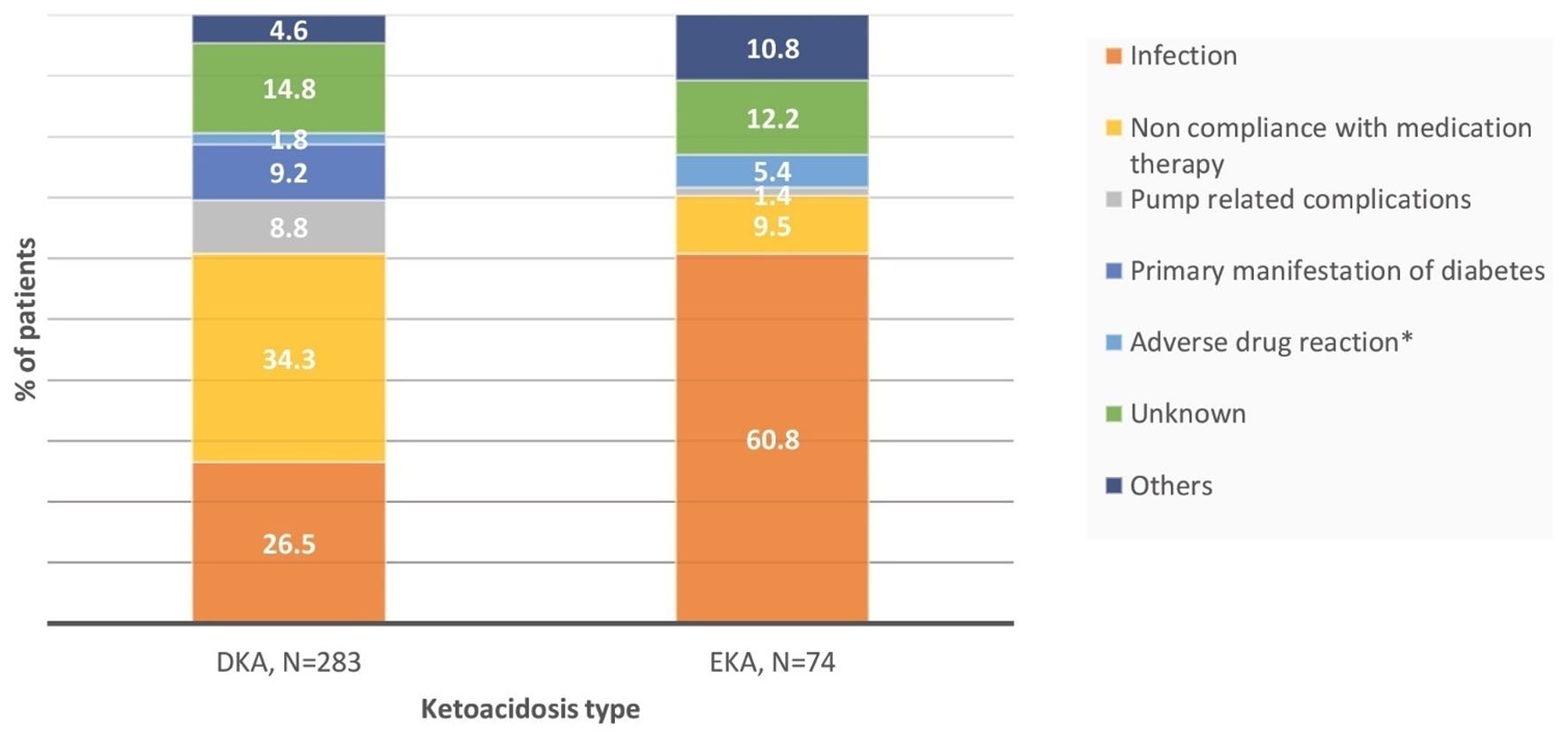 Click for large image | Figure 2. Ketoacidosis etiology in DKA vs. SGLT2i-KA group. *Adverse drug reaction of steroids, immunoreaction related to Keytruda. DKA: diabetic ketoacidosis; EKA: euglycemic ketoacidosis; SGLT2i-KA: SGLT2i-associated ketoacidosis. |
SGLT2i-KA diagnosis was not recognized by the treating team in 27 (36.4%) of the 74 SGLT2i-KA patients (Table 2). CHF was more common in missed SGLT2i-KA patients in comparison to correctly diagnosed SGLT2i-KA patients.
Click to view | Table 2. Comparison of Missed vs. Recognized SGLT2i-KA |
The majority of missed SGLT2i-KA were associated with acute infection (77.8%). Missed SGLT2i-KA had higher pH (7.31 vs. 7.19) and bicarbonate values (14.7 (3.2–23.0) vs. 10.15 (2.3–17.9)) in comparison to correctly diagnosed SGLT2i-KA, although the anion gap was comparable.
Missed SGLT2i-KA did not result in mortality during hospitalization, although there was a trend towards longer hospitalization periods (median 7.07 days) compared to a median of 5.7 days in correctly diagnosed SGLT2i-KA cases (P = 0.053) (Table 2).
In multivariable logistic regression, infection was associated with greater odds of missed recognition (adjusted OR 5.34, 95% CI 1.39–25.91; P = 0.023). Each 1-mmol/L increase in bicarbonate was also associated with higher odds of missed recognition (adjusted OR 1.23, 95% CI 1.03–1.53; P = 0.037). Dapagliflozin exposure, compared with empagliflozin, was not independently associated with missed recognition (adjusted OR 2.08, 95% CI 0.54–8.77; P = 0.293).
Eleven patients in our cohort died during hospitalization. While the results initially suggested that older age, SGLT2i-KA diagnosis, infectious etiology, and longer hospital stays might be linked to higher risk of in-hospital death (Table 3), none of these factors were statistically significant when analyzed together in a multivariable model. The adjusted OR for SGLT2i-KA diagnosis was 3.07 (95% CI 0.81–13.35; P = 0.109), and the adjusted OR for infectious etiology was 4.30 (95% CI 0.97–30.30; P = 0.081). Age (adjusted OR 1.02 per year, 95% CI 0.98–1.07; P = 0.387), estimated glomerular filtration rate (eGFR) (adjusted OR 1.02 per mg/dL, 95% CI 0.99–1.06; P = 0.441), and days of hospitalization (adjusted OR 1.05 per day, 95% CI 0.97–1.12; P = 0.143) were also not statistically significant.
Click to view | Table 3. Patients Who Survived Compared With Patients Who Died During Hospitalization |
| Discussion | ▴Top |
This study is one of the largest single-center, real-world cohorts of SGLT2-KA. The primary finding of this study is that SGLT2i-KA accounted for a substantial proportion of ketoacidosis admissions contrary to very low prevalence in clinical trials. A total of 74 patients, or one-third of all patients hospitalized with ketoacidosis during this period had SGLT2i-KA, similar to prevalence reported in a real-world meta-analysis published in 2024 [19]. Our study showed that SGLT2i-KA was missed in a significant percentage of cases, and led to higher mortality compared to DKA. Although acidosis was less severe and length of insulin infusion did not differ, mortality was higher, and hospital stay was longer, which is consistent with a recently published review [20].
Recent studies continue to show that randomized trial and real-world data are complementary. Randomized trials suggest an increased relative risk but a low absolute event rate, whereas observational studies include less selected patients and may capture events associated with acute illness, surgery, fasting, and reduced food intake [19, 21]. Differences in diagnostic definitions and the frequent use of administrative codes may partly explain variation between studies.
In our study, the majority of SGLT2i-KA patients were treated with SGLT2i due to T2DM, likely because during most of the study period, the drug had not been licensed for heart failure and chronic kidney disease in Israel. Towards the end of the study, additional indications for kidney and heart failure were added to the labels of SGLT2i, so 3% of our SGLT2i-KA patients did not have diabetes mellitus. SGLT2i-KA is probably not limited to diabetes mellitus patients only, although this would have to be proved in a cohort including patients with other indications for SGLT2is such as renal or cardiac failure.
Our findings demonstrate that SGLT2i-KA was more common in older male patients, whereas classical DKA occurred predominantly in younger females. This demographic contrast may reflect underlying differences in pathophysiology and clinical context: SGLT2i-KA typically arises in patients with T2DM receiving SGLT2is, a population generally older with a higher prevalence of comorbidities such as cardiovascular or renal disease. In contrast, DKA often represents the initial presentation or a complication of type 1 diabetes mellitus, which is more prevalent among younger women in our cohort. The age- and sex-related differences we observed highlight the need for heightened clinical suspicion of SGLT2i-KA in older men treated with SGLT2is, particularly in the setting of acute illness, while maintaining vigilance for DKA in younger women with insulin-dependent diabetes.
Infection accounted for the majority of SGLT2i-KA cases, emerging as the leading precipitating factor. Many patients who developed SGLT2i-KA had been hospitalized with COVID-19 as the data collection period coincided with the COVID-19 outbreak. This association between febrile disease and SGLT2-induced ketoacidosis is possibly due to the fact that during severe febrile illness, patients eat less and might develop ketoacidosis as a result of fasting. In the DKA subgroup, infection was also one of the leading causes of DKA, albeit to a much lesser extent. In the DKA group, non-compliance with medical treatment was the leading factor probably because the pathophysiology of both diseases differs [24, 25].
A 2025 hospital-based study similarly found that most marked ketotic events in SGLT2i-treated patients occurred in the presence of fasting, surgery, sepsis, poor oral intake, or critical illness, supporting the importance of an additional precipitating stressor [26]. Insulin use has been suggested as one of the predictors for SGLT2i-KA (40%).
The initial laboratory results of the patients showed lower blood glucose in the SGLT2i-KA group compared to DKA, as expected, but both groups had all ranges of glucose (euglycemic and hyperglycemic) possibly since the majority of patients had diabetes mellitus. We did not collect glycated hemoglobin in our patients, so we could not assess the association between control of diabetes and risk of SGLT2i-KA.
In terms of ketoacidosis complications, there were no differences between the groups in electrolyte complications except for hypomagnesemia, which was more prevalent in the SGLT2i-KA group, although magnesium was not measured in a large proportion of patients so this finding should be interpreted cautiously. The duration of intravenous insulin was comparable; however, SGLT2i-KA patients were hospitalized for longer periods and mortality rates were higher possibly driven by the etiology of SGLT2i-KA, the majority of which were acute infections in older and probably more comorbid patients.
More than one-third of SGLT2i-KA cases were not recognized by the treating team. In most patients admitted with a diagnosis of CHF, SGLT2i-KA was missed, which may indicate milder SGLT2i-KA in these patients, atypical symptoms, or another severe underlying condition, although the small number of CHF patients in our study make conclusions difficult. Missed SGLT2i-KA was characterized by higher bicarbonate levels and normal pH, meaning that patients managed to compensate for the acidosis and were possibly in a milder clinical condition. All mortality in the SGLT2i-KA group occurred in patients correctly diagnosed with ketoacidosis and none of the patients with missed SGLT2i-KA diagnosis died during hospitalization, also indicative of a milder clinical condition.
Older age and acute infection were risk factors for in-hospital mortality according to our results. Lower pH levels were found specifically in patients who survived hospitalization, while those who ultimately died exhibited higher pH levels, closer to the normal range. It is possible that these patients compensated for the acidosis, or had additional metabolic disturbances such as respiratory or metabolic alkalosis, leading to more severe complications. In terms of complications, patients who died during hospitalization had significantly longer hospital stays, but without prolonged insulin therapy. Possibly these patients’ acidosis balanced out over time, but the cause or the complications caused the longer hospitalization.
Although mortality was higher in the SGLT2i-KA group in the unadjusted comparison, SGLT2i-KA diagnosis was not statistically significant in the multivariable model (adjusted OR 3.07, 95% CI 0.81–13.35; P = 0.109). The wide CI reflects the small number of deaths and the result should therefore be interpreted cautiously.
The SGLT2i-KA patients in our study were predominantly prescribed empagliflozin; however, we did not compare utilization of dapagliflozin within our population in comparison to empagliflozin, the only two marketed SGLT2is in Israel, so we could not determine that SGLT2i-KA is more prevalent with empagliflozin.
Our study has several strengths as it was conducted using a single data system, with data collected by a physician familiar with the data system and documentation format. Furthermore, the findings of our study are reinforced by their similarity to those of other large-scale studies conducted worldwide.
Current international recommendations emphasize measurement of blood β-hydroxybutyrate when possible, discontinuation of SGLT2i during acute illness or prolonged fasting, and withholding therapy before surgery. Treatment follows the principles of DKA management, with intravenous fluids, insulin, electrolyte replacement, and early dextrose administration when glucose is normal or only moderately elevated [22, 23]. These recommendations are especially relevant to the missed cases described in our cohort.
Limitations
There are several limitations to our study, including its retrospective nature. We could not be certain that patients actually took the SGLT2i prior to admission since we relied on the chronic medication list as recorded in the patient’s chart. An additional limitation is that eating habits of the patients were not recorded due to the retrospective nature of our study, and the lack of systematic recording of type of diet. Ketosis can occur as a result of an extremely low carbohydrate diet, known as a ketogenic diet, or from fasting, although the vast majority of our population consume a Mediterranean diet. An inherent limitation of our study is that it was conducted in a single center. While this allowed for uniform data collection and consistency in diagnostic evaluation, the findings may not fully reflect patterns seen in other healthcare settings. Future multicenter studies would help confirm the generalizability of our results.
The association between diabetes mellitus and the risk of SGLT2i-KA may be confounded, since the study was conducted at a time when prescribing SGLT2 for patients with heart failure and kidney failure (without diabetes) was relatively new. Patients whose SGLT2i-KA diagnosis was missed or undiagnosed by the treating team may indeed have had an alternative diagnosis, but retrospectively, this could not be determined from the case file. The inclusion of patients in the missed SGLT2i-KA group was reviewed by two investigators, an internal medicine resident and a senior physician, reducing the likelihood of this occurrence.
Clinical guidelines now suggest screening for latent autoimmune diabetes in adults (LADA) or measuring C-peptide and glutamic acid decarboxylase (GAD) antibodies in atypical patients—particularly those with lower BMI, younger age, or rapid glycemic deterioration—prior to initiating SGLT2i therapy [11]. We do not routinely collect these data, so we cannot say whether our patients were at specific high risk for SGLT2i-KA.
Conclusion
SGLT2i-KA accounted for a substantial proportion of ketoacidosis admissions in this single-center cohort and was not recognized by the treating team in more than one-third of cases. Infection was the leading precipitant and was independently associated with missed recognition. Patients receiving SGLT2i should undergo ketone and acid-base assessment during acute illness when ketoacidosis is clinically plausible, regardless of the degree of hyperglycemia. Further studies should clarify whether the risk or ketoacidosis differs in CHF and chronic kidney disease in comparison to the risk in diabetes mellitus, and whether dietary habits entail an additional risk.
Acknowledgments
None to declare.
Financial Disclosure
No funding or sponsorship was received for this study.
Conflict of Interest
The authors have no conflict of interest.
Informed Consent
Informed consent was waivered due to the retrospective nature of the study.
Author Contributions
Amit Richter Malamud, MD: data analysis and interpretation, manuscript drafting and revising. Nael Lahham, MD: clinical evaluation based on patient medical records and clinical data synthesis. Snait Ayalon: data extraction and reorganization from patients’ medical records. Gilat Ron Avraham: reviewing, editing, and publishing. Lee Hilary Goldstein, MD: study supervision and conceptual guidance, manuscript writing and critical revision, and overall study coordination. All authors reviewed and approved the final manuscript.
Data Availability
The datasets generated and analyzed during the current study are not publicly available due to medical confidentiality and patient privacy regulations at Emek Medical Center, but are available from corresponding author on reasonable requests.
| References | ▴Top |
- Palmer BF, Clegg DJ. Euglycemic ketoacidosis as a complication of SGLT2 inhibitor therapy. Clin J Am Soc Nephrol. 2021;16(8):1284-1291.
doi pubmed - Filippatos G, Butler J, Farmakis D, Zannad F, Ofstad AP, Ferreira JP, Green JB, et al. Empagliflozin for heart failure with preserved left ventricular ejection fraction with and without diabetes. Circulation. 2022;146(9):676-686.
doi pubmed - Zinman B, Wanner C, Lachin JM, Fitchett D, Bluhmki E, Hantel S, Mattheus M, et al. Empagliflozin, cardiovascular outcomes, and mortality in type 2 diabetes. N Engl J Med. 2015;373(22):2117-2128.
doi pubmed - Group E-KC, Herrington WG, Staplin N, Agrawal N, Wanner C, Green JB, Hauske SJ, et al. Long-term effects of empagliflozin in patients with chronic kidney disease. N Engl J Med. 2025;392(8):777-787.
doi pubmed - Wiviott SD, Raz I, Bonaca MP, Mosenzon O, Kato ET, Cahn A, Silverman MG, et al. Dapagliflozin and cardiovascular outcomes in type 2 diabetes. N Engl J Med. 2019;380(4):347-357.
doi pubmed - McMurray JJV, Solomon SD, Inzucchi SE, Kober L, Kosiborod MN, Martinez FA, Ponikowski P, et al. Dapagliflozin in patients with heart failure and reduced ejection fraction. N Engl J Med. 2019;381(21):1995-2008.
doi pubmed - Neal B, Perkovic V, Mahaffey KW, de Zeeuw D, Fulcher G, Erondu N, Shaw W, et al. Canagliflozin and cardiovascular and renal events in type 2 diabetes. N Engl J Med. 2017;377(7):644-657.
doi pubmed - U.S. Food and Drug Administration. FDA revises labels of SGLT2 inhibitors for diabetes to include warnings about ketoacidosis and serious urinary tract infections. 2015. Accessed October 5, 2025.
- Dhatariya KK. Defining and characterising diabetic ketoacidosis in adults. Diabetes Res Clin Pract. 2019;155:107797.
doi pubmed - Blau JE, Tella SH, Taylor SI, Rother KI. Ketoacidosis associated with SGLT2 inhibitor treatment: Analysis of FAERS data. Diabetes Metab Res Rev. 2017;33(8):e2924.
doi pubmed - Morace C, Lorello G, Bellone F, Quartarone C, Ruggeri D, Giandalia A, Mandraffino G, et al. Ketoacidosis and SGLT2 inhibitors: a narrative review. Metabolites. 2024;14(5):264.
doi pubmed - Nasa P, Chaudhary S, Shrivastava PK, Singh A. Euglycemic diabetic ketoacidosis: A missed diagnosis. World J Diabetes. 2021;12(5):514-523.
doi pubmed - Al-Hindi B, Mohammed MA, Mangantig E, Martini ND. Prevalence of sodium-glucose transporter 2 inhibitor-associated diabetic ketoacidosis in real-world data: A systematic review and meta-analysis. J Am Pharm Assoc (2003). 2024;64(1):9-26.e6.
doi pubmed - Goldenberg RM, Berard LD, Cheng AYY, Gilbert JD, Verma S, Woo VC, Yale JF. SGLT2 inhibitor-associated diabetic ketoacidosis: clinical review and recommendations for prevention and diagnosis. Clin Ther. 2016;38(12):2654-2664.e1.
doi pubmed - Rabbone I, Traversi D, Scaioli G, Vallini C, Carletto G, Masante I, Durazzo M, et al. Microbiota, epidemiological and nutritional factors related to ketoacidosis at the onset of type 1 diabetes. Acta Diabetol. 2020;57(11):1337-1349.
doi pubmed - Diaz-Ramos A, Eilbert W, Marquez D. Euglycemic diabetic ketoacidosis associated with sodium-glucose cotransporter-2 inhibitor use: a case report and review of the literature. Int J Emerg Med. 2019;12(1):27.
doi pubmed - Umpierrez GE, Davis GM, ElSayed NA, Fadini GP, Galindo RJ, Hirsch IB, Klonoff DC, et al. Hyperglycemic crises in adults with diabetes: a consensus report. Diabetes Care. 2024;47(8):1257-1275.
doi pubmed - Fralick M, Hojbjerg Lassen MC, Rangrej J, Asgari S, Rais S, Hillmer MP, Fritz JL, et al. Predicting the occurrence of DKA following sodium glucose co-transporter-2 inhibitors: An international cohort study. J Diabetes Complications. 2025;39(10):109144.
doi pubmed - Taylor SI, Blau JE, Rother KI. SGLT2 inhibitors may predispose to ketoacidosis. J Clin Endocrinol Metab. 2015;100(8):2849-2852.
doi pubmed - Daniele G, Xiong J, Solis-Herrera C, Merovci A, Eldor R, Tripathy D, DeFronzo RA, et al. Dapagliflozin enhances fat oxidation and ketone production in patients with type 2 diabetes. Diabetes Care. 2016;39(11):2036-2041.
doi pubmed - Wang KM, Isom RT. SGLT2 inhibitor-induced euglycemic diabetic ketoacidosis: a case report. Kidney Med. 2020;2(2):218-221.
doi pubmed - American Diabetes Association Professional Practice C. 16. Diabetes care in the hospital: standards of care in diabetes-2025. Diabetes Care. 2025;48(1 Suppl 1):S321-S334.
doi pubmed - Tsur A, Leibowitz G, Cohen MJ, Cahn A, Pollack R. Predictors of diabetic ketoacidosis in patients with insulin-deficient diabetes phenotype initiating SGLT2 inhibitors. Diabetes Obes Metab. 2025;27(9):4989-4997.
doi pubmed - Gao FM, Kishore K, Pandey D, Jahanabadi H, Stevens M, Lecamwasam A, Bellomo R, et al. Ketosis and ketoacidosis in hospitalized patients receiving SGLT2 inhibitor therapy. Diabetes Obes Metab. 2025;27(11):6367-6374.
doi pubmed - Sridharan K, Sivaramakrishnan G. Risk of diabetic ketoacidosis associated with sodium glucose cotransporter-2 inhibitors: a network meta-analysis and meta-regression. J Clin Med. 2024;13(6):1748.
doi pubmed - Chow E, Clement S, Garg R. Euglycemic diabetic ketoacidosis in the era of SGLT-2 inhibitors. BMJ Open Diabetes Res Care. 2023;11(5):e003666.
doi pubmed
This article is distributed under the terms of the Creative Commons Attribution 4.0 International License (CC BY 4.0), which permits unrestricted use, distribution, and reproduction in any medium, including commercial use, provided the original work is properly cited.
Journal of Clinical Medicine Research is published by Elmer Press Inc.