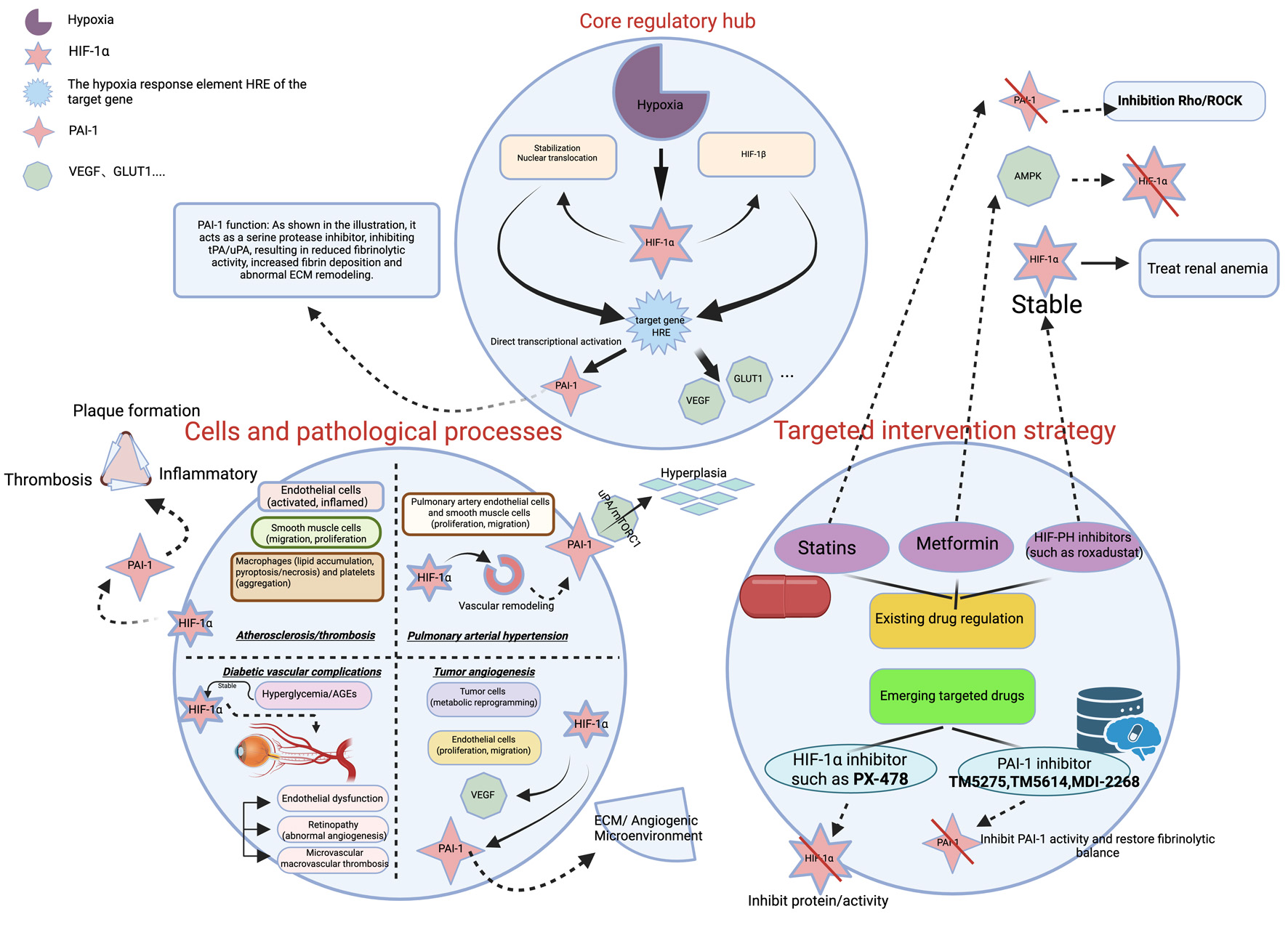
↓ Figure 1. The HIF-1α/PAI-1 regulatory network in vascular diseases. Under hypoxic conditions, HIF-1α is stabilized and translocates to the nucleus, where it transcriptionally activates target genes including PAI-1, VEGF, and GLUT1 by binding to hypoxia response elements (HREs). Elevated PAI-1 contributes to the pathogenesis of various vascular disorders—such as atherosclerosis/thrombosis, pulmonary arterial hypertension (PAH), diabetic vascular complications, and tumor angiogenesis—through mechanisms involving fibrinolysis inhibition, inflammatory modulation, extracellular matrix (ECM) remodeling, and vascular remodeling. The diagram also summarizes current targeted intervention strategies, including existing drugs (e.g., statins) and emerging inhibitors targeting HIF-1α (e.g., PX-478) or PAI-1 (e.g., TM5275, TM5614, MDI-2268). HIF-1α: hypoxia-inducible factor-1α; PAI-1: plasminogen activator inhibitor-1. VEGF: vascular endothelial growth factor; GLUT1: glucose transporter 1.