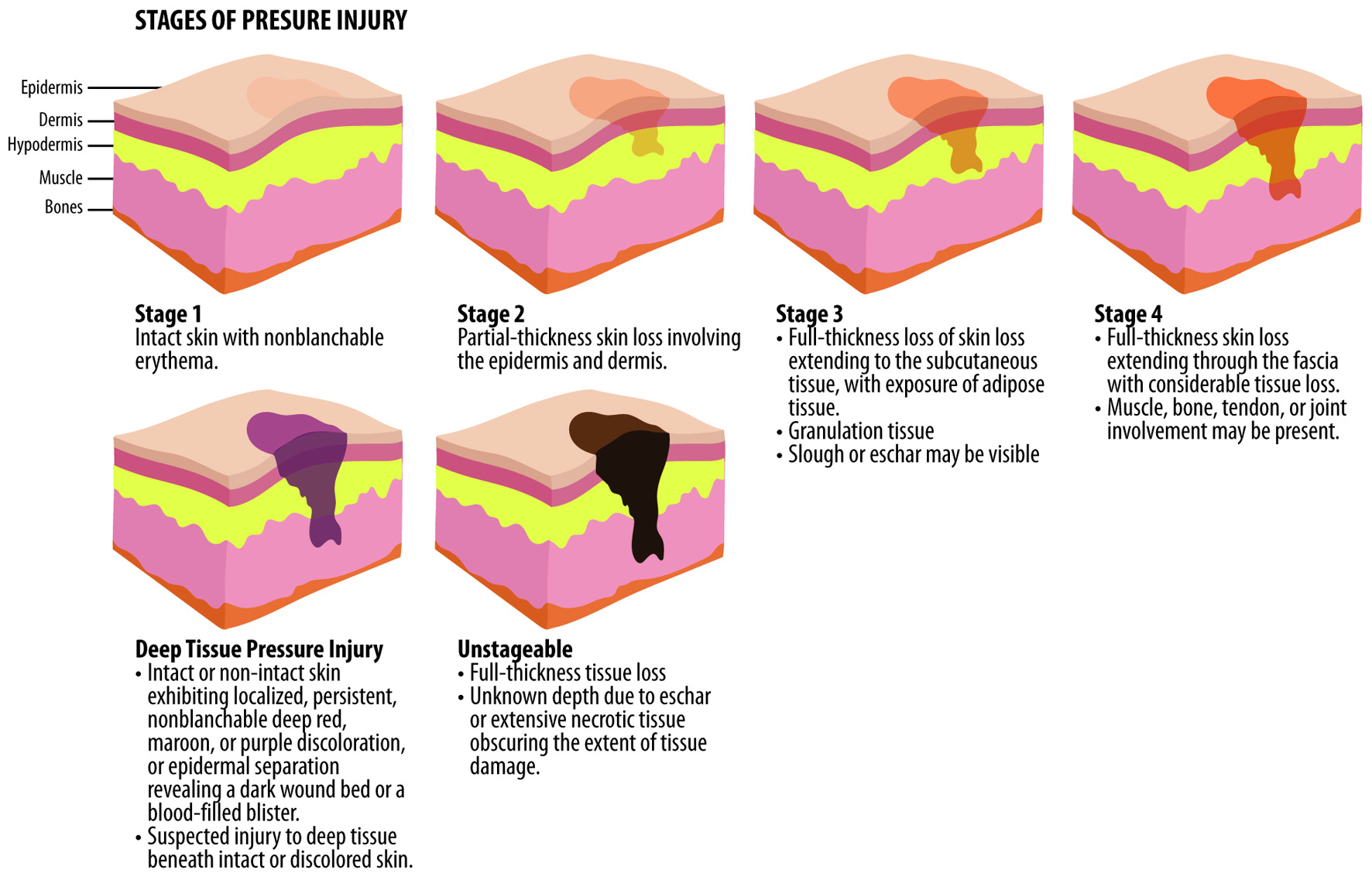
↓ Figure 1. Stages of PIs based on EPUAP classification. EPUAP: European Pressure Ulcer Advisory Panel; PIs: pressure injuries.
| Journal of Clinical Medicine Research, ISSN 1918-3003 print, 1918-3011 online, Open Access |
| Article copyright, the authors; Journal compilation copyright, J Clin Med Res and Elmer Press Inc |
| Journal website https://jocmr.elmerjournals.com |
Review
Volume 18, Number 3, March 2026, pages 142-156
The Correct Nutritional Intake in the Prevention and Treatment of Skin Lesions in Patients With Spinal Cord Injury
Figures
Tables
| Risk factor | Description |
|---|---|
| PI: pressure injury. | |
| Intrinsic factors | |
| Impaired sensation | Loss of sensory perception prevents pain or discomfort awareness, causing prolonged pressure on tissues. |
| Reduced mobility | Limited or absent ability to reposition independently increases pressure exposure. |
| Muscle atrophy | Loss of muscle mass reduces padding on bony prominences, increasing PI risk. |
| Autonomic dysregulation | Poor circulation and thermoregulation impair skin health and wound healing. |
| Malnutrition | Protein and micronutrient deficiencies weaken skin integrity and delay healing. |
| Incontinence (urinary/fecal) | Moisture and bacteria increase the risk of skin breakdown and infection. |
| Spasticity or contractures | Abnormal muscle tone can cause friction, shear, and prolonged pressure on certain areas. |
| Comorbidities (e.g., diabetes, cardiovascular disease) | Conditions affecting circulation, immune function, or healing increase susceptibility. |
| Advanced age | Aging leads to thinner and less elastic skin, reduced tissue perfusion, and delayed wound healing, increasing susceptibility to PIs. Slower cell turnover and reduced blood supply impair skin integrity and repair processes. Aging-related comorbidities (e.g., diabetes, vascular disease) further increase the risk. |
| Extrinsic factors | |
| Prolonged pressure on bony areas | Prolonged sitting or lying down without position changes causes ischemia and tissue damage. |
| Shear and friction | Skin movement against surfaces can disrupt blood flow and cause injury. |
| Excess moisture | Sweating or incontinence weakens skin integrity, making it more prone to breakdown. |
| Improper support surfaces | Inadequate mattresses, cushions, or positioning devices fail to distribute pressure effectively. |
| Poor nursing or caregiver support | Inadequate pressure relief strategies, skin checks, and hygiene contribute to injury risk. |
| Tool | Purpose/context | Strengths | Limitations | Notes |
|---|---|---|---|---|
| HAPI: hospital-acquired pressur injury; PI: pressure injury; SCI: spinal cord injury. | ||||
| Braden Scale | Commonly used in acute and readmission SCI settings | Good predictive value in SCI outpatients [35] Broad predictive scope | Effectiveness in home care is uncertain [36] No significant benefit vs. clinical judgment [37] Insufficient nutritional assessment Relies on subjective inputs | Remains a reference tool, especially in acute settings |
| SCIPUS | Predictive tool for SCI-specific risks | Includes SCI-specific risks, such as autonomic dysreflexia [38] | Modest predictive accuracy Not validated in Italy | Combining Braden ≤ 12 and SCIPUS ≥ 9 may enhance HAPI prediction [31, 38] |
| SCIPUS-A | Adapted version of SCIPUS | Targets SCI-specific risk assessment | Modest accuracy Remains unvalidated in Italy | Similar predictive limitations to SCIPUS |
| LPD Scale | Designed for chronic/home/community SCI management | Includes unique home care factors, such as caregiver support and hygiene [39] | Not suitable for acute settings Lacks nutritional/clinical input | Developed specifically for home care; may outperform Braden in this context |
| Combined Use | Braden + SCIPUS + context-specific risk factors | Enhances HAPI prediction by integrating general and SCI-specific risks [31, 38] | No unified validation Requires regular reassessment due to patient variability | Encouraged to apply shared decision-making models in PI risk assessment [33] |
| Category | Details | References |
|---|---|---|
| BMI: body mass index; BUN: blood urea nitrogen; CBC: complete blood count; CRP: C-reactive protein; CT: computed tomography; ESR: erythrocyte sedimentation rate; MRI: magnetic resonance imaging; PI: pressure injury; QoL: quality of life; SCFA: short-chain fatty acids; SCI-QOL: spinal cord injury–quality of life; TDEE: total daily energy expenditure; WHOQOL: World Health Organization Quality of Life; TDEE: total energy expenditure. | ||
| Multidisciplinary care | Collaboration between plastic surgeons, internal medicine specialists, and physical medicine and rehabilitation physicians; emphasized for pre- and postoperative care | [30] |
| Wound assessment and microbial load measurement | Assess bleeding, exudate type, odor, color. Levine technique or culture biopsy for microbial load; swab analysis generally ineffective | [42] |
| Infectious disease management | Infectious disease specialists guide antibiotic therapy in suspected osteomyelitis; MRI preferred over CT for spongiosa edema | – |
| First-line treatment | Wound care, offloading, nutritional support | – |
| Surgical intervention | Indicated for advanced or non-healing PIs; plastic surgeon required | [30] |
| Surgical techniques | Debridement with direct closure or vascularized tissue flaps (myocutaneous, fasciocutaneous, free flaps with skin grafting) | [43] |
| Routine clinical assessments | CBC, CRP, ESR, renal function tests (BUN, creatinine), electrolytes, vitamins, albumin, lipid profiles for nutritional/metabolic evaluation | [44] |
| Malnutrition indicators | Pre-albumin < 11 mg/dL + CRP < 15 mg/L indicates malnutrition while excluding inflammation/infection | [45] |
| Energy and anthropometric assessment | Indirect calorimetry for resting and total daily energy expenditure (TDEE); assess height, weight, BMI | [46] |
| Neurogenic obesity | BMI ≥ 22 kg/m2 is often linked with prediabetes, hypertension | [47] |
| Cachexia and anorexia evaluation | Assess free fat mass; rule out psychogenic and organic causes | – |
| Hydration and sepsis monitoring | Monitor hydration and procalcitonin levels | [48] |
| Gut microbiota | Dysbiosis is common; pathogenic, pro-inflammatory bacteria ↑; SCFA-producing bacteria ↓; affects gut barrier and inflammation | [49] |
| QoL evaluation | Use SCI-QOL and WHOQOL tools; assess physical, psychological, and social domains, and independence for patient-centered rehabilitation | [50, 51] |
| Food and cooking method | AGE (kU/100 g) |
|---|---|
| AGE: advanced glycation end product. | |
| Beef hot dog, boiled in water | 7,484 |
| Beef hot dog, grilled | 11,270 |
| Ground beef, pan-fried, previously marinated with lemon | 3,833 |
| Ground beef, pan-fried | 4,928 |
| Raw beef | 707 |
| Roast beef | 6,071 |
| Beef steak, grilled | 7,479 |
| Beef stew | 2,657 |
| Chicken breast, boiled in water | 1,210 |
| Chicken breast, breaded and fried | 9,722 |
| Chicken breast, steamed in aluminum foil | 1,058 |
| Chicken breast with skin, roasted | 6,639 |
| Chicken thigh with skin, roasted | 10,997 |
| Salmon, steamed | 1,212 |
| Salmon, roasted | 4,334 |
| Salmon fillet, boiled | 1,082 |
| Salmon fillet, grilled | 3,347 |
| Raw salmon | 528 |
| Smoked salmon | 572 |
| Cheese, light ricotta (1% fat) | 1,453 |
| Cheese, feta | 8,423 |
| Cheese, Parmesan | 16,900 |
| Egg, omelet, low heat with cooking spray, 11 min | 90 |
| Egg, omelet, low heat with butter, 13 min | 507 |
| Egg, omelet, low heat with olive oil, 12 min | 337 |
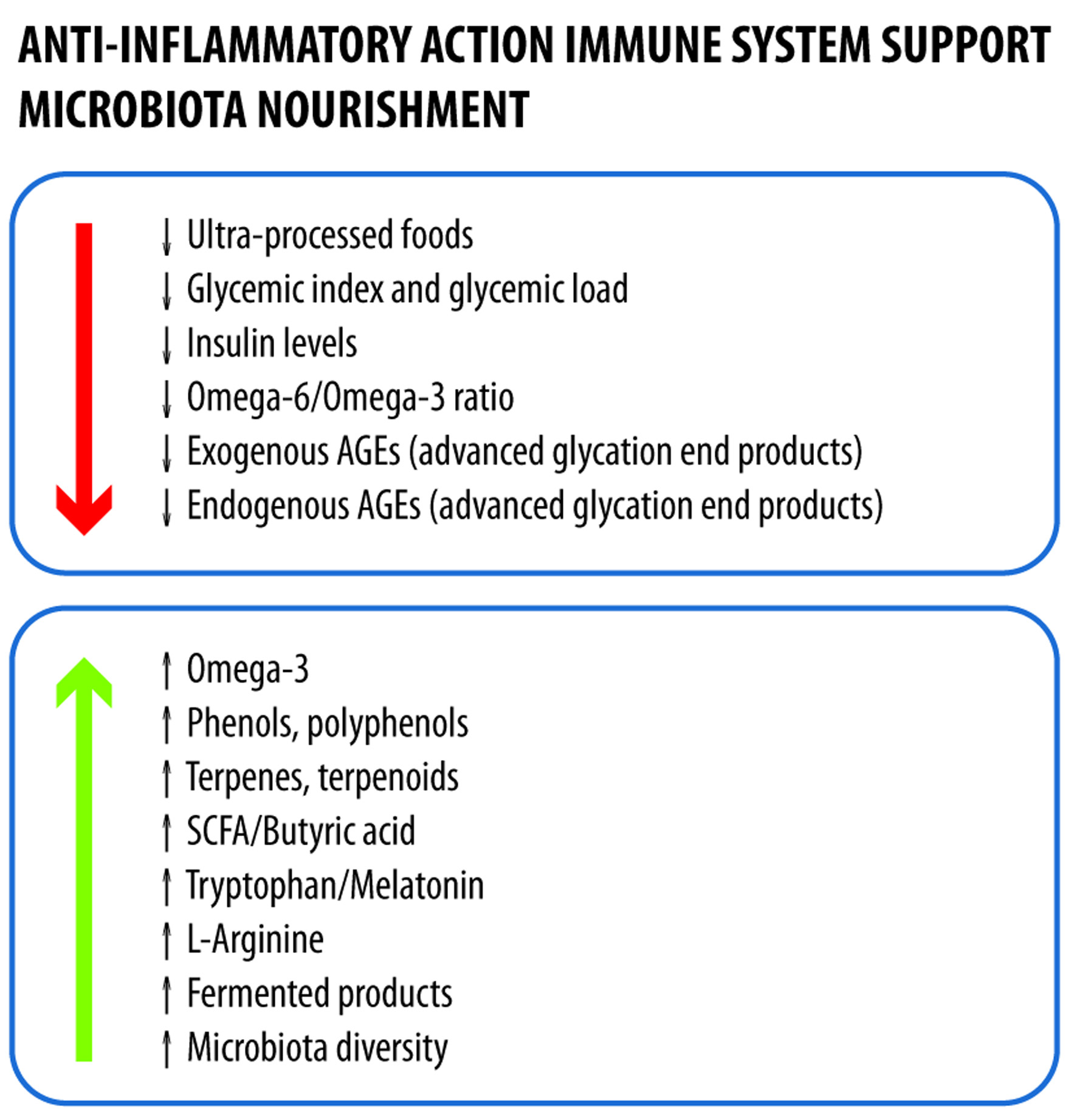
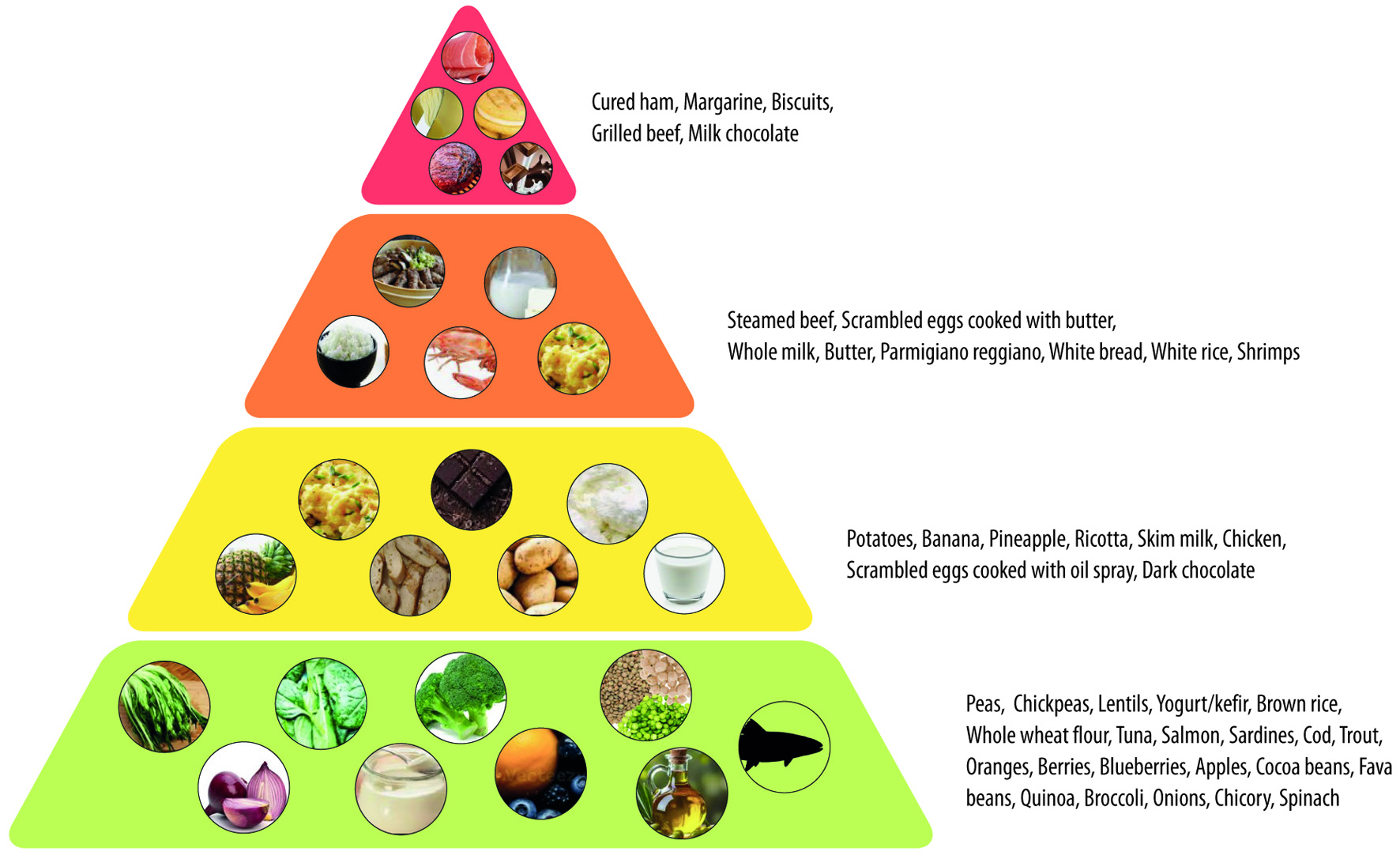
| Fruits, vegetables, and resistant starches (providing soluble and insoluble fibers). Fish, which contributes to greater microbiota biodiversity. Foods rich in tryptophan and arginine are essential for metabolic and immune functions. Fermented foods provide beneficial probiotics. |
| Ingredients | Nutritional values |
|---|---|
| 40 g whole oats 100 g berries 5 g flaxseeds 150 mL kefir 3 almonds | Energy: 375 kcal Carbohydrates: 52 g Proteins: 13 g Fats: 11 g Saturated fats: 1.8 g Fiber: 8.0 g Simple sugars: 10 g Vitamin A: 110 IU Vitamin C: 25 mg Vitamin B12: 0.5 µg Quercetin: 7 mg Tryptophan: 180 mg Melatonin: 0.7 µg Inulin: 1.5 g Omega-6: 1.7 g Omega-3: 1.2 g Omega-6/omega-3 ratio: 1.4:1 Arginine: 0.5 g Glutamine: 1 g Zinc: 1.1 mg Calcium: 180 mg Glycemic load: 14 Curcuminoids: 0 mg Gingerol: 0 mg Piperine: 0 mg Polyphenols: 70 mg Resveratrol: 0.5 mg |
| Ingredients | Nutritional values |
|---|---|
| 150 g pear 10 g almonds 1 cup green tea | Energy: 150 kcal Carbohydrates: 20 g Proteins: 3.0 g Fats: 8.0 g Saturated fats: 0.6 g Fiber: 4 g Simple sugars: 14 g Vitamin A: 5 IU Vitamin C: 7 mg Vitamin B12: 0 µg Quercetin: 0.3 mg Tryptophan: 35 mg Melatonin: 0.1 µg Inulin: 0 g Omega-6: 1.7 g Omega-3: 0.01 g Omega-6/omega-3 ratio: 170:1 Arginine: 0.4 g Glutamine: 0.3 g Zinc: 0.6 mg Calcium: 20 mg Glycemic load: 8 Curcuminoids: 0 mg Gingerol: 0 mg Piperine: 0 mg Polyphenols: 40 mg Resveratrol: 0 mg |
| Ingredients | Nutritional values |
|---|---|
| 80 g whole wheat pasta 50 g dried chickpeas (rehydrated) 50 g artichokes 50 g chicory 100 g chicken breast 50 g red onion 100 g fresh spinach 30 g avocado 5 g olive oil 5 g turmeric, ginger, and black pepper | Energy: 515 kcal Carbohydrates: 90 g Proteins: 35 g Fats: 10 g Saturated fats: 2.5 g Fiber: 14 g Simple sugars: 7 g Vitamin A: 9,733 IU Vitamin C: 47 mg Vitamin B12: 0.2 µg Quercetin: 20 mg Tryptophan: 320 mg Melatonin: 0.4 µg Inulin: 5 g Omega-6: 3.8 g Omega-3: 1.2 g Omega-6/omega-3 ratio: 3.2:1 Arginine: 1.8 g Glutamine: 3.0 g Zinc: 2.3 mg Calcium: 130 mg Glycemic load: 23 Curcuminoids: 150 mg Gingerol: 20 mg Piperine: 5 mg Polyphenols: 100 mg Resveratrol: 0.01 mg |
| Ingredients | Nutritional values |
|---|---|
| 150 g Greek yogurt 10 g chia seeds 1 cup green tea | Energy: 149.5 kcal Carbohydrates: 9.0 g Proteins: 11.0 g Fats: 8.0 g Saturated fats: 3.0 g Fiber: 3.0 g Simple sugars: 5 g Vitamin A: 40 IU Vitamin C: 0 mg Vitamin B12: 0.6 µg Quercetin: 0 mg Tryptophan: 90 mg Melatonin: 0 µg Inulin: 0 g Omega-6: 1.5 g Omega-3: 0.5 g Omega-6/omega-3 ratio: 3:1 Arginine: 0.8 g Glutamine: 1.2 g Zinc: 1.2 mg Calcium: 140 mg Glycemic load: 5 Curcuminoids: 0 mg Gingerol: 0 mg Piperine: 0 mg Polyphenols: 60 mg Resveratrol: 0 mg |
| Ingredients | Nutritional information |
|---|---|
| Salmon fillet 150 g Broccoli 150 g Red onion 50 g Whole-grain bread 50 g Olive oil 5 g Turmeric, ginger, black pepper 5 g | Energy: 515 kcal Carbohydrates: 45 g Proteins: 37 g Fats: 22 g Saturated fats: 4.4 g Fiber: 10 g Simple sugars: 5 g Vitamin A: 617 IU Vitamin C: 86 mg Vitamin B12: 4.5 µg Quercetin: 13 mg Tryptophan: 325 mg Melatonin: 0.3 µg Inulin: 1.5 g Omega-6: 3 g Omega-3: 2.5 g Omega-6/omega-3 ratio: 1.2:1 Arginine: 1.9 g Glutamine: 2.7 g Zinc: 2.8 mg Calcium: 160 mg Glycemic load: 12 Curcuminoids: 150 mg Gingerol: 20 mg Piperine: 5 mg Polyphenols: 120 mg Resveratrol: 0 mg |
| Nutritional components | Nutritional information |
|---|---|
| Energy | 1,695 kcal |
| Carbohydrates | 213 g (50%) |
| Proteins | 97.7 g (23%) |
| Fats | 58 g (27%) |
| Saturated fats | 12.1 g (6%) |
| Fiber | 49 g |
| Simple sugars | 41 g |
| Vitamin A | 10,505 IU |
| Vitamin C | 165 mg |
| Vitamin B12 | 5.8 µg |
| Quercetin | 40.3 mg |
| Tryptophan | 960 mg |
| Melatonin | 1.5 µg |
| Inulin | 8.0 g |
| Omega-6 | 11.2 g |
| Omega-3 | 6.3 g |
| Omega-6/omega-3 ratio | 1.8:1 |
| Arginine | 5.1 g |
| Glutamine | 7.8 g |
| Zinc | 7.9 mg |
| Calcium | 620 mg |
| Glycemic load | 61 |
| Curcuminoids | 300 mg |
| Gingerol | 40 mg |
| Piperine | 10 mg |
| Polyphenols | 390 mg |
| Resveratrol | 0.06 mg |
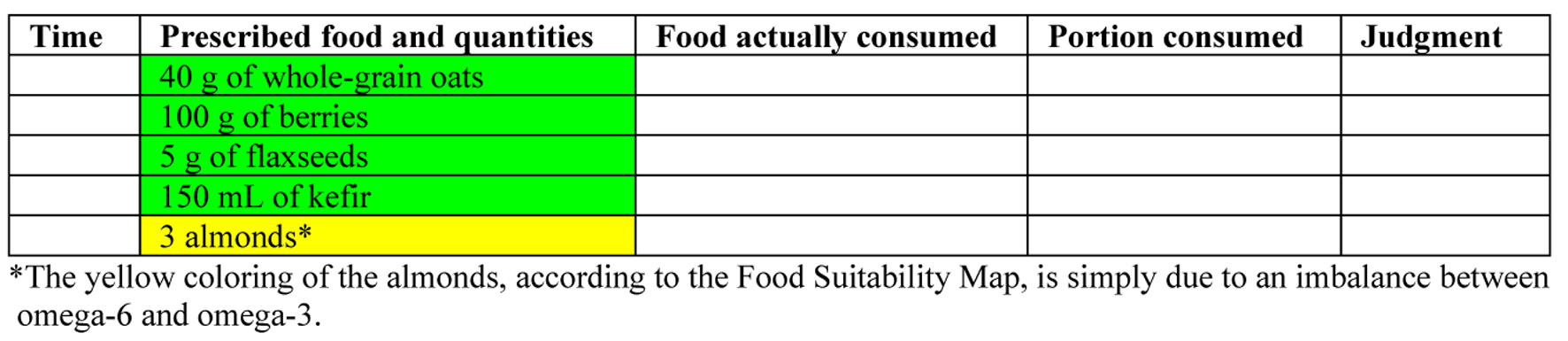
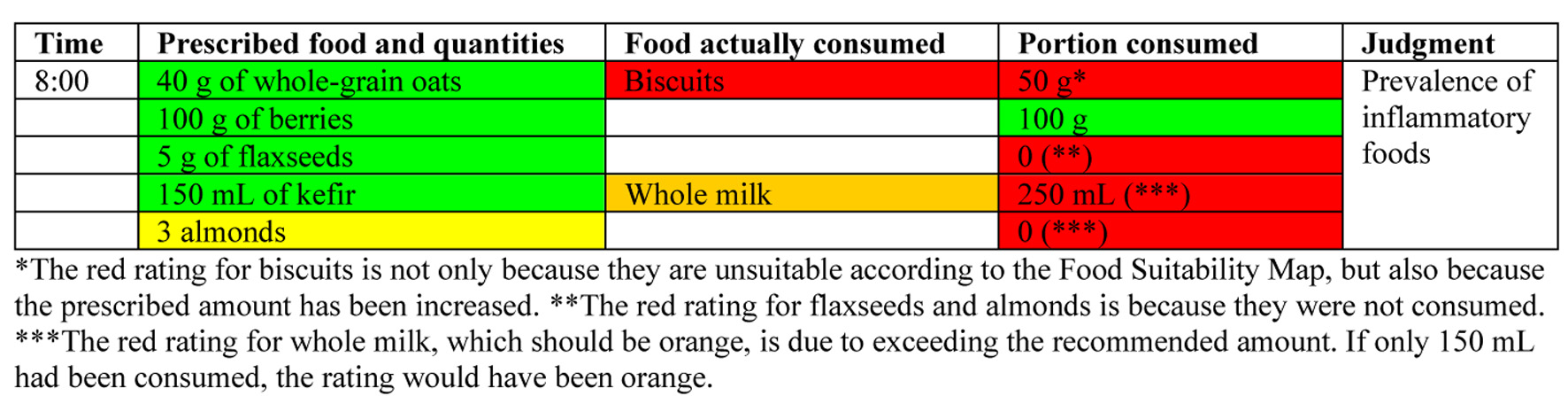
| It should outline the patient’s dietary tasks (diet). It must allow for the study, implementation, and recording of alternatives to the prescribed dietary recommendations. It must allow a final overall assessment through the Food Suitability Map, based on the prevalence of strongly inflammatory or, conversely, health-beneficial foods. It should not be a mere summary of quantities and energy intake but a tool to help the patient truly perceive what has the greatest impact on their health. |