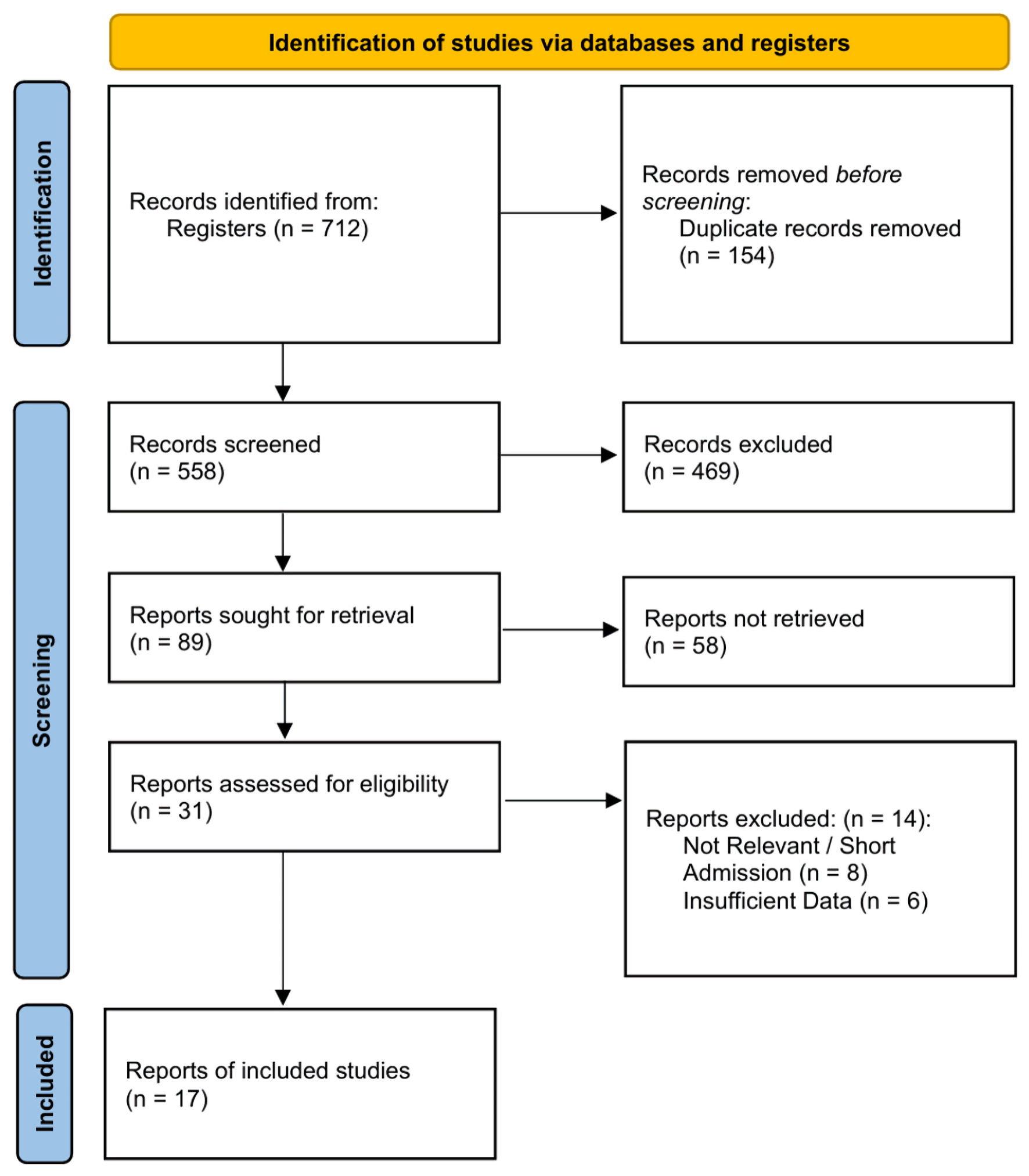
↓ Figure 1. PRISMA 2020 flow diagram. PRISMA: Preferred Reporting Items for Systematic Reviews and Meta-Analyses.
| Journal of Clinical Medicine Research, ISSN 1918-3003 print, 1918-3011 online, Open Access |
| Article copyright, the authors; Journal compilation copyright, J Clin Med Res and Elmer Press Inc |
| Journal website https://jocmr.elmerjournals.com |
Original Article
Volume 18, Number 8, August 2026, pages 542-555
Endoscopic Versus Surgical Bariatric Interventions for Obesity: A Systematic Review and Network Meta-Analysis
Figures
Tables
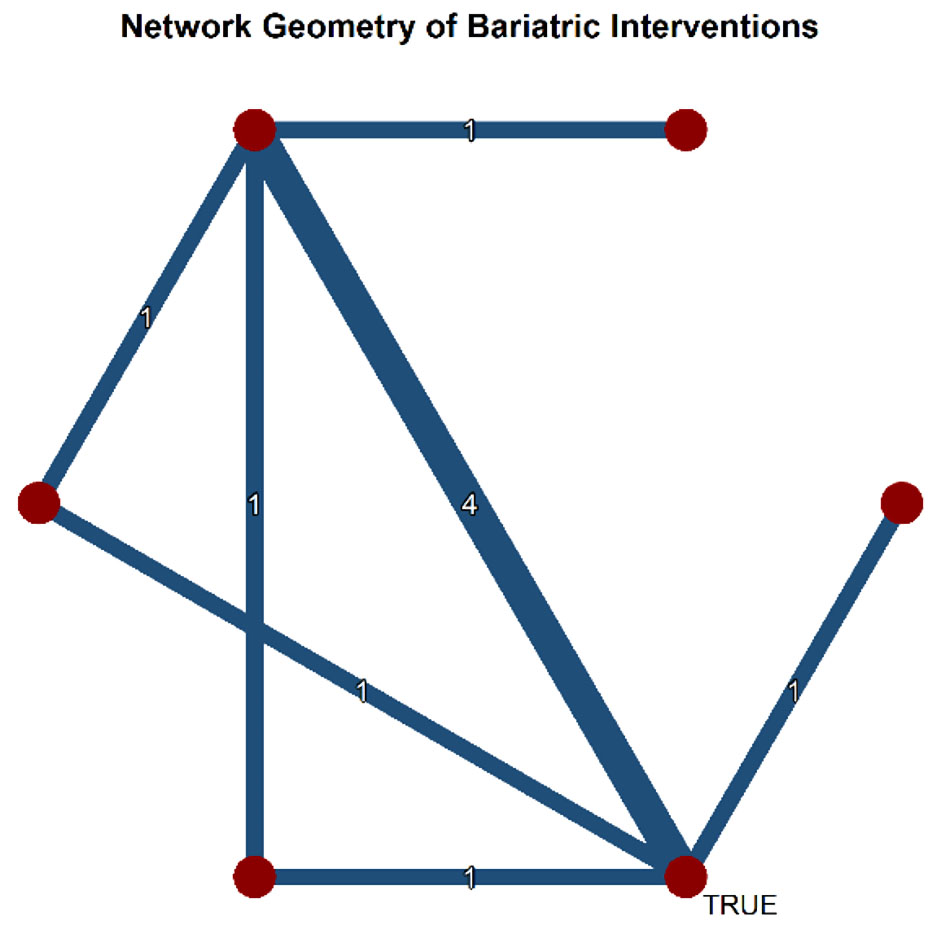
| Study | Study design | Treatment arms | Number |
|---|---|---|---|
| ESG: Endoscopic sleeve gastroplasty; LSG: Laparoscopic sleeve gastrectomy; EIB: endoscopic intragastric balloon; LGCP: Laparoscopic greater curve plication; LAGB: Laparoscopic adjustable gastric banding; EBT: endoscopic bariatric therapy; LBT: laparoscopic bariatric therapy; HIDLT: High-intensity diet and lifestyle therapy; BIB: BioEnterics intragastric balloon; MBSAQIP: Metabolic and Bariatric Surgery Accreditation and Quality Improvement Program. | |||
| Gudur et al, 2023 [25] | Retrospective database (MBSAQIP) | ESG | 6,054 |
| LSG | 597,463 | ||
| Carr et al, 2022 [26] | Prospective cohort | ESG | 16 |
| LSG | 45 | ||
| Joseph et al, 2024 [27] | Retrospective cohort | ESG | 68 |
| LSG | 212 | ||
| Dankar et al, 2025 [28] | Retrospective cohort | ESG | 70 |
| LSG | 70 | ||
| Alqahtani et al, 2022 [29] | Propensity-matched cohort | ESG | 3,018 |
| LSG | 3,018 | ||
| Fayad et al, 2019 [30] | Case-matched cohort | ESG | 54 |
| LSG | 83 | ||
| Tammo et al, 2025 [31] | Retrospective cohort | EIB | 36 |
| LSG | 36 | ||
| Lopez-Nava et al, 2021 [32] | Retrospective cohort | ESG | 199 |
| LSG | 61 | ||
| LGCP | 36 | ||
| Novikov et al, 2018 [33] | Retrospective cohort | ESG | 91 |
| LSG | 120 | ||
| LAGB | 67 | ||
| Marshall et al, 2022 [34] | Matched cohort | ESG | 25 |
| LSG | 25 | ||
| Fiorillo et al, 2020 [35] | Propensity-matched cohort | ESG | 23 |
| LSG | 23 | ||
| Mocanu et al, 2025 [36] | Retrospective database (MBSAQIP) | ESG | 2,285 |
| LSG | 504,312 | ||
| Fayad et al, 2022 [37] | Propensity-matched database | EBT | 211 |
| LBT | 9,059 | ||
| Osman et al, 2025 [38] | Propensity-matched cohort (TriNetX) | ESG | 62 |
| LSG | 62 | ||
| Ebadinejad et al, 2025 [39] | Retrospective database (MBSAQIP) | ESG | 2,171 |
| LSG | 7,997 | ||
| Milone et al, 2005 [40] | Retrospective cohort | BIB | 57 |
| LSG | 20 | ||
| Cheskin et al, 2020 [41] | Case-matched cohort | ESG | 105 |
| HIDLT | 281 | ||
| Outcome | Studies (n) | Participants (n) | Effect estimate | Risk of bias | Inconsistency | Indirectness | Imprecision | Publication bias | Final certainty |
|---|---|---|---|---|---|---|---|---|---|
| GRADE: Grading of Recommendations Assessment, Development, and Evaluation; MD: mean difference; RR: risk ratio; %TBWL: percentage of total body weight loss; CI: confidence interval; GERD: gastroesophageal reflux disease; T2DM: type 2 diabetes mellitus; ESG: endoscopic sleeve gastroplasty; LSG: laparoscopic sleeve gastrectomy. | |||||||||
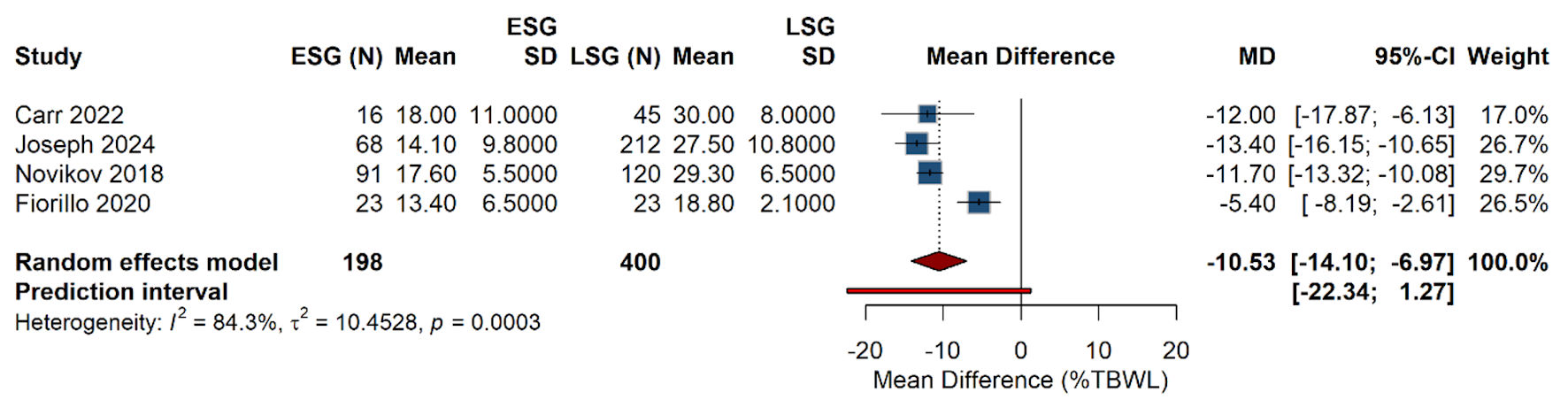
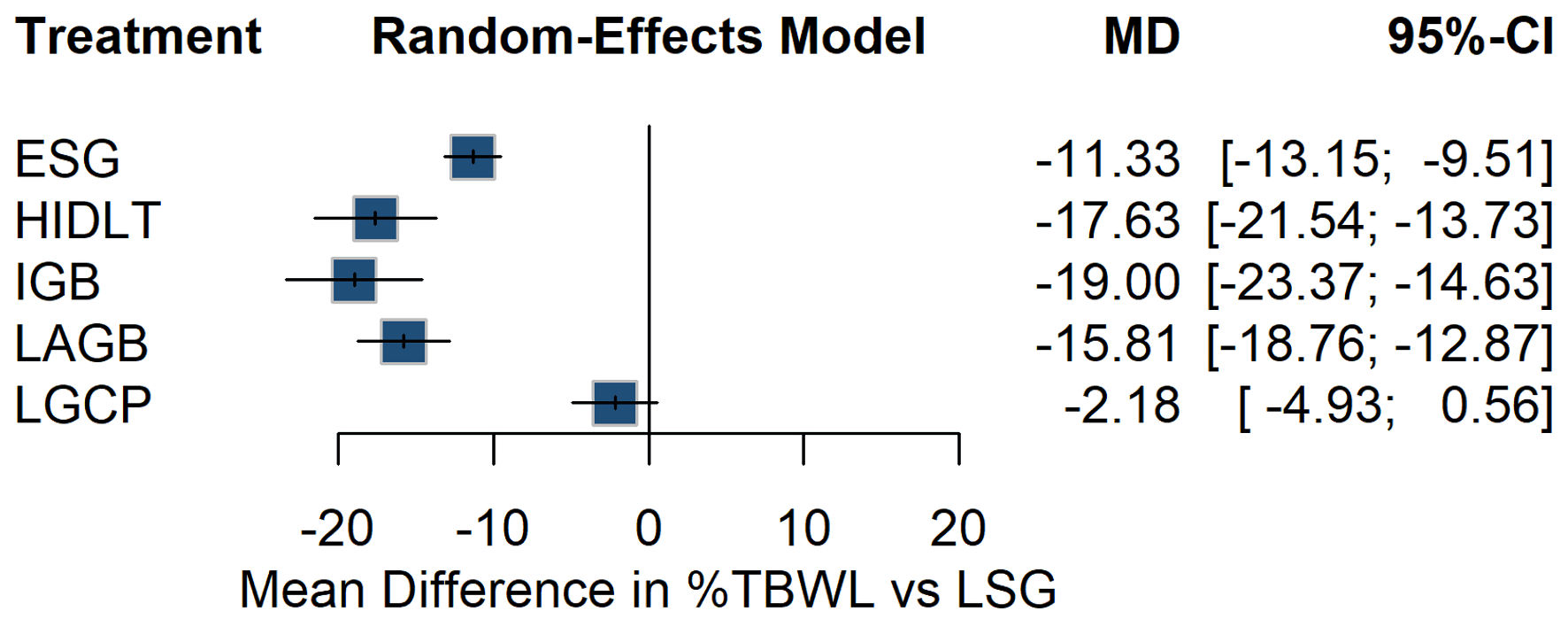
| %TBWL at 12 months (weight-loss efficacy) | 8 cohorts | About 620,000 | MD = –10.5 %TBWL (95% CI, –14.1 to –7.0) ESG vs LSG | Serious (–1) | Serious (–1) | Not serious | Not serious | Undetected | ⊕◯◯◯ Very low |
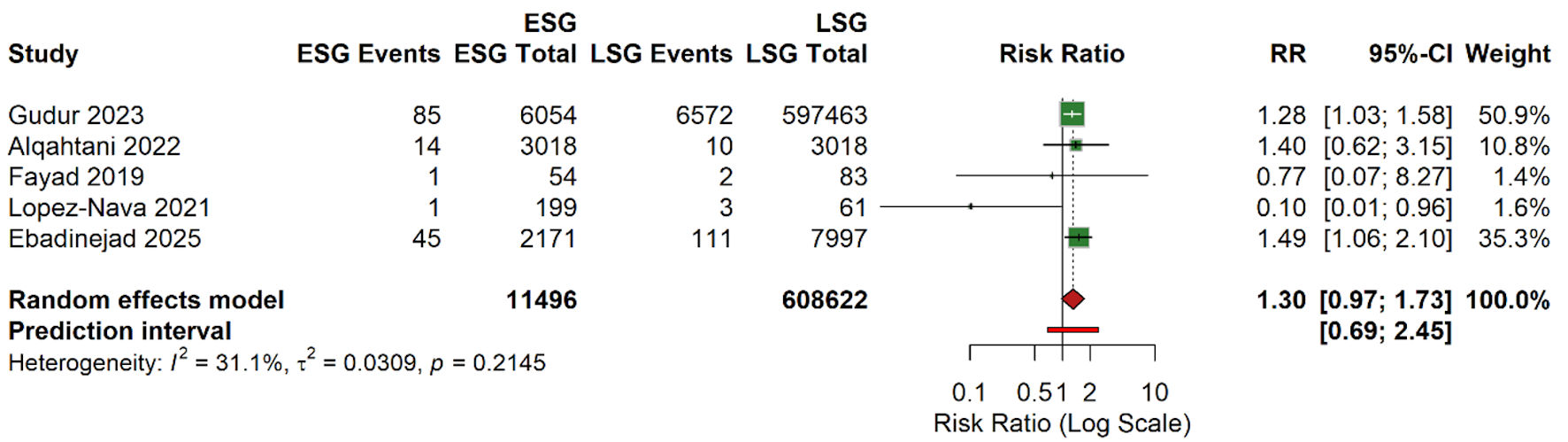
| Serious adverse events (Clavien-Dindo ≥ III) | 5 (including registries) | About 620,000 | RR = 1.30 (95% CI, 0.97 to 1.73) ESG vs LSG | Serious (–1) | Not serious | Not serious | Serious (–1) | Undetected | ⊕◯◯◯ Very low |
| Comorbidity remission (T2DM, GERD) | 4 cohorts | About 6,200 | T2DM remission: ESG 64% vs LSG 82%; New-onset GERD: ESG 4% vs LSG 20% | Serious (–1) | Serious (–1) | Not serious | Serious (–1) | Undetected | ⊕◯◯◯ Very low |