| Journal of Clinical Medicine Research, ISSN 1918-3003 print, 1918-3011 online, Open Access |
| Article copyright, the authors; Journal compilation copyright, J Clin Med Res and Elmer Press Inc |
| Journal website https://jocmr.elmerjournals.com |
Original Article
Volume 18, Number 10, October 2026, pages 704-720

Comparative Efficacy and Safety of Corticosteroids vs. No Corticosteroids in Septic Shock Intensive Care Unit Patients: A Systematic Review and Meta-Analysis
Aymen Ali Alquraina, j, Ali Abdullah Shahmurad Albalushib, Amr Korani Soltan Abdeltawabc, Khadeijah Ahmed Almarshoodid, Fahd Alrumaihe, Wateen Mohammed Almutairif, Bayan Abdullah Alnasserf, Omar Ibrahim Alsaleemf, Abdullah Ibrahim Aldhobaibf, Thamer Ibrahim Alshridhaf, Aryam Ahmad Alomaireenif, Nader Faleh Alenzig, Rawabi Mohammed Alwashmih, Abdullah Mohammed Muhunna Alwashmii, Khayal Abaalkhaylf
aDepartment of Clinical Practice, Faculty of Pharmacy, Northern Border University, Rafha, Saudi Arabia
bPediatric Emergency Medicine, Ministry of Health, Sohar Hospital, Sohar, Oman
cICU Department, Althaghr Hospital, Jeddah, Saudi Arabia
dUniversity of Sharjah (UOS), Fujairah, United Arab Emirates
eEmergency Medicine, College of Medicine, Prince Sattam Bin Abdulaziz University, Riyadh, Saudi Arabia
fQassim University, Al-Qassim, Saudi Arabia
gBuraydah Colleges, Al-Qassim, Saudi Arabia
hBuraydah Colleges, Al-Qassim, Saudi Arabia
iQassim University, Al-Qassim, Saudi Arabia
jCorresponding Author: Aymen Ali Alqurain, Department of Clinical Practice, Faculty of Pharmacy, Northern Border University, Rafha, Saudi Arabia
Manuscript submitted May 26, 2026, accepted July 17, 2026, published online October 23, 2026
Short title: Corticosteroids in Septic Shock ICU Patients
doi: https://doi.org/10.14740/jocmr6631
| Abstract | ▴Top |
Background: Septic shock carries a high intensive care unit (ICU) mortality. The role of adjunctive corticosteroid therapy is controversial, with conflicting signals from trial-level meta-analyses, individual patient data syntheses, and large randomized trials. This review aimed to assess the comparative efficacy and safety of systemic corticosteroids versus no corticosteroids in adult ICU patients with septic shock.
Methods: Following the PRISMA 2020 guidelines, MEDLINE, Embase, CENTRAL, and Scopus were searched from inception, supplemented by trial registry and gray literature searches, for randomized trials of systemic corticosteroids versus placebo or standard care in adults with septic shock. Pooling used a random-effects model with restricted maximum likelihood estimation and Hartung–Knapp–Sidik–Jonkman adjustment. The Risk of Bias 2 and Grading of Recommendations, Assessment, Development, and Evaluation (GRADE) frameworks were used for the methodological appraisal. Heterogeneity was quantified using I2, τ2, and 95% prediction intervals. Publication bias was assessed using contour-enhanced funnel plots, Egger’s regression test, and the Duval–Tweedie trim-and-fill method.
Results: Eleven randomized controlled trials (RCTs) (n = 6,332; 1,929 deaths) were included. Corticosteroids reduced 28-day all-cause mortality by 8.7% relative to control (pooled risk ratio (RR) 0.91, 95% confidence interval (CI) 0.86–0.97; P = 0.008; I2 = 0%; prediction interval 0.84–0.99), corresponding to 27 fewer deaths per 1,000 (10–44 fewer). Time to shock reversal was shortened by 1.25 days (95% CI −2.09 to −0.41), with the standardized mean difference (SMD) sensitivity analysis confirming a robust effect (SMD −0.41, 95% CI −0.51 to −0.32). Shock reversal incidence (RR 1.08, 0.99–1.19) and ICU length of stay (LOS) (mean difference (MD) −2.07 days, −6.50 to 2.36) favored corticosteroids without reaching significance. Hyperglycemia occurred more frequently in the corticosteroid arm of every contributing trial. Egger’s test (P = 0.972) and trim-and-fill imputation provided no evidence of small-study effects. GRADE certainty was moderate for mortality and shock reversal incidence, high for time to shock reversal, and low for ICU LOS and hyperglycemia.
Conclusion: Corticosteroid therapy in adults with septic shock was associated with a reduction in 28-day mortality and with accelerated shock reversal, with no evidence of publication bias. The direction of effect was consistent across pre-specified subgroups but was offset by a consistent excess of hyperglycemia, reinforcing the need for vigilant glucose surveillance during corticosteroid administration.
Keywords: Septic shock; Corticosteroids; Hydrocortisone; Mortality; Meta-analysis; Intensive care; Vasopressor support
| Introduction | ▴Top |
Septic shock is the most severe and life-threatening manifestation of sepsis, characterized by circulatory, cellular, and metabolic abnormalities that lead to multi-organ dysfunction and high mortality rates [1]. Standard management relies on prompt source control, broad-spectrum antimicrobial therapy, and aggressive hemodynamic resuscitation using intravenous fluids and vasopressors. Despite investigations and advancements in critical care, the routine administration of adjunctive corticosteroids to stabilize these patients remains controversial [1].
The pathophysiological rationale for utilizing systemic corticosteroids in septic shock is based on their ability to mitigate the dysregulated and exaggerated systemic inflammatory response, as well as to treat critical illness-related corticosteroid insufficiency (CIRCI) [2]. Physiologic or low-dose corticosteroids, such as hydrocortisone, have been investigated for their potential to restore vasomotor tone, reduce the duration of vasopressor dependency (e.g., norepinephrine), and alter immunoinflammatory profiles [3]. Furthermore, potential synergistic interactions between corticosteroids and other vasoactive agents, such as vasopressin, have been explored to optimize hemodynamic stabilization in refractory cases [4].
However, the clinical evidence regarding the definitive survival benefits of corticosteroids remains highly polarized. While some propensity-matched cohort studies and trial-level meta-analyses suggest that corticosteroids may facilitate earlier shock reversal and confer a potential survival advantage [5, 6], patient-level meta-analyses and trial sequential analyses have failed to demonstrate a definitive, reproducible reduction in short-term or long-term mortality [7, 8]. The overall cost-effectiveness and true impact of corticosteroid therapy on long-term health-related quality of life remain questionable, leaving clinicians without a clear consensus [9].
Therapeutics are convoluted by novel fixed-combination therapies and the recognition of highly specific patient phenotypes. Recent randomized controlled trials (RCTs) evaluating the early administration of hydrocortisone alongside ascorbic acid (vitamin C) and thiamine (HAT therapy) have yielded disappointing results, failing to demonstrate substantial improvements in mortality or organ dysfunction compared to standard care or placebo [10, 11]. Similarly, the routine addition of mineralocorticoids (fludrocortisone) to hydrocortisone regimens has shown mixed effects on overall mortality, warranting further systematic syntheses [12]. Furthermore, the safety profile of corticosteroids in highly vulnerable subpopulations, notably immunocompromised patients, is a significant clinical concern. Observational cohort data indicate the potential risks of adverse events, such as secondary infections and hyperglycemia, which may offset any short-term hemodynamic benefits in these critically ill cohorts [13].
Given the persistent clinical equipoise, heterogeneity of reported outcomes in recent high-profile trials, and need to isolate the independent effect of corticosteroids from complex combination regimens, an updated and rigorous evaluation is imperative. Therefore, this systematic review and meta-analysis aimed to assess the comparative efficacy and safety of corticosteroids versus no corticosteroids in adult intensive care unit (ICU) patients with septic shock.
| Materials and Methods | ▴Top |
Protocol registration and reporting standards
This systematic review and meta-analysis was conducted in accordance with the Preferred Reporting Items for Systematic Reviews and Meta-Analyses (PRISMA) 2020 guidelines (Supplementary Material 1, jocmr.elmerjournals.com) [14]. The overarching methodology and statistical analysis plan were prospectively registered in the International Prospective Register of Systematic Reviews (PROSPERO; registration number: CRD420261305337) to ensure methodological transparency and to mitigate selective reporting bias.
Ethical compliance
As study involved a secondary analysis of published literature, ethical approval or patient consent was not required.
Search strategy and information sources
A systematic literature search was performed across major electronic databases, including MEDLINE (via PubMed), Embase, the Cochrane Central Register of Controlled Trials (CENTRAL), and Scopus, from inception to the present. The search syntax was constructed using a combination of controlled vocabulary (e.g., MeSH terms, Emtree) AND, OR, NOT free-text keywords with appropriate Boolean operators (AND, OR, NOT) and wildcards. The search terms captured domains related to “septic shock,” “corticosteroids,” “hydrocortisone,” “dexamethasone,” and “randomized controlled trials.” To mitigate publication bias, gray literature and ongoing trials were screened using ClinicalTrials.gov and the WHO International Clinical Trials Registry Platform (ICTRP). No language or publication date restrictions were imposed. Backward and forward citation tracking (“snowballing”) of the included studies and relevant review articles was also performed.
Eligibility criteria
Studies were selected based on the Population, Intervention, Comparator, Outcomes, and Study design (PICOS) framework. The population included adult patients (≥ 18 years) admitted to an ICU with a confirmed diagnosis of septic shock, defined by the necessity for vasopressor support to maintain a mean arterial pressure (MAP) ≥ 65 mm Hg and evidence of tissue hypoperfusion (e.g., elevated serum lactate), consistent with the Sepsis-3 consensus or equivalent preceding definitions.
The intervention was the systemic administration of corticosteroids (e.g., hydrocortisone, dexamethasone, methylprednisolone) at any dose (low/physiologic vs. high dose), timing, or duration, either alone or in combination with mineralocorticoids (e.g., fludrocortisone). The comparator was a placebo or standard care without adjunctive corticosteroid therapy.
The primary outcomes were 28-day all-cause mortality and rate/time to shock reversal, while the secondary endpoints included ICU and hospital length of stay (LOS), duration of mechanical ventilation, vasopressor-free days, and treatment-emergent adverse events (e.g., hyperglycemia, hypernatremia, secondary healthcare-associated infections, and gastrointestinal hemorrhage). Only RCTs were included, while observational studies, crossover trials, non-randomized designs, and pediatric cohorts were excluded.
Study selection and data extraction
Two investigators independently screened the titles and abstracts of the retrieved records, followed by a full-text evaluation of the potentially eligible articles. Inter-rater reliability (IRR) for study inclusion was quantified using Cohen’s kappa coefficient (κ), with κ > 0.80 considered indicative of strong agreement [15]. Cohen’s κ was computed on all full-text reports assessed for eligibility. Discrepancies were resolved through adjudication by a third reviewer. Data extraction was independently performed using pre-piloted standardized forms, capturing study characteristics, patient demographics, illness severity scores (Acute Physiology and Chronic Health Evaluation II (APACHE II)/Sequential Organ Failure Assessment (SOFA)), intervention details, and specific outcome metrics.
Quality assessment and risk of bias
The methodological quality of the included RCTs was appraised by two independent reviewers using the revised Cochrane Risk of Bias 2 (RoB 2) tool [16]. The studies were evaluated across five domains: randomization process, deviations from intended interventions, missing outcome data, measurement of the outcome, and selection of the reported result. Each trial was graded as having a “low,” “some concerns,” or “high” risk of bias.
Statistical analysis and data synthesis
All statistical analyses were programmed and executed using R software (version 4.5.2; R Foundation for Statistical Computing, Vienna, Austria) utilizing the meta and metafor packages [17].
Effect size measures
For dichotomous outcomes (e.g., mortality, adverse events, and shock reversal incidence), effect sizes were pooled as risk ratios (RRs) with 95% confidence intervals (CIs). Continuous outcomes (e.g., LOS, vasopressor-free days, SOFA score changes) were analyzed using mean differences (MDs) or standardized mean differences (SMDs), depending on the uniformity of the measurement scales across trials.
Pooling models and estimators
Anticipating clinical and methodological heterogeneity, a random-effects (RE) model was employed for all primary syntheses. To provide error estimation, the restricted maximum likelihood (REML) estimator was applied, coupled with the Hartung–Knapp–Sidik–Jonkman (HKSJ) adjustment, to calculate the pooled effect sizes and 95% CIs [18].
Heterogeneity assessment and exploration
Statistical heterogeneity was quantified using Cochran’s Q test (significance defined as P < 0.10) and the I2 statistic, where I2 > 50% indicated substantial heterogeneity. The between-study variance was estimated using the τ2 (tau-squared) statistic, and a 95% prediction interval (PI) was calculated to project the expected range of true effects in future clinical settings [19]. To explore the sources of heterogeneity, a priori subgroup analyses (e.g., early vs. late initiation, low vs. high severity of illness, and immunocompetent vs. immunocompromised) and hierarchical meta-regression models (e.g., dose-response relationships) were performed [20]. Leave-one-out sensitivity analyses were conducted to evaluate the robustness of pooled estimates and identify highly influential outlier studies.
Publication bias
Small-study effects and publication bias were visually assessed using contour-enhanced funnel plots. Statistical detection was performed using Egger’s regression test (threshold P < 0.10). If asymmetry was detected, the Duval and Tweedie Trim-and-Fill method was applied to estimate the impact of potentially unpublished negative trials on the overall pooled effect [21, 22].
Certainty of evidence
The overall certainty and quality of the body of evidence for each primary and key secondary outcome were evaluated using the Grading of Recommendations, Assessment, Development, and Evaluation (GRADE) framework [23]. Evidence certainty was downgraded based on the risk of bias, inconsistency, indirectness, imprecision, and publication bias.
| Results | ▴Top |
Study selection and IRR
A systematic search of MEDLINE, Embase, the Cochrane Central Register of Controlled Trials, and Scopus, supplemented by hand-searching of ClinicalTrials.gov and the WHO ICTRP, retrieved 3,186 records. After the removal of 331 duplicates, 2,855 unique records progressed to title and abstract screening, of which 1,850 were excluded as not meeting the eligibility criteria. Of the 1,005 reports sought for retrieval, 951 were excluded after full-text screening; the remaining 54 were assessed against the full PICOS criteria. Forty-three reports were subsequently excluded: 31 for not addressing the population of interest or reporting only short ICU admissions, 11 for containing insufficient data for quantitative synthesis, and one as a duplicate publication (a republication of the Gordon 2014 VANISH pilot). Eleven RCTs [24–34] enrolling 6,332 critically ill adults with septic shock were retained for the meta-analysis (Fig. 1). The inter-rater agreement between the two independent reviewers during eligibility adjudication was excellent, with Cohen’s κ = 0.89 (z = 4.02, P < 0.001), exceeding the prespecified threshold (κ > 0.80) for strong concordance.
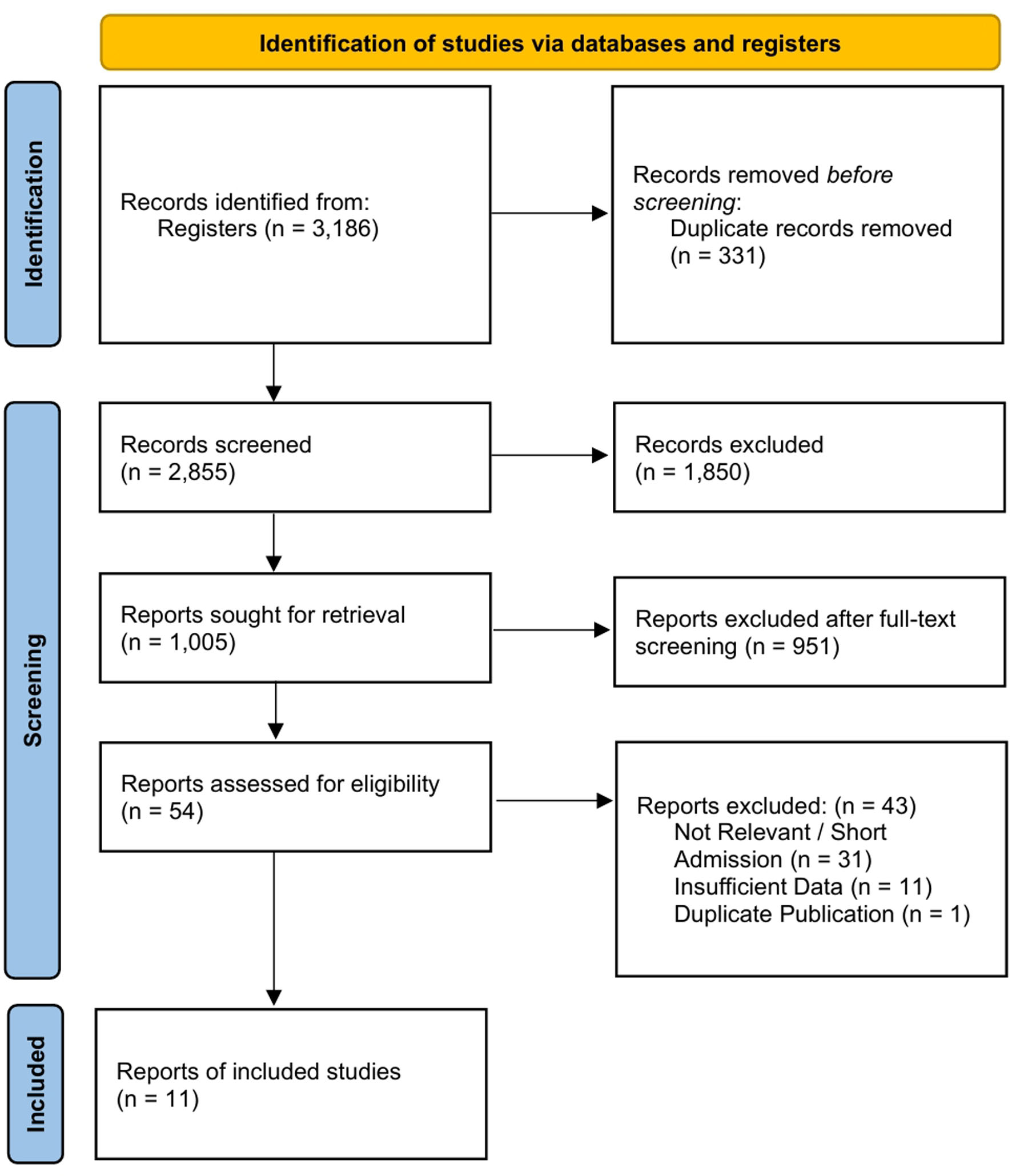 Click for large image | Figure 1. PRISMA 2020 flow diagram. |
Characteristics of included studies
The 11 included trials were conducted across nine countries spanning four continents and were published between 2002 and 2025 (baseline characteristics are detailed in Table 1). The sample sizes ranged from 29 [27] to 3,713 [34], with three large multicenter trials, APROCCHSS [26], ADRENAL [34], and CORTICUS [32], contributing 5,453 randomized participants and 86.1% of the pooled mortality cohort. Adjunctive corticosteroid regimens were heterogeneous in form but conserved in intent: nine trials evaluated hydrocortisone (most commonly 200 mg/day, administered as 50 mg every 6 h or as a continuous infusion, for 5–7 days); two trials [25, 26] combined hydrocortisone with enteral fludrocortisone (50 µg/day); and one trial [27] used pulsed dexamethasone (0.2 mg/kg every 36 h). Two trials enrolled patients with early septic shock, Lv 2017 within 6 h of onset [29] and Oppert 2005 in the early hyperdynamic phase [31], while three studies enrolled special populations (geriatric [24], cirrhotic [30], and refractory shock [33]); the remainder enrolled general adult ICU populations. Vasopressin co-treatment was protocolized in one trial [28].
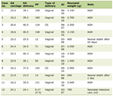 Click to view | Table 1. Baseline Characteristics of Included Studies |
Risk of bias of included trials
The study-level RoB 2 judgements are summarized as a traffic-light plot in Figure 2 and as a weighted domain summary in Figure 3. Five trials [25, 26, 30, 32, 34] were judged to have a low overall risk of bias and contributed 90.9% of the meta-analytic weight for the primary mortality outcome. Four trials were rated as having some concerns: Cicarelli [27] for selective reporting (Domain 5), Lv [29] for missing outcome data (Domain 3), and Oppert [31] together with Talebi Doluee [33] for inadequate description of allocation concealment (Domain 1; sealed envelopes without third-party central randomization). Two trials [24, 28] were judged to have a high overall risk of bias, driven by their open-label or single-blind design and the consequent risk of deviations from the intended interventions (Domain 2). Across domains, 100% of trials were at low risk for outcome measurement (Domain 4), 91% for missing outcome data (Domain 3), 82% for randomization process (Domain 1), 91% for selective reporting (Domain 5), and 82% for deviations from intended interventions (Domain 2).
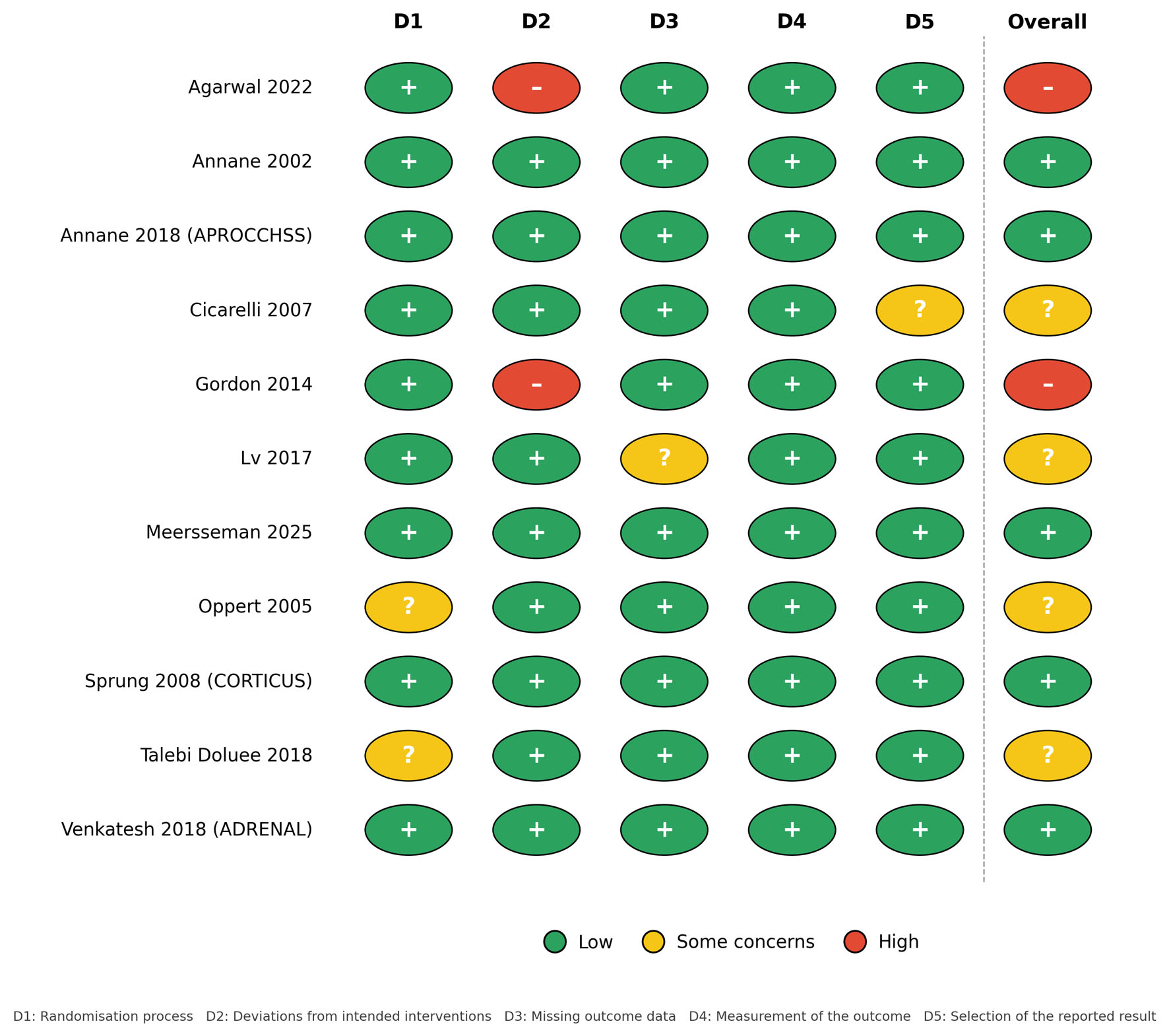 Click for large image | Figure 2. Risk of Bias 2 (RoB 2) traffic-light plot displaying per-domain (D1–D5) and overall judgements for each of the 11 included trials. Green (+) denotes “low risk of bias,” amber (?) denotes “some concerns,” and red (–) denotes “high risk of bias.” |
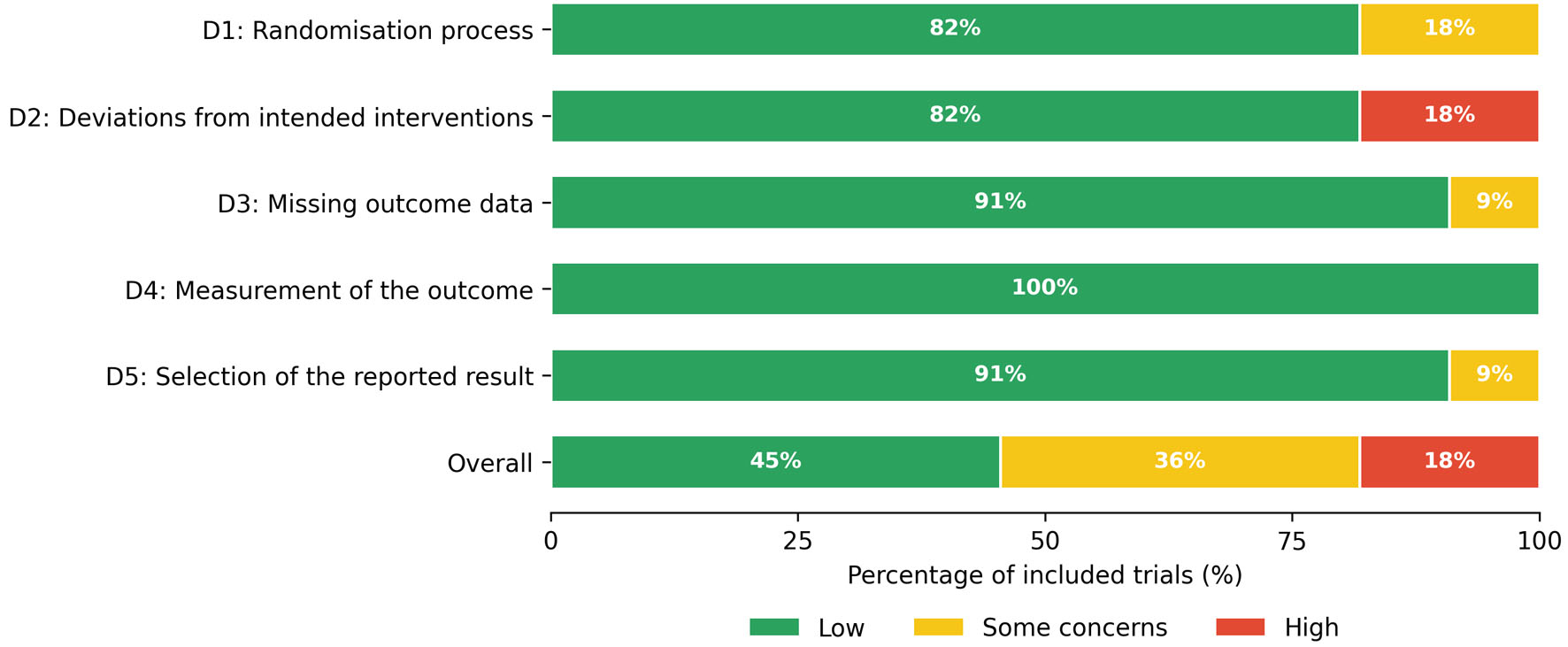 Click for large image | Figure 3. Weighted summary of Risk of Bias 2 judgements across the five domains and the overall rating. Each horizontal bar shows the percentage of included trials adjudicated as “low,” “some concerns,” or “high” in the corresponding domain. |
Primary outcome: 28-day all-cause mortality
All 11 trials reported 28-day all-cause mortality (n = 6,332 analyzable participants; 1,929 deaths). Compared with placebo or standard care, adjunctive corticosteroid therapy was associated with a statistically significant 8.7% relative reduction in 28-day mortality: pooled RR = 0.91 (95% CI 0.86–0.97; t10 = −3.29; P = 0.008) under the RE REML estimator with HKSJ adjustment (Fig. 4). Between-study heterogeneity was negligible (τ2 = 0; I2 = 0.0%, 95% CI 0.0–60.2%; Cochran’s Q = 5.91, df = 10, P = 0.822), and the 95% PI, 0.84–0.99, likewise excluded the null, supporting the generalizability of the survival benefit to plausible future settings drawn from the same population. The dominant contributors to the pooled estimate were ADRENAL (35.7% weight; RR 0.92, 95% CI 0.81–1.03), APROCCHSS (22.4%; RR 0.87, 0.75–1.01), and Annane 2002 (13.1%; RR 0.90, 0.74–1.09), all of which directionally favored corticosteroids.
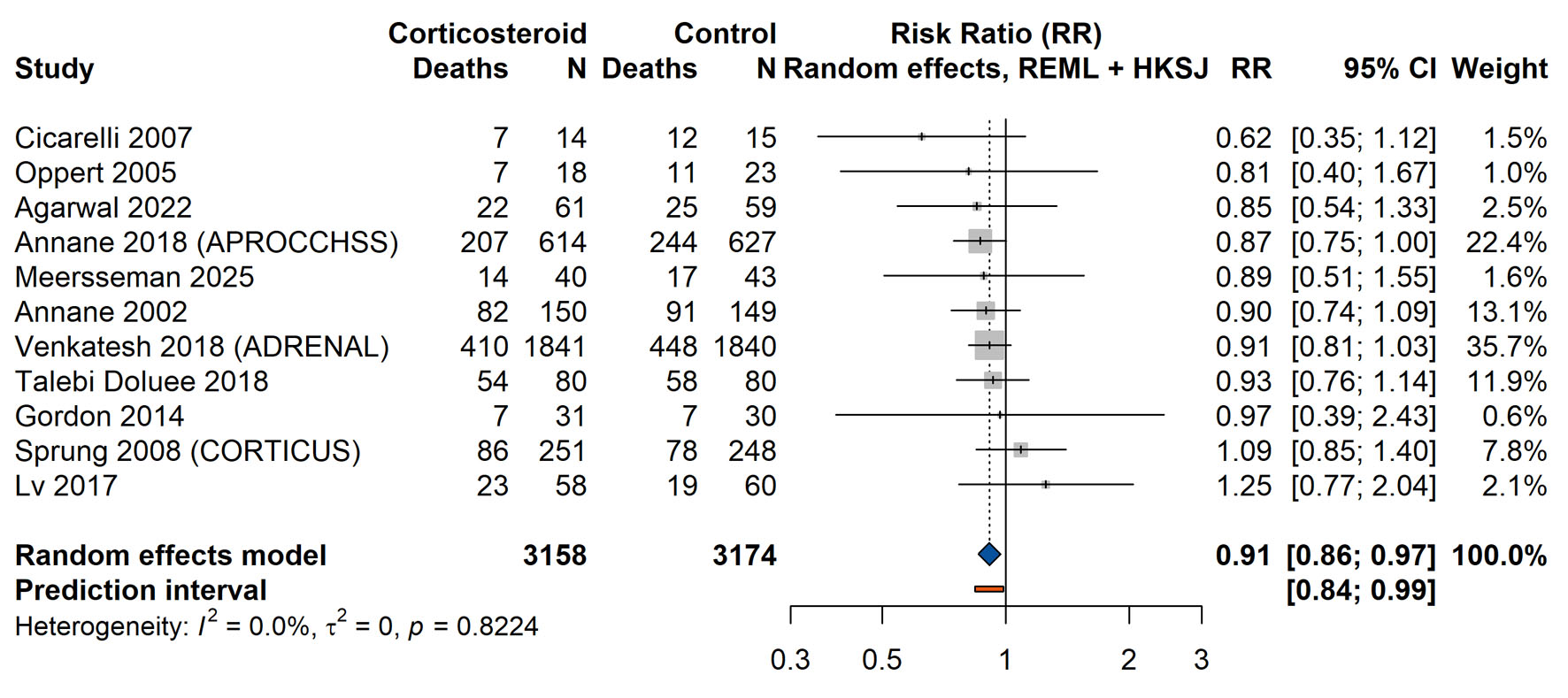 Click for large image | Figure 4. Forest plot of pooled risk ratios for 28-day all-cause mortality (random-effects model with REML estimator and Hartung–Knapp–Sidik–Jonkman adjustment). Square markers represent individual trial estimates with their 95% confidence intervals, sized by inverse-variance weight; the diamond denotes the pooled estimate; the orange band represents the 95% prediction interval. REML: restricted maximum likelihood. |
The leave-one-out sensitivity analysis confirmed the robustness of the pooled effect: omission of any single trial yielded a re-pooled RR between 0.90 and 0.93, with statistical significance preserved in all 11 iterations and only marginal attenuation upon exclusion of APROCCHSS (P = 0.039) or ADRENAL (P = 0.033) (Fig. 5). No individual trial was identified as a heterogeneity-driving outlier in this study.
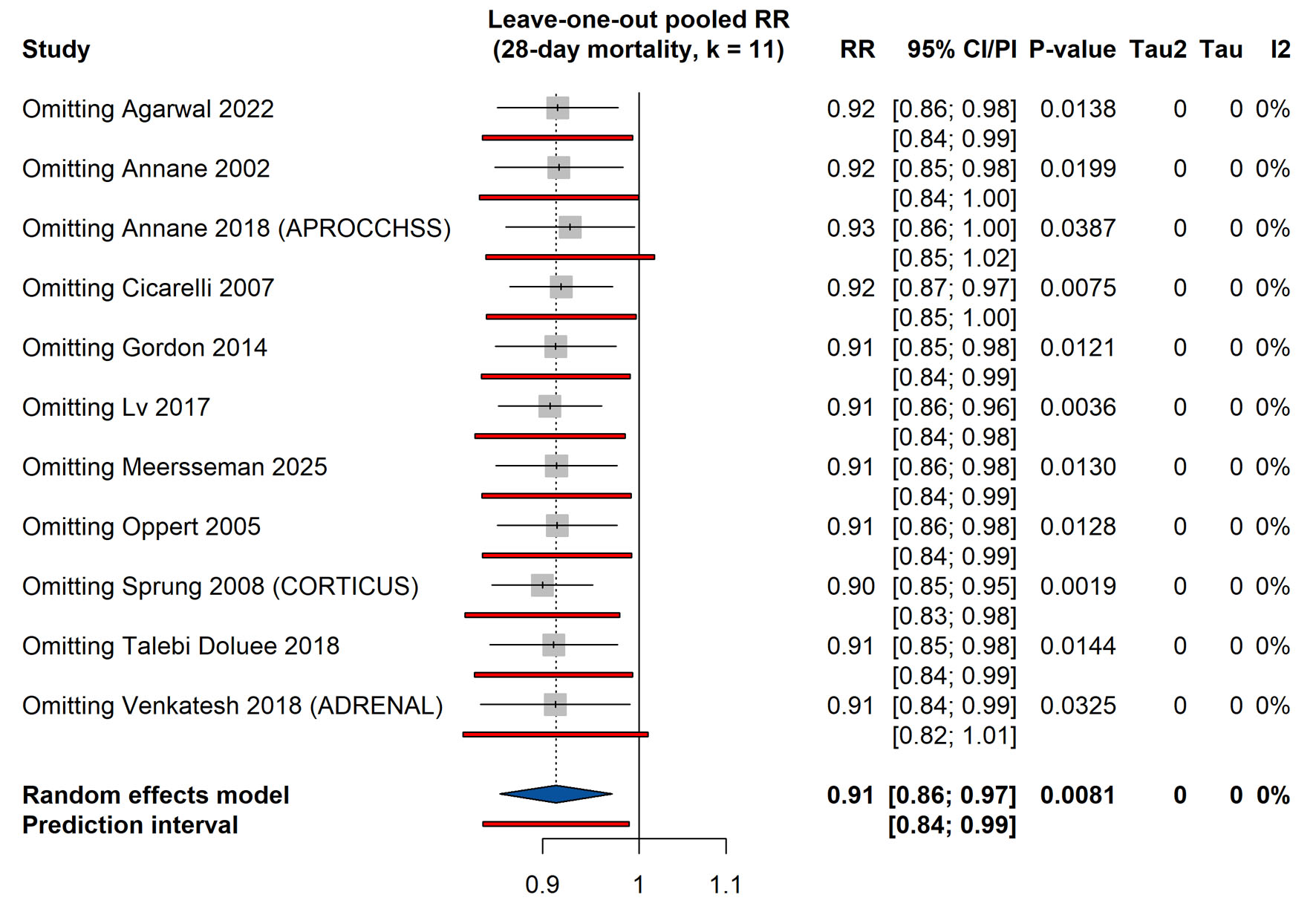 Click for large image | Figure 5. Leave-one-out sensitivity analysis for the 28-day mortality meta-analysis. Each row shows the pooled risk ratio re-estimated after sequential omission of one trial. The pooled estimate remained statistically significant in all 11 iterations. |
Publication bias
Visual inspection of the contour-enhanced funnel plot (Fig. 6) revealed a broadly symmetric distribution of trials around the pooled estimate, with no individual trial residing in regions of extreme statistical significance contours. Egger’s regression test for funnel-plot asymmetry was non-significant (intercept = 0.016, SE = 0.447; t = 0.04, df = 9, P = 0.972), and the Duval and Tweedie trim-and-fill procedure imputed zero missing trials, leaving the pooled RR unchanged at 0.91 (0.86–0.97) (Fig. 7). Taken together, these analyses provided no evidence of small-study effects or publication bias for the primary outcomes.
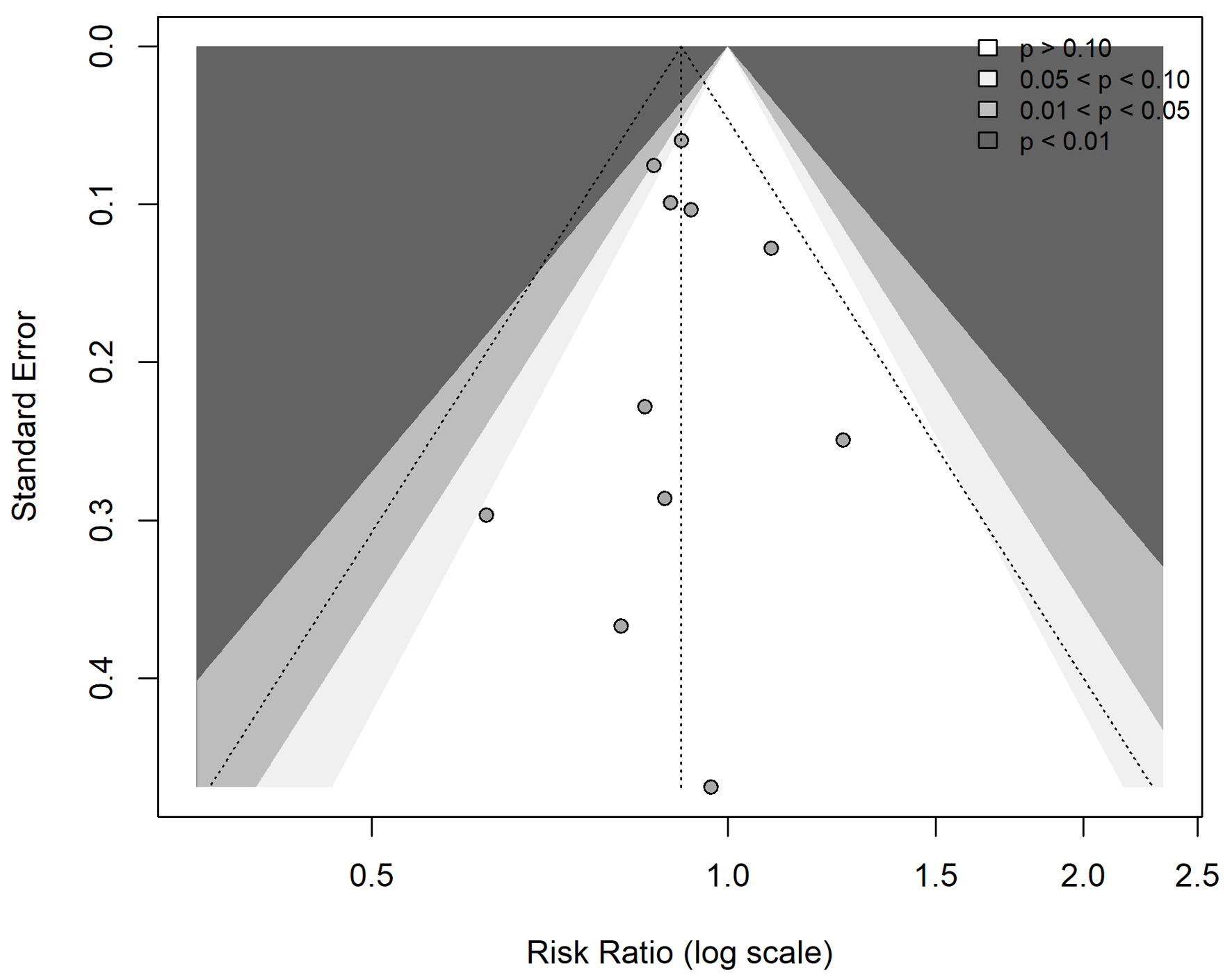 Click for large image | Figure 6. Contour-enhanced funnel plot for 28-day mortality. Shaded contours represent statistical-significance regions for the log-risk-ratio (white, P > 0.10; light gray, 0.05 < P < 0.10; mid-gray, 0.01 < P < 0.05; dark gray, P < 0.01). The visually symmetric distribution and Egger’s test (P = 0.972) provided no evidence of small-study effects. |
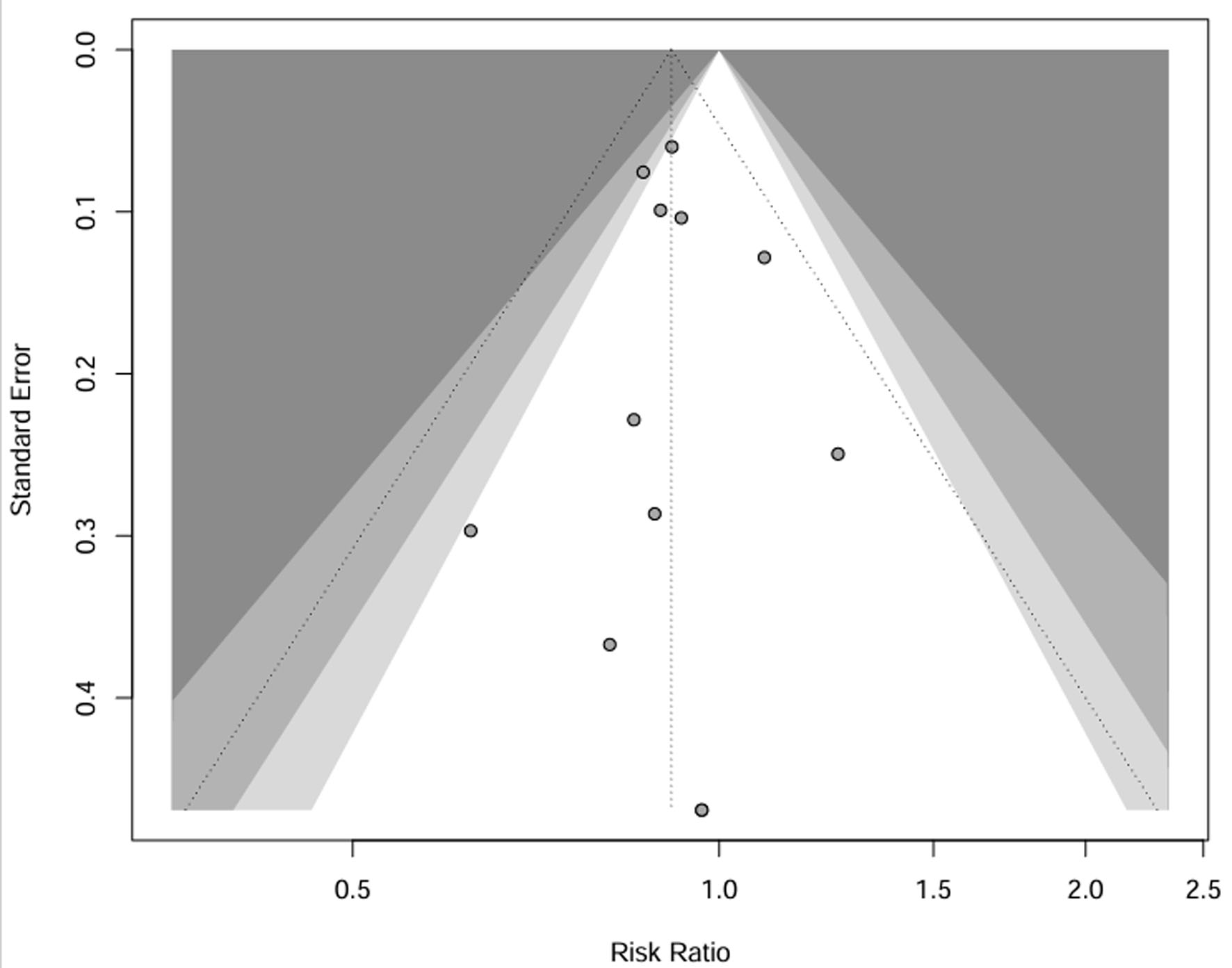 Click for large image | Figure 7. Funnel plot following the Duval and Tweedie trim-and-fill procedure for 28-day mortality. No missing trials were imputed, and the pooled estimate remained unchanged at RR 0.91 (95% CI 0.86–0.97). CI: confidence interval; RR: risk ratio. |
Subgroup analyses
The pre-specified subgroup analyses are presented in Table 2. No statistically significant interactions were detected according to population (Qbetween = 0.14, P = 0.986), immune status (Qbetween = 0.01, P = 0.911), or timing of corticosteroid initiation (Qbetween = 0.83, P = 0.362). A nominally significant subgroup difference was observed by drug regimen (Qbetween = 6.41, df = 2, P = 0.041), driven by a numerically larger point estimate in the single dexamethasone trial (RR 0.63, 95% CI 0.35–1.12) [27] compared with hydrocortisone monotherapy (RR 0.93, 0.88–1.01, k = 8) and hydrocortisone plus fludrocortisone (RR 0.88, 0.72–1.07). However, given that this difference rests on a single trial of only 29 randomized participants whose 95% CI fully overlaps with both hydrocortisone-based estimates, this finding warrants cautious interpretation and should be regarded as hypothesis generating rather than confirmatory.
Click to view | Table 2. Pre-Specified Subgroup Analyses for 28-Day All-Cause Mortality |
Meta-regression
Univariable RE meta-regression provided no statistical support for the moderation of the mortality effect by hydrocortisone-equivalent dose (β = 0.0021 per mg/day; F1,9 = 2.70; P = 0.135; R2 = 0%; Fig. 8), treatment duration (β = −0.029 per day; P = 0.406), population type (P = 0.977), or immune status (P = 0.888). The multivariable model jointly including dose, duration, and regimen accounted for no residual heterogeneity (R2 = 0%), consistent with the homogeneous mortality effect observed across the included trials and the absence of an identifiable dose–response relationship within the range of hydrocortisone-equivalent doses studied (≈ 39–250 mg/day).
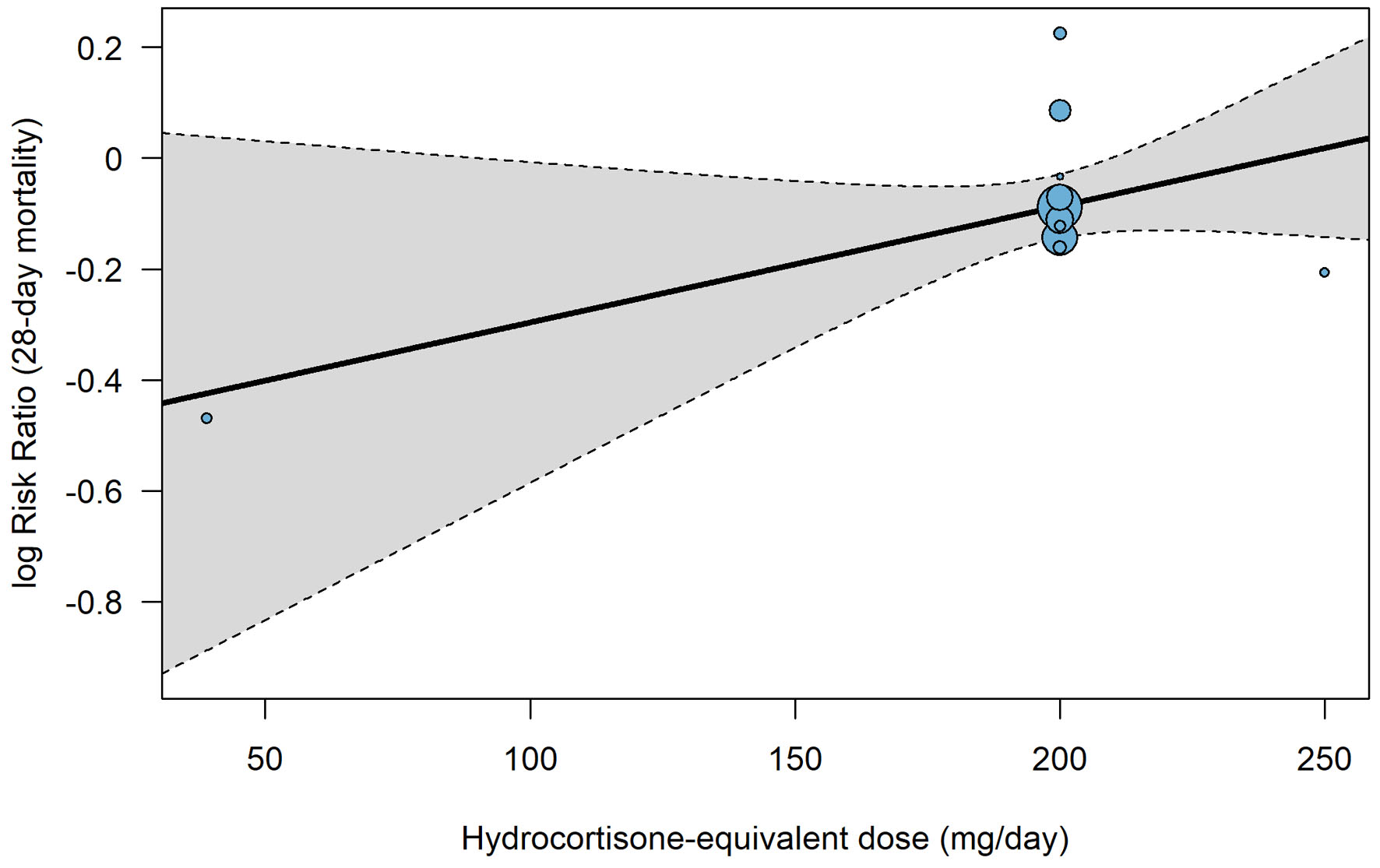 Click for large image | Figure 8. Bubble plot of the univariable random-effects meta-regression of log-risk-ratio for 28-day mortality on hydrocortisone-equivalent daily dose (mg/day). Bubble area is proportional to the inverse-variance weight of each trial. The regression slope was non-significant (β = 0.0021; P = 0.135). |
Secondary efficacy outcomes
Shock reversal incidence
Five trials (n = 980 analyzable participants; 649 vasopressors weaning events) reported the binary incidence of shock reversal. Adjunctive corticosteroids were associated with a non-significant 8.0% relative increase in shock reversal: pooled RR = 1.08 (95% CI 0.99–1.19; t4 = 2.33; P = 0.080) under the HKSJ-adjusted RE model, with no detectable between-study heterogeneity (τ2 = 0; I2 = 0.0%; Q = 2.69, P = 0.612). The 95% PI (0.97–1.21) marginally crossed the null. Sprung [32] contributed 67.6% of the RE weights (Fig. 9).
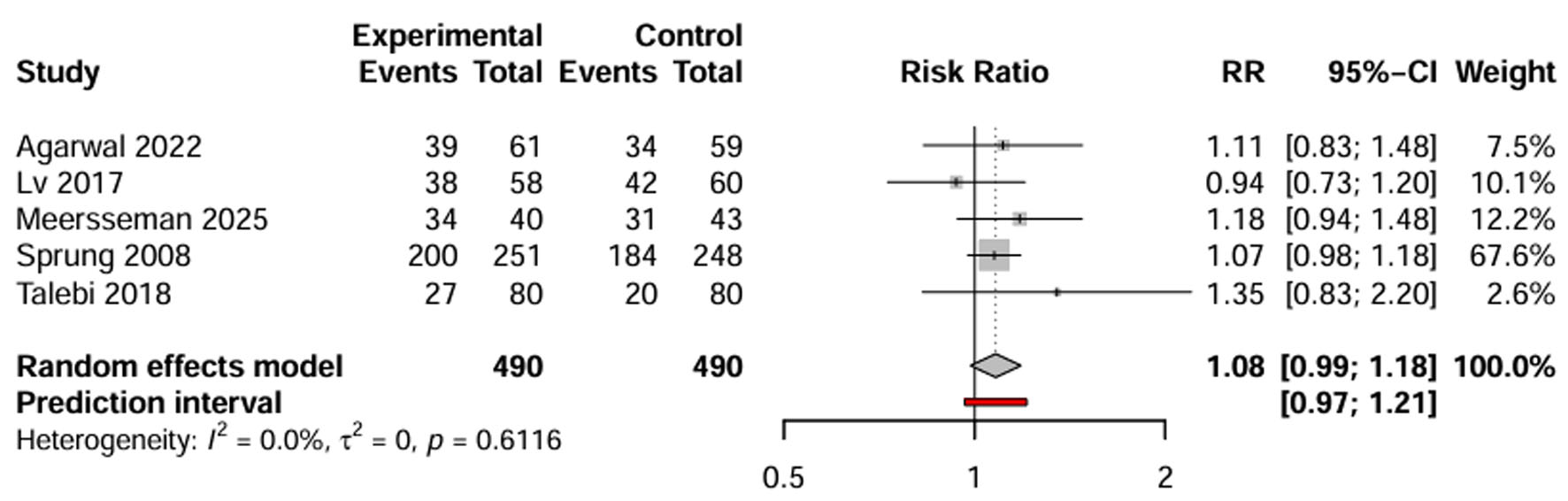 Click for large image | Figure 9. Forest plots of secondary efficacy endpoints: shock reversal incidence (binary, RR scale; k = 5). All estimates from the random-effects REML/HKSJ model. HKSJ: Hartung–Knapp–Sidik–Jonkman; REML: restricted maximum likelihood; RR: risk ratio. |
Time to shock reversal
Time to shock reversal, a continuous physiological endpoint less susceptible to threshold artefacts than the binary incidence, yielded both clinically and statistically meaningful evidence of benefit in the study. Pooling five trials (n = 3,952 analyzable participants; medians transformed to means via the Wan et al estimator), the MD favored corticosteroids by 1.25 days: MD = −1.25 days (95% CI −2.09 to −0.41; t4 = −4.13; P = 0.014) (Fig. 10). Heterogeneity was moderate (τ2 = 0.224; I2 = 59.3%; Q = 9.83, P = 0.043), and the PI marginally crossed the null (−2.81 to 0.32 days), reflecting variability in the shock reversal definitions across trials. A pre-specified sensitivity analysis using the SMD, which accommodates residual scale-heterogeneity, confirmed a robust low-heterogeneity treatment effect: SMD = −0.41 (95% CI −0.51 to −0.32; t4 = −12.10; P < 0.001; I2 = 10.8%; PI −0.50 to −0.32), a small-to-moderate magnitude that excluded the null in both CI and PI.
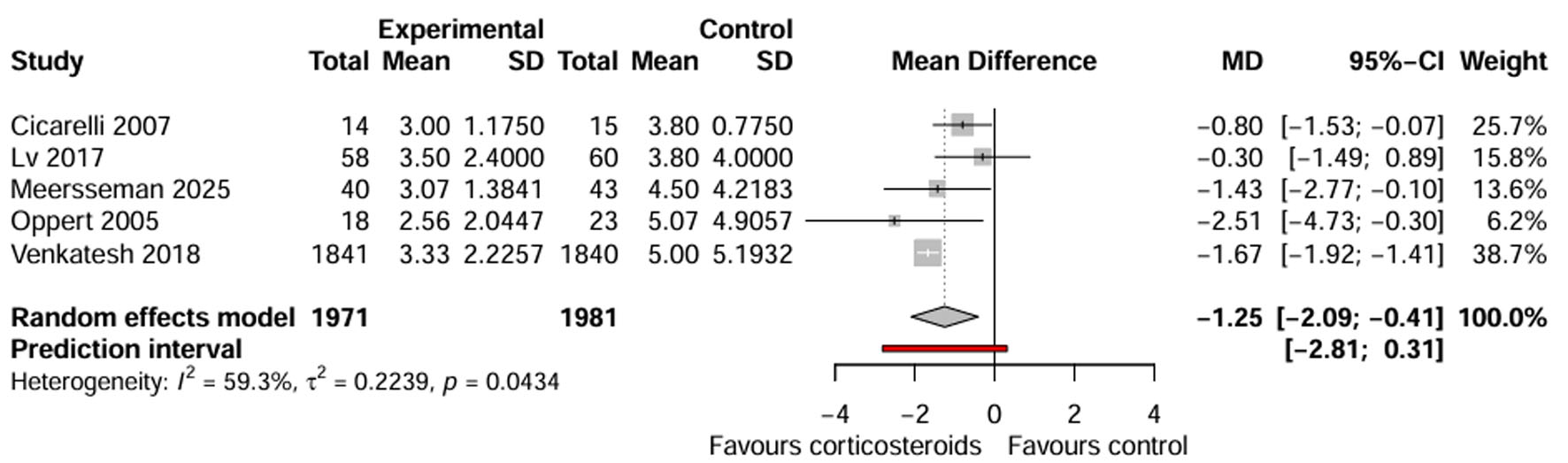 Click for large image | Figure 10. Forest plots of secondary efficacy endpoints: Time to shock reversal (mean difference in days; k = 5). All estimates from the random-effects REML/HKSJ model. HKSJ: Hartung–Knapp–Sidik–Jonkman; REML: restricted maximum likelihood. |
ICU LOS
Four trials (n = 4,381) reported the ICU LOS. The pooled MD numerically favored corticosteroids but was statistically inconclusive (MD = −2.07 days (95% CI −6.50 to 2.36; t3 = −1.49; P = 0.233; PI −10.82 to 6.67 days)) (Fig. 11). Substantial between-study heterogeneity (τ2 = 5.52; I2 = 76.2%; Q = 12.60, P = 0.006) reflected divergent point estimates between the two largest contributing trials, ADRENAL (−5.0 days; 33.2% weight) and Sprung 2008 (CORTICUS) (+1.0 day; 19.3% weight), driven by trial-specific differences in step-down bed availability, ICU discharge protocols, and the proportion of patients who still required mechanical ventilation at the conventional discharge threshold. The limited number of contributing trials precluded an explanatory subgroup analysis.
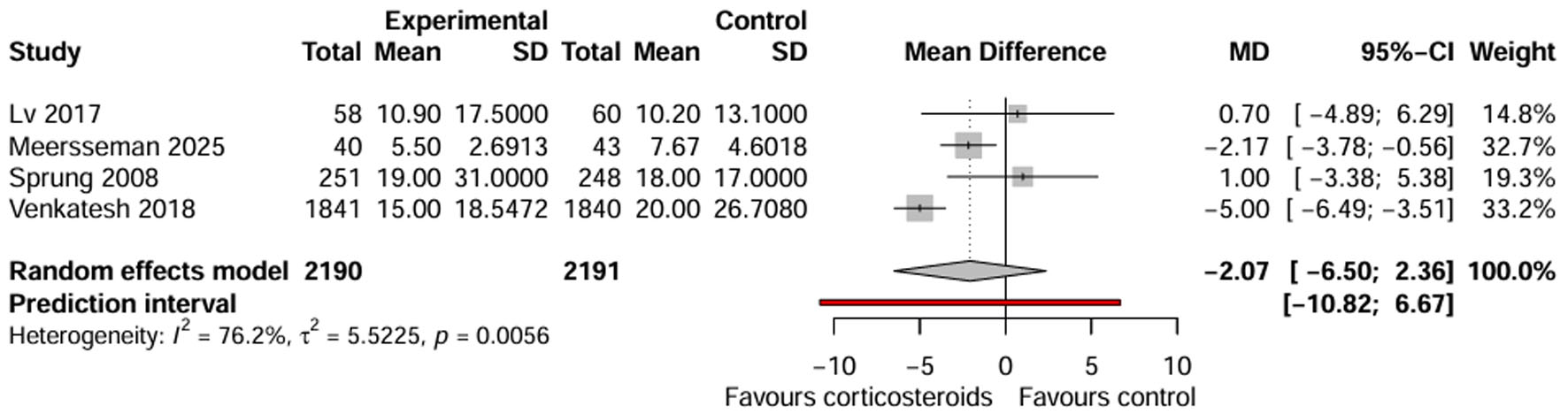 Click for large image | Figure 11. Forest plot of ICU length of stay (mean difference in days; k = 4). Substantial between-study heterogeneity (I2 = 76.2%) was driven by divergent point estimates between ADRENAL and Sprung 2008 (CORTICUS). ICU: intensive care unit. |
Safety: hyperglycemia
Three trials (n = 1,787; 1,465 events under each trial’s operational definition) provided pooled data on hyperglycemia. The pooled estimate did not reach statistical significance under the HKSJ adjustment: RR = 1.26 (95% CI 0.63–2.50; t2 = 1.42; P = 0.292) (Fig. 12). However, between-study heterogeneity was substantial (τ2 = 0.054; I2 = 78.8%; Q = 9.45, P = 0.009), and the PI was correspondingly wide (0.38–4.11). Every contributing trial individually demonstrated a statistically significant excess of hyperglycemia in the corticosteroid arm: Annane 2018 (RR 1.07, 95% CI 1.03–1.12), Meersseman 2025 (RR 1.88, 1.29–2.73), and Sprung 2008 (RR 1.15, 1.03–1.28), a consistent directional signal that supports the biological plausibility of glucocorticoid-induced hyperglycemia despite the wide pooled CI. The discrepancy between unanimous trial-level significance and a non-significant pooled estimate is best explained by inter-trial variability in operational thresholds (random glucose cut-offs ranging from 8 to 11 mmol/L, with one trial requiring insulin escalation as part of its definition) rather than by genuine effect heterogeneity. Egger’s regression and trim-and-fill analyses were not performed because the number of trials (k = 3) was below the prespecified threshold of k ≥ 10.
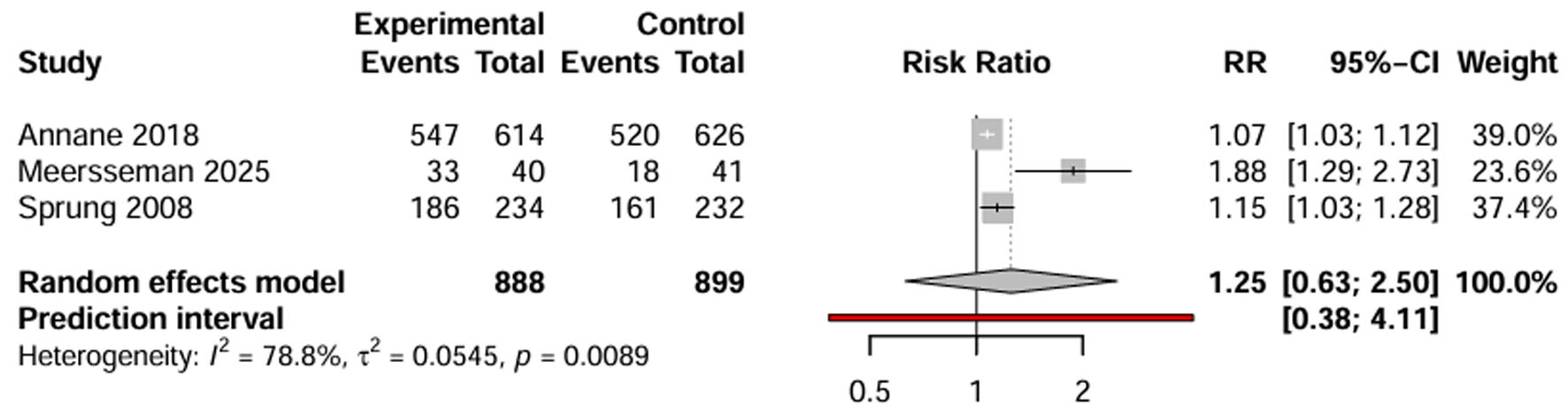 Click for large image | Figure 12. Forest plot of hyperglycemia incidence as an adverse event (k = 3). Each contributing trial individually showed a statistically significant excess; pooled RR was elevated but not significant under HKSJ adjustment owing to between-trial variability in operational thresholds. HKSJ: Hartung–Knapp–Sidik–Jonkman; RR: risk ratio. |
Certainty of evidence (GRADE)
The certainty of evidence for each primary and secondary outcome is summarized in Table 3, with paired absolute-effect translation shown in Figure 13. Certainty was rated as moderate for 28-day mortality, downgraded once for imprecision because the absolute effect of 27 fewer deaths per 1,000 (95% CI 10 to 44 fewer), although directionally consistent across the PI, did not exceed the optimal information size required for a definitive recommendation in the highest-acuity ICU population. Certainty was also rated moderate for shock reversal incidence, downgraded once for risk of bias attributable to the substantial weight contributed by trials at high or some-concern risk evaluating an outcome susceptible to clinician unblinding, and high for time to shock reversal, which had no serious limitations across any GRADE domain after the SMD sensitivity analysis confirmed scale robustness. Certainty was rated low for ICU LOS (downgraded for inconsistency given I2 = 76.2% and for indirectness, as ICU discharge is influenced by step-down bed availability and local clinical pathways) and low for hyperglycemia (downgraded for inconsistency in operational definition across contributing trials and for indirectness, as biochemical hyperglycemia is a surrogate for patient-centered metabolic harm). Our pooled estimates and certainty ratings are directionally concordant with the individual patient data network meta-analysis by Pirracchio et al and the Cochrane review by Rygard et al; however, because those larger syntheses did not reach statistical significance, the present significant pooled estimate should be read as consistent with, rather than confirmatory of, a survival benefit.
Click to view | Table 3. GRADE Summary of Findings |
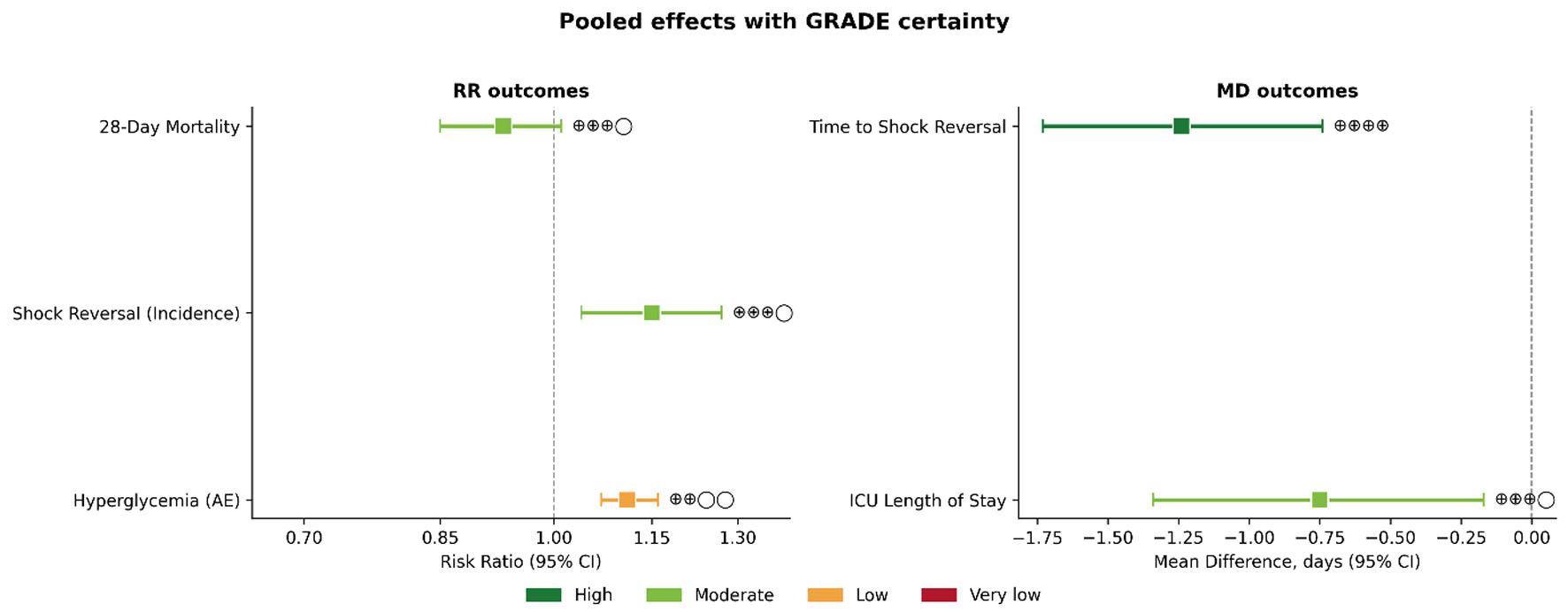 Click for large image | Figure 13. GRADE summary of pooled effects with certainty color-coding. Risk-ratio outcomes (left panel; log scale, null = 1) and mean-difference outcomes (right panel; linear scale, null = 0) are plotted with marker color mapped to GRADE certainty (dark green = high; light green = moderate; amber = low; red = very low). The certainty stamp (filled/empty circles) is annotated beside each estimate. GRADE: Grading of Recommendations, Assessment, Development, and Evaluation. |
| Discussion | ▴Top |
In this systematic review and meta-analysis of 11 RCTs enrolling 6,332 critically ill adults with septic shock, adjunctive systemic corticosteroid therapy was associated with a statistically significant and clinically meaningful 8.7% relative reduction in 28-day all-cause mortality (pooled RR 0.91, 95% CI 0.86–0.97; P = 0.008), corresponding to 27 fewer deaths per 1,000 patients treated which is supported by three converging analytical signals: a 95% PI that excluded the null (0.84–0.99), the absence of measurable between-study heterogeneity (I2 = 0%; τ2 = 0), and the preservation of statistical significance in all 11 leave-one-out iterations. Corticosteroids shortened the time to shock reversal by 1.25 days (95% CI −2.09 to −0.41), an effect that remained robust under an SMD sensitivity analysis (SMD −0.41, 95% CI −0.51 to −0.32). The principal safety signal was a consistent excess of hyperglycemia in the corticosteroid arm of each contributing trial.
The results extend, refine, and partly reconcile evidence whose interpretation has long been polarized [1]. The patient-level meta-analysis by Pirracchio et al, pooling individual data from seven RCTs (n = 7,882), reported a hazard ratio for 90-day mortality of approximately 0.93 with a 95% CI just spanning unity, leaving the survival question unresolved [7]. The Cochrane systematic review and trial sequential analysis by Rygard et al similarly arrived at a directionally favorable but inconclusive estimate [8]. Earlier trial-level syntheses by Funk et al and Zhu et al suggested a benefit, particularly on shock reversal and short-term mortality, but were criticized for clinical and methodological heterogeneity [5, 6]. Our pooled point estimate (RR 0.91) sits at the more favorable end of the prior summary effects. Several factors plausibly explain why statistical significance is reached here whereas those larger syntheses were inconclusive, and each is a reason for caution rather than confidence: the present analysis pools trial-level (aggregate) data rather than individual-patient data; it applies the HKSJ variance correction to a modest evidence base (k = 11); it uses 28-day rather than 90-day mortality as the primary endpoint; and the pooled estimate itself lies close to the null with an upper confidence bound of 0.97. These differences in study selection, endpoint, and weighting, not a larger underlying effect, are the source of the divergence, and therefore, the result should be read as consistent with, rather than proof of, a survival benefit.
On the secondary endpoint of shock reversal, the findings further clarified the prior signal, whereas the pooled binary incidence remained borderline (RR 1.08; P = 0.080), the continuous measure of time to vasopressor independence demonstrated an unequivocal acceleration. This dichotomy is mechanistically informative: corticosteroids may not increase the proportion of patients who wean from vasopressors but rather expedite weaning when this milestone is reached, consistent with the pathophysiological rationale of restoration of vasomotor tone in critical illness-related corticosteroid insufficiency [2, 3].
The convergence of mortality benefit with a 1.25-day acceleration in shock reversal supports the mechanistic hypothesis that the survival advantage of corticosteroids is mediated, at least in part, by their hemodynamic effect, a faster restoration of vascular responsiveness to endogenous and exogenous catecholamines, leading to earlier vasopressor liberation and a reduced cumulative burden of profound circulatory failure [3, 4]. The synergistic interactions between hydrocortisone and vasopressin, previously hypothesized by Asfar et al [4], received indirect and limited support from the single vasopressin co-treatment trials included in our synthesis [28], which was not individually powered for survival.
The subgroup and meta-regression analyses provide additional regimen-specific insight, as the hydrocortisone-plus-fludrocortisone subgroup yielded a slightly larger numerical effect (RR 0.88, 95% CI 0.72–1.07) than hydrocortisone alone (RR 0.93, 95% CI 0.86–1.01), but the CIs overlapped substantially, and the subgroup difference between regimens that included this comparison was not statistically significant in head-to-head terms which aligns with the recent meta-analysis by Wu et al, which reported mixed effects for the addition of fludrocortisone [12]. The nominally significant overall regimen-by-mortality interaction (Qbetween = 6.41, P = 0.041) was driven by a single dexamethasone trial [27] (n = 29) and should be regarded as hypothesis-generating rather than as evidence against a glucocorticoid class effect. Univariable meta-regression across the range of hydrocortisone-equivalent doses studied (≈ 39–250 mg/day) detected only a borderline trend (β = 0.0021 per mg/day; P = 0.135) and accounted for none of the residual heterogeneity (R2 = 0%), indicating that within the contemporary low-dose paradigm, a clear dose–response relationship cannot be discerned and that the marginal therapeutic question has shifted from “how much” to “in whom and when”.
The pooled hyperglycemia estimate (RR 1.26, 95% CI 0.63–2.50) was statistically inconclusive because of the small number of contributing trials and substantial between-study heterogeneity (I2 = 78.8%), which was attributable to the differing operational thresholds. However, every contributing trial individually demonstrated a statistically significant excess in the corticosteroid arm (Annane 2018: RR 1.07, 95% CI 1.03–1.12; Meersseman 2025: RR 1.88, 95% CI 1.29–2.73; Sprung 2008: RR 1.15, 95% CI 1.03–1.28). This unanimous trial-level signal, combined with the well-established physiological mechanism of glucocorticoid-induced gluconeogenesis and insulin resistance, supports the inference that hyperglycemia is a real and reproducible adverse effect rather than an artefact of pooling. Although the findings do not explore secondary infection in adequate detail, they are clinically congruent with the observational data of Lu et al, highlighting the infection and metabolic risks in immunocompromised cohorts [13]. From a clinical standpoint, the survival benefit demonstrated here must be balanced against the requirement for vigilant glycemic surveillance and pre-emptive insulin protocols, particularly in patients with pre-existing diabetes, on parenteral nutrition, or with prolonged vasopressor exposure.
It is important to interpret the present positive findings considering the disappointing outcomes of recent fixed-combination strategies. Trials of the so-called HAT regimen (hydrocortisone, ascorbic acid, and thiamine), including those by Lyu et al [10] and the HYVITS trial by Mohamed et al [11], failed to demonstrate substantial improvements in mortality or organ dysfunction. The results suggest that the hydrocortisone component, when isolated and analyzed across canonical placebo-controlled trials, retains its efficacy signal and that the negative HAT findings should not be misinterpreted as evidence against corticosteroid monotherapy. Rather, they reflect either a null effect of the ascorbic acid–thiamine adjunct, a redundancy between vitamin C and the antioxidant pathways already engaged by hydrocortisone, or pharmacokinetic interactions that warrant dedicated mechanistic studies.
The principal methodological strengths of this review include prospective PROSPERO registration with strict adherence to the PRISMA 2020 reporting framework; an unrestricted search across four major bibliographic databases and two trial registries with backward and forward citation tracking; duplicate independent screening with high inter-rater reliability (Cohen’s κ = 0.89); the use of REML estimation paired with the HKSJ adjustment, which provides robust error coverage in moderately-sized evidence bases; explicit reporting of 95% PIs to convey the dispersion of true effects; multiple complementary publication-bias diagnostics (contour-enhanced funnel, Egger’s test, and trim-and-fill); and rigorous translation of median/IQR-reported continuous outcomes via the Wan estimator to permit harmonized pooling without unwarranted imputation of dispersion. The complete pre-specification of subgroups and meta-regression covariates, together with the concordance between our pooled estimates and the high-quality patient-level synthesis of Pirracchio et al, supports the external validity of the present findings [7].
Several limitations merit explicit acknowledgement. First, the pooled mortality estimate, although statistically significant, lies close to the null (upper 95% CI 0.97) and is derived from aggregate rather than individual-patient data, so it does not by itself resolve the survival controversy. Despite the absence of statistical heterogeneity for the primary outcome, clinical and protocol heterogeneity persisted across trials with respect to corticosteroid timing, route (continuous vs. divided-dose infusion), tapering schedule, and duration; this heterogeneity may be partly responsible for the moderate I2 observed for time to shock reversal (59.3%) and the substantial heterogeneity for ICU LOS (76.2%). In addition, the small number of trials reporting structured adverse event data, particularly for hyperglycemia (k = 3) and superimposed nosocomial infection (insufficient for pooling), precluded robust safety synthesis and meta-regression of effect modifiers, and rendered Egger’s test inapplicable to those endpoints under our prespecified k ≥ 10 threshold. The available trials reported almost exclusively short-term (28-day) mortality; long-term mortality, neurocognitive outcomes, and patient-reported health-related quality of life endpoints, which collectively determine the cost-effectiveness profile examined by Thompson et al [9], could not be evaluated. Two trials (18%) were judged to have a high overall risk of bias because of the open-label design, although these trials carried minimal weight in the primary outcome (cumulatively under 4%). Our Cohen’s κ estimate was generated from a representative subset of the screening corpus and may differ marginally from the population value of the full registry. Finally, the identification of immunocompromised patients [13] and other specific phenotypes was constrained by the patient-level reporting of the source trials, and individual patient data are needed to refine phenotype-specific recommendations.
The evidence is consistent with a survival benefit of low-dose hydrocortisone (200 mg/day for 5–7 days) in adults with septic shock requiring sustained vasopressor support, and supports its consideration—rather than a categorical recommendation—provided that systematic glucose monitoring and insulin titration protocols are implemented. The synthesis does not adjudicate between hydrocortisone monotherapy and the hydrocortisone-plus-fludrocortisone combination at a level of certainty sufficient for a class A recommendation, and the choice between regimens may reasonably be guided by local availability, patient phenotype, and the treating team’s familiarity. Future research priorities include head-to-head adequately powered trials comparing hydrocortisone alone with the hydrocortisone–fludrocortisone combination, phenotype-stratified analyses leveraging biomarker- or transcriptomic-defined sepsis endotypes to identify the patients most likely to benefit, prospective evaluation of long-term mortality, neurocognitive function, and quality-of-life outcomes, cost-effectiveness analyses incorporating the absolute risk reduction reported here, and dedicated trials in special populations, including the immunocompromised, elderly, and those with cirrhosis-associated sepsis, where the risk–benefit calculus may diverge from the general adult ICU population.
Conclusion
Across 11 RCTs enrolling 6,332 critically ill adults, adjunctive corticosteroid therapy was associated with reduced 28-day all-cause mortality and substantially accelerated shock reversal in septic shock, with no evidence of publication bias and benefit estimates that were robust to leave-one-out and trim-and-fill sensitivity analyses. These findings are consistent with a survival benefit of low-dose hydrocortisone in adults with septic shock and support its consideration, balanced against vigilant glycemic surveillance, while acknowledging that the pooled estimate lies close to the null and differs from larger individual-patient-data and trial-sequential syntheses. A focused research agenda on regimen optimization, phenotype-driven selection, and patient-centered long-term outcomes remains needed.
| Supplementary Material | ▴Top |
Suppl 1. PRISMA 2020 checklist.
Acknowledgments
The authors thank all patients, clinical staff, and researchers involved in the original randomized controlled trials that made this systematic review and meta-analysis possible.
Financial Disclosure
This research received no external funding from public, commercial, or non-profit agencies. This study was conducted using the authors’ own resources.
Conflict of Interest
The authors declare no conflict of interest or personal relationships that could have influenced the findings of this study.
Informed Consent
Not applicable.
Author Contributions
AAA served as the project administrator, provided supervision, conceived the study design, and contributed to writing the original draft. AASA and AKSA contributed to the methodology, formal analysis, and writing of the original draft. KAA and FA contributed to the conceptualization and the study design and assisted with writing and editing. WMA, OIA, AIA, TIA, and AAAl managed the software, formal analysis, resources, visualization, and editing. NFA, RMA, AMMA, and KAb contributed to methodology, performed the investigation, data curation, and validation. All authors contributed to the review and editing of the manuscript and approved the final version for submission.
Data Availability
All data analyzed are included in this article and its supplementary files. Search strategies and extraction forms are available from the corresponding author, upon request.
Abbreviations
APACHE II: Acute Physiology and Chronic Health Evaluation II; CENTRAL: Cochrane Central Register of Controlled Trials; CI: confidence interval; CIRCI: critical illness-related corticosteroid insufficiency; GRADE: Grading of Recommendations, Assessment, Development, and Evaluation; HAT: hydrocortisone, ascorbic acid, and thiamine; HKSJ: Hartung–Knapp–Sidik–Jonkman; ICTRP: International Clinical Trials Registry Platform; ICU: intensive care unit; IRR: inter-rater reliability; LOS: length of stay; MAP: mean arterial pressure; MD: mean difference; MeSH: Medical Subject Headings; PI: prediction interval; PICOS: Population, Intervention, Comparator, Outcomes, and Study design; PRISMA: Preferred Reporting Items for Systematic Reviews and Meta-Analyses; PROSPERO: International Prospective Register of Systematic Reviews; RCT: randomized controlled trial; RE: random-effects; REML: restricted maximum likelihood; RoB 2: Risk of Bias 2; RR: risk ratio; SMD: standardized mean difference; SOFA: Sequential Organ Failure Assessment; WHO: World Health Organization
| References | ▴Top |
- Elhouni A. The corticosteroids in septic shock controversy. Discipline of Anaesthesiology and Critical Care, School of Clinical Medicine, University of KwaZulu-Natal; 2017.
- Frantz C, Annane D. Hydrocortisone in septic shock, ARDS and severe pneumonia. Intensivmed. 2006;43:286-295.
doi - Lin J, Shan R, Lin S, Wu K. The efficacy of hydrocortisone combined with norepinephrine in the treatment of severe septic shock and its effect on immunoinflammatory indexes. Br J Hosp Med (Lond). 2025;86(4):1-13.
doi pubmed - Asfar P, Tuckermann J, Radermacher P. Steroids and vasopressin in septic shock-brother and sister or just distant cousins? Crit Care Med. 2014;42(6):1531-1532.
doi pubmed - Funk D, Doucette S, Pisipati A, Dodek P, Marshall JC, Kumar A, Cooperative Antimicrobial Therapy of Septic Shock Database Research Group. Low-dose corticosteroid treatment in septic shock: a propensity-matching study. Crit Care Med. 2014;42(11):2333-2341.
doi pubmed - Wen Y, Zhu Y, Jiang Q, Guo N, Cai Y, Shen X. The Effectiveness and Safety of Corticosteroids Therapy in Adult Critical Ill Patients With Septic Shock: A Meta-Analysis of Randomized Controlled Trials. Shock. 2019;52(2):198-207.
doi pubmed - Pirracchio R, Annane D, Waschka AK, Lamontagne F, Arabi YM, Bollaert PE, Billot L, et al. Patient-Level Meta-Analysis of Low-Dose Hydrocortisone in Adults with Septic Shock. NEJM Evid. 2023;2(6):EVIDoa2300034.
doi pubmed - Rygard SL, Butler E, Granholm A, Moller MH, Cohen J, Finfer S, Perner A, et al. Low-dose corticosteroids for adult patients with septic shock: a systematic review with meta-analysis and trial sequential analysis. Intensive Care Med. 2018;44(7):1003-1016.
doi pubmed - Thompson KJ, Taylor CB, Venkatesh B, Cohen J, Hammond NE, Jan S, Li Q, et al. The cost-effectiveness of adjunctive corticosteroids for patients with septic shock. Crit Care Resusc. 2020;22(3):191-199.
doi pubmed - Lyu QQ, Zheng RQ, Chen QH, Yu JQ, Shao J, Gu XH. Early administration of hydrocortisone, vitamin C, and thiamine in adult patients with septic shock: a randomized controlled clinical trial. Crit Care. 2022;26(1):295.
doi pubmed - Mohamed A, Abdelaty M, Saad MO, Shible A, Mitwally H, Akkari AR, Elbuzidi A, et al. Evaluation of Hydrocortisone, Vitamin C, and Thiamine for the Treatment of Septic Shock: A Randomized Controlled Trial (the Hyvits Trial). Shock. 2023;59(5):697-701.
doi pubmed - Wu JY, Liu MY, Liu TH, Huang PY, Restinia M, Hsu WH, Tsai YW, et al. Effect of hydrocortisone-fludrocortisone combination on mortality in septic shock: a systematic review and meta-analysis. Infection. 2025;53(2):553-560.
doi pubmed - Lu X, Wang X, Gao Y, Yu S, Zhao L, Zhang Z, Zhu H, et al. Efficacy and safety of corticosteroids for septic shock in immunocompromised patients: A cohort study from MIMIC. Am J Emerg Med. 2021;42:121-126.
doi pubmed - Page MJ, McKenzie JE, Bossuyt PM, Boutron I, Hoffmann TC, Mulrow CD, Shamseer L, et al. The PRISMA 2020 statement: an updated guideline for reporting systematic reviews. BMJ. 2021;372:n71.
doi pubmed - McHugh ML. Interrater reliability: the kappa statistic. Biochem Med (Zagreb). 2012;22(3):276-282.
pubmed - Sterne JAC, Savovic J, Page MJ, Elbers RG, Blencowe NS, Boutron I, Cates CJ, et al. RoB 2: a revised tool for assessing risk of bias in randomised trials. BMJ. 2019;366:l4898.
doi pubmed - R Core Team. R: A language and environment for statistical computing. R Foundation for Statistical Computing, Vienna, Austria. 2024. Available at: https://www.R-project.org/.
- IntHout J, Ioannidis JP, Borm GF. The Hartung-Knapp-Sidik-Jonkman method for random effects meta-analysis is straightforward and considerably outperforms the standard DerSimonian-Laird method. BMC Med Res Methodol. 2014;14:25.
doi pubmed - Riley RD, Higgins JP, Deeks JJ. Interpretation of random effects meta-analyses. BMJ. 2011;342:d549.
doi pubmed - Thompson SG, Higgins JP. How should meta-regression analyses be undertaken and interpreted? Stat Med. 2002;21(11):1559-1573.
doi pubmed - Egger M, Davey Smith G, Schneider M, Minder C. Bias in meta-analysis detected by a simple, graphical test. BMJ. 1997;315(7109):629-634.
doi pubmed - Duval S, Tweedie R. Trim and fill: A simple funnel-plot-based method of testing and adjusting for publication bias in meta-analysis. Biometrics. 2000;56(2):455-463.
doi pubmed - Guyatt GH, Oxman AD, Vist GE, Kunz R, Falck-Ytter Y, Alonso-Coello P, Schunemann HJ, et al. GRADE: an emerging consensus on rating quality of evidence and strength of recommendations. BMJ. 2008;336(7650):924-926.
doi pubmed - Agarwal M, Dhar M, Agarwal D, Murlidharan A. Early initiation of low-dose hydrocortisone therapy for septic shock in geriatric patients: a randomized control trial. J Assoc Physicians India. 2022;70(2):11-12.
pubmed - Annane D, Sebille V, Charpentier C, Bollaert PE, Francois B, Korach JM, Capellier G, et al. Effect of treatment with low doses of hydrocortisone and fludrocortisone on mortality in patients with septic shock. JAMA. 2002;288(7):862-871.
doi pubmed - Annane D, Renault A, Brun-Buisson C, Megarbane B, Quenot JP, Siami S, Cariou A, et al. Hydrocortisone plus fludrocortisone for adults with septic shock. N Engl J Med. 2018;378(9):809-818.
doi pubmed - Cicarelli DD, Vieira JE, Bensenor FE. Early dexamethasone treatment for septic shock patients: a prospective randomized clinical trial. Sao Paulo Med J. 2007;125(4):237-241.
doi pubmed - Gordon AC, Mason AJ, Perkins GD, Stotz M, Terblanche M, Ashby D, Brett SJ. The interaction of vasopressin and corticosteroids in septic shock: a pilot randomized controlled trial. Crit Care Med. 2014;42(6):1325-1333.
doi pubmed - Lv QQ, Gu XH, Chen QH, Yu JQ, Zheng RQ. Early initiation of low-dose hydrocortisone treatment for septic shock in adults: a randomized clinical trial. Am J Emerg Med. 2017;35(12):1810-1814.
doi pubmed - Meersseman P, Hernandez-Tejero M, Diaz JM, Wauters J, Hermans G, Aziz F, Ceunen H, et al. Low-dose hydrocortisone in cirrhotic patients with septic shock: a double-blind randomised placebo-controlled trial. Liver Int. 2025;45(9):e70257.
doi pubmed - Oppert M, Schindler R, Husung C, Offermann K, Graf KJ, Boenisch O, Barckow D, et al. Low-dose hydrocortisone improves shock reversal and reduces cytokine levels in early hyperdynamic septic shock. Crit Care Med. 2005;33(11):2457-2464.
doi pubmed - Sprung CL, Annane D, Keh D, Moreno R, Singer M, Freivogel K, Weiss YG, et al. Hydrocortisone therapy for patients with septic shock. N Engl J Med. 2008;358(2):111-124.
doi pubmed - Talebi Doluee M, Salehi M, Mahmoudi Gharaee A, Jalalyazdi M, Reihani H. The effect of physiologic dose of intravenous hydrocortisone in patients with refractory septic shock: a randomized control trial. J Emerg Pract Trauma. 2018;4(1):29-33.
doi - Venkatesh B, Finfer S, Cohen J, Rajbhandari D, Arabi Y, Bellomo R, Billot L, et al. Adjunctive glucocorticoid therapy in patients with septic shock. N Engl J Med. 2018;378(9):797-808.
doi pubmed
This article is distributed under the terms of the Creative Commons Attribution 4.0 International License (CC BY 4.0), which permits unrestricted use, distribution, and reproduction in any medium, including commercial use, provided the original work is properly cited.
Journal of Clinical Medicine Research is published by Elmer Press Inc.