| Journal of Clinical Medicine Research, ISSN 1918-3003 print, 1918-3011 online, Open Access |
| Article copyright, the authors; Journal compilation copyright, J Clin Med Res and Elmer Press Inc |
| Journal website https://jocmr.elmerjournals.com |
Original Article
Volume 18, Number 11, November 2026, pages 815-822

Urate-Lowering Effect of Dotinurad During Concomitant Sodium-Glucose Cotransporter 2 Inhibitor Therapy for Chronic Kidney Disease: A Retrospective Study
Masato Habukaa, c, Sahoko Otsukaa, Kazunori Satokataa, Asa Ogawaa, Suguru Yamamotob
aDivision of Nephrology, Niigata Prefectural Shibata Hospital, Niigata, Japan
bDivision of Clinical Nephrology and Rheumatology, Kidney Research Center, Niigata University Graduate School of Medical and Dental Sciences, Niigata, Japan
cCorresponding Author: Masato Habuka, Division of Nephrology, Niigata Prefectural Shibata Hospital, 1-2-8 Honcho, Shibata City, Niigata 957-8588, Japan
Manuscript submitted September 13, 2026, accepted October 17, 2026, published online November 9, 2026
Short title: Dotinurad and SGLT2 Inhibitors in CKD
doi: https://doi.org/10.14740/jocmr6733
| Abstract | ▴Top |
Background: Dotinurad is a selective urate transporter 1 (URAT1) inhibitor that effectively lowers serum urate (UA) levels in patients with chronic kidney disease (CKD) and hyperuricemia. Sodium-glucose cotransporter 2 (SGLT2) inhibitors are increasingly used in this population and also influence renal urate handling. However, whether dotinurad maintains its urate-lowering efficacy during concomitant SGLT2 inhibitor therapy remains unknown.
Methods: This retrospective single-center cohort study enrolled 44 patients with CKD and hyperuricemia who started dotinurad therapy. Patients were classified according to concomitant SGLT2 inhibitor use (SGLT2 inhibitor group, n = 13; non-SGLT2 inhibitor group, n = 31). The primary outcome was the change in serum UA level from baseline to 12 months. Secondary outcomes included longitudinal changes in serum UA, estimated glomerular filtration rate (eGFR), and eGFR slope.
Results: Dotinurad significantly reduced serum UA levels in both groups. The mean changes at 12 months were −1.97 ± 1.71 and −2.94 ± 1.78 mg/dL in the SGLT2 inhibitor and non-SGLT2 inhibitor groups, respectively, with no significant between-group difference (P = 0.177). Serum UA levels remained significantly lower throughout the 12-month follow-up in both groups. After adjusting for baseline serum UA level, sex, and diabetes mellitus, the between-group difference in the serum UA level at 12 months was −0.026 mg/dL (95% confidence interval, −1.130 to 1.079; P = 0.963). No significant between-group differences were observed in longitudinal changes in eGFR or eGFR slope (P = 0.837).
Conclusions: Dotinurad was associated with reductions in serum urate levels in patients with CKD and hyperuricemia, both with and without concomitant SGLT2 inhibitor therapy. Both groups showed similar magnitudes of serum urate level reduction and changes in eGFR slope. However, these findings should be interpreted cautiously because of the small sample size and potential confounding.
Keywords: Chronic kidney disease; Dotinurad; Sodium-glucose cotransporter 2 inhibitor; Hyperuricemia; Urate transporter 1
| Introduction | ▴Top |
Hyperuricemia is a common complication in patients with chronic kidney disease (CKD), primarily because impaired renal function reduces urinary uric acid (UA) excretion [1]. Beyond its role in gout and nephrolithiasis, hyperuricemia has also been reported to be associated with an increased risk of cardiovascular disease, CKD progression, and various metabolic disorders [1, 2]. Therefore, appropriate urate-lowering therapy represents an important therapeutic option for CKD patients complicated by hyperuricemia.
Dotinurad is a novel selective urate reabsorption inhibitor that lowers the serum urate levels by inhibiting urate transporter 1 (URAT1), which is the principal transporter responsible for renal urate reabsorption. Dotinurad effectively lowers the serum urate levels and is generally well tolerated in patients with hyperuricemia, including those with CKD [3, 4]. Given its selective mechanism of action and favorable safety profile, dotinurad has emerged as an important therapeutic option for CKD patients requiring urate-lowering therapy.
Sodium-glucose cotransporter 2 (SGLT2) inhibitors are now widely used in CKD patients because of their established cardiorenal protective effects [5]. As the use of SGLT2 inhibitors has increased in patients with CKD, an increasing number of patients receiving dotinurad are also treated with SGLT2 inhibitors in routine clinical practice. In addition to their cardiorenal benefits, SGLT2 inhibitors lower serum urate levels by altering renal urate handling through increased urinary glucose excretion [5–7].
Given that both SGLT2 and URAT1 are expressed on the apical membrane of proximal tubular epithelial cells, SGLT2 inhibition exposes URAT1 to a glucose-rich tubular luminal environment [8, 9]. This raises the possibility that the urate-lowering efficacy of dotinurad may be influenced by these conditions. Although several mechanisms have been proposed to explain the urate-lowering effect of SGLT2 inhibitors, whether dotinurad maintains its urate-lowering efficacy in this altered tubular luminal environment remains unknown [10, 11].
Therefore, this study aimed to evaluate the urate-lowering effect of dotinurad according to concomitant SGLT2 inhibitor use in patients with CKD and hyperuricemia. Additionally, we assessed the longitudinal changes in renal function according to concomitant SGLT2 inhibitor use.
| Materials and Methods | ▴Top |
Study design and patients
This retrospective single-center cohort study consecutively screened 158 patients with CKD who received dotinurad therapy at our institution between April 1, 2021, and October 31, 2025. CKD was defined as abnormalities of kidney structure or function persisting for at least 3 months, including an estimated glomerular filtration rate (eGFR) of < 60 mL/min/1.73 m2 or presence of kidney damage markers, such as persistent albuminuria or proteinuria, in accordance with the KDIGO criteria. Patients with a documented diagnosis of hyperuricemia were eligible irrespective of their serum UA level at dotinurad initiation, including those already receiving other urate-lowering agents. Patients who had initiated dotinurad before referral to our institution were excluded because laboratory data at treatment initiation were unavailable. Patients were eligible if the serum UA measurements at baseline and 12 months after treatment initiation were available, as well as the eGFR measurements at 12 months before, at baseline, and at 12 months after dotinurad treatment initiation. The data cutoff date was October 31, 2025. Patients who had not completed at least 12 months of follow-up by this date were excluded from the analysis. The present study was conducted in accordance with the guidelines stipulated in the Declaration of Helsinki and approved by the Ethics Committee of Niigata Prefectural Shibata Hospital (Approval No. 306). Given the study’s retrospective design, the requirement for written informed consent was waived, and an opt-out approach was adopted. Information about the study was publicly disclosed, and patients were given the opportunity to decline participation.
Data collection
The patient’s baseline demographic and clinical characteristics, including age, sex, comorbidities (diabetes mellitus and hypertension), diuretic use, SGLT2 inhibitor use, serum UA level, and eGFR, were collected from electronic medical records. Baseline was defined as the date of dotinurad initiation. Concomitant SGLT2 inhibitor use was defined as an ongoing treatment with an SGLT2 inhibitor during dotinurad initiation. All 13 patients in the SGLT2 inhibitor group had received SGLT2 inhibitor therapy for at least 12 months before dotinurad initiation, and the therapy remained unchanged throughout the subsequent 12-month follow-up period. The eGFR was calculated using the equation for Japanese individuals proposed by the Japanese Society of Nephrology. The serum UA and eGFR measurements obtained during routine follow-up at approximately 3-month intervals after dotinurad initiation were included in the analysis. Additionally, for the longitudinal assessment of renal function, the eGFR measurements obtained approximately 6 and 12 months before dotinurad initiation were collected. The final daily dose of dotinurad at 12 months was also recorded. Patients were included irrespective of whether dotinurad was prescribed as de novo therapy, a switch from another urate-lowering agent, or in combination with another urate-lowering agent, reflecting routine clinical practice.
Outcomes
The primary outcome was the change in serum UA level from baseline to 12 months after dotinurad initiation. The secondary outcomes included the longitudinal changes in serum UA level during the 12-month follow-up period, longitudinal changes in eGFR over the study period from 12 months before to 12 months after dotinurad initiation, changes in eGFR slope, and final daily dose of dotinurad at 12 months.
Statistical analysis
Continuous variables are presented as means ± standard deviations, and categorical variables as numbers (percentages). Between-group comparisons were performed using the Mann–Whitney U and Fisher’s exact tests for continuous and categorical variables, respectively. The pre-treatment eGFR slope was calculated from the eGFR values obtained 12 months before and at the initiation of dotinurad therapy (−12 and 0 months), whereas the post-treatment eGFR slope was calculated from the eGFR values obtained at treatment initiation and 12 months thereafter (0 and 12 months). The change in eGFR slope was defined as the post-treatment slope minus the pre-treatment slope and was compared between groups using the Mann–Whitney U test. Within-group changes from baseline at each follow-up time point were analyzed using the Wilcoxon signed-rank test. To account for potential confounding, an analysis of covariance (ANCOVA) was performed with serum UA level at 12 months as the dependent variable, concomitant SGLT2 inhibitor use as the main explanatory variable, and baseline serum UA level, sex, and diabetes mellitus as covariates. Adjusted between-group differences are presented with 95% confidence intervals (CIs). As a sensitivity analysis, an ANCOVA was repeated in the subgroup of patients who initiated dotinurad de novo, with adjustment for baseline serum UA level. For both analyses, heteroscedasticity-consistent robust standard errors were used, with 95% CIs and P values calculated using the t-distribution with residual degrees of freedom. All statistical analyses were performed using EZR (Saitama Medical Center, Jichi Medical University, Saitama, Japan), which is a graphical user interface for R (The R Foundation for Statistical Computing, Vienna, Austria). EZR is a modified version of R Commander designed to add statistical functions frequently used in biostatistics [12]. A two-sided P value < 0.05 was considered statistically significant.
| Results | ▴Top |
Patient characteristics
A total of 158 patients receiving dotinurad were identified during the study period. Of these, 103 patients were excluded: 45 patients who had already been receiving dotinurad before referral to our institution; 40 who had not yet completed 12 months of follow-up by the data cutoff date; 10 who had returned to the care of their referring primary care physicians; six who had died from causes related to their underlying comorbidities, with no apparent association with dotinurad treatment; and two had missing laboratory data. Among the remaining 55 patients, 11 were excluded because of an insufficient number of eGFR measurements for longitudinal assessment. Consequently, 44 patients, comprising 13 patients receiving and 31 patients not receiving concomitant SGLT2 inhibitor therapy, were included in the final analysis (Fig. 1). The patients’ baseline characteristics are summarized in Table 1. As expected, the prevalence of diabetes mellitus was significantly higher in the SGLT2 inhibitor group than in the non-SGLT2 inhibitor group (76.9% vs. 12.9%, P < 0.001). The SGLT2 inhibitor group was also more likely to be male (92.3% vs. 54.8%, P = 0.0335) and had lower baseline serum UA levels (8.3 ± 1.3 vs. 9.3 ± 1.5 mg/dL, P = 0.0219) than the non-SGLT2 inhibitor group. No significant between-group differences were observed in terms of age, eGFR, prevalence of hypertension, or use of diuretics. The pattern of dotinurad initiation (de novo, switching from another urate-lowering agent, or concomitant use with another urate-lowering agent) did not significantly differ between the groups (P = 0.11).
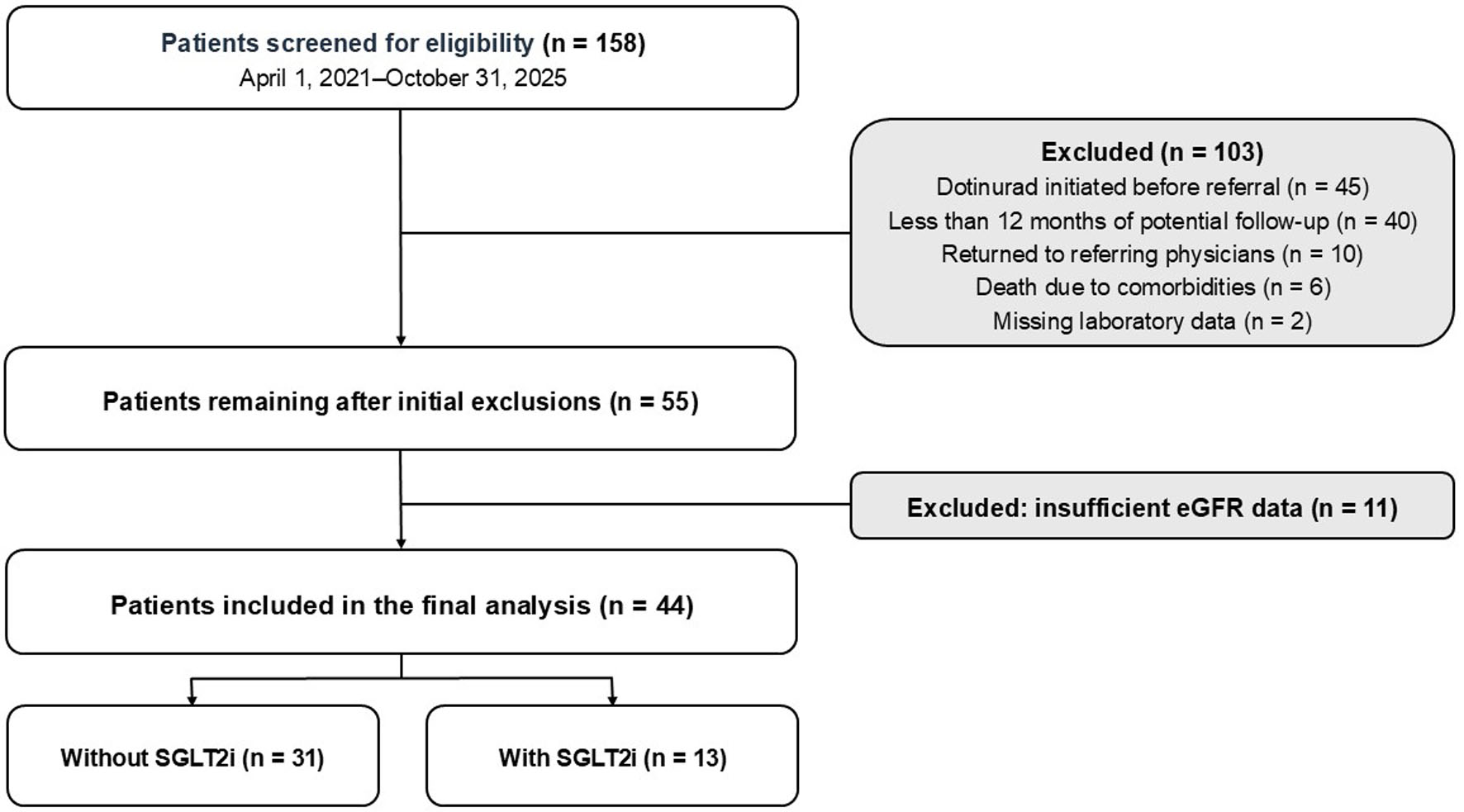 Click for large image | Figure 1. Flow diagram of patient selection. Among the 158 patients receiving dotinurad during the study period, 114 were excluded for the reasons shown in the flowchart, leaving 44 patients for the final analysis. eGFR: estimated glomerular filtration rate; SGLT2i: sodium-glucose cotransporter 2 inhibitor; UA: uric acid. |
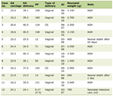 Click to view | Table 1. Baseline Characteristics of the Study Participants According to Concomitant SGLT2i Use |
Primary outcome
Dotinurad significantly reduced serum UA levels in both groups. The mean changes in serum UA levels from baseline to 12 months were −1.97 ± 1.71 and −2.94 ± 1.78 mg/dL in the SGLT2 inhibitor and non-SGLT2 inhibitor groups, respectively, showing no significant difference between the groups (P = 0.177) (Fig. 2). After adjusting for baseline serum UA level, sex, and diabetes mellitus, the adjusted between-group difference in serum UA level at 12 months was −0.026 mg/dL (95% CI, −1.130 to 1.079; P = 0.963). In a sensitivity analysis restricted to patients who initiated dotinurad de novo (n = 30; 24 without and six with concomitant SGLT2 inhibitor therapy), the adjusted between-group difference in the serum UA level at 12 months was 0.317 mg/dL (95% CI, −0.450 to 1.085; P = 0.404) after adjusting for baseline serum UA level.
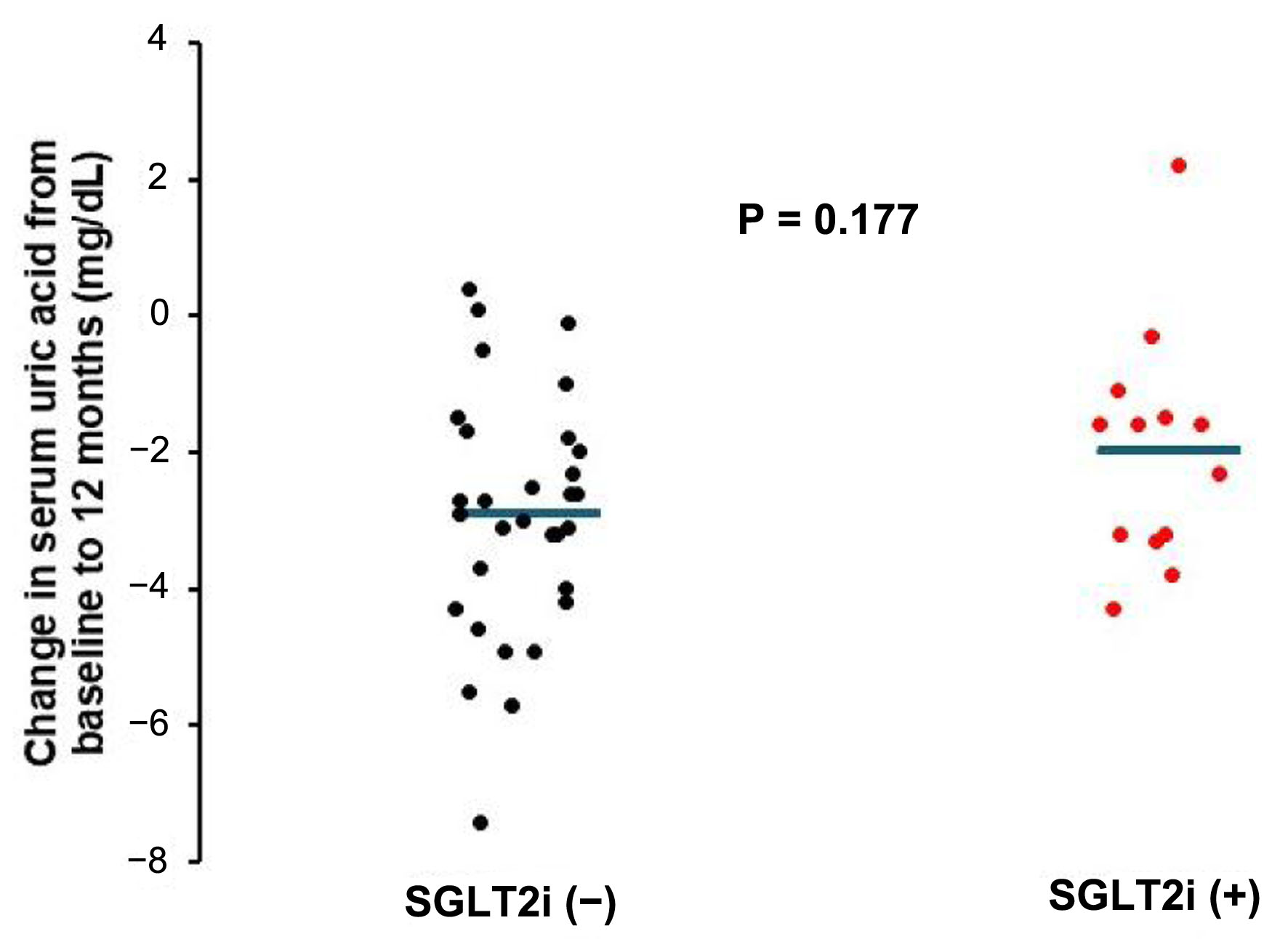 Click for large image | Figure 2. Change in the serum uric acid levels from baseline to 12 months according to concomitant SGLT2 inhibitor use. Individual dots represent individual patients. Horizontal blue bars indicate mean values. The magnitude of the reduction in serum uric acid levels did not significantly differ between patients with and without concomitant SGLT2 inhibitor use (P = 0.177). SGLT2: sodium-glucose cotransporter 2. |
Longitudinal changes in serum UA levels
The longitudinal changes in the serum UA levels are shown in Figure 3. The serum UA levels decreased markedly during the first 3 months after dotinurad treatment initiation in both groups and were maintained at lower levels throughout the remainder of the follow-up period. At 12 months, the mean serum UA levels were 6.4 ± 1.4 and 6.4 ± 1.1 mg/dL in the non-SGLT2 inhibitor and SGLT2 inhibitor groups, respectively. No significant between-group differences in the serum UA levels were observed throughout the follow-up period.
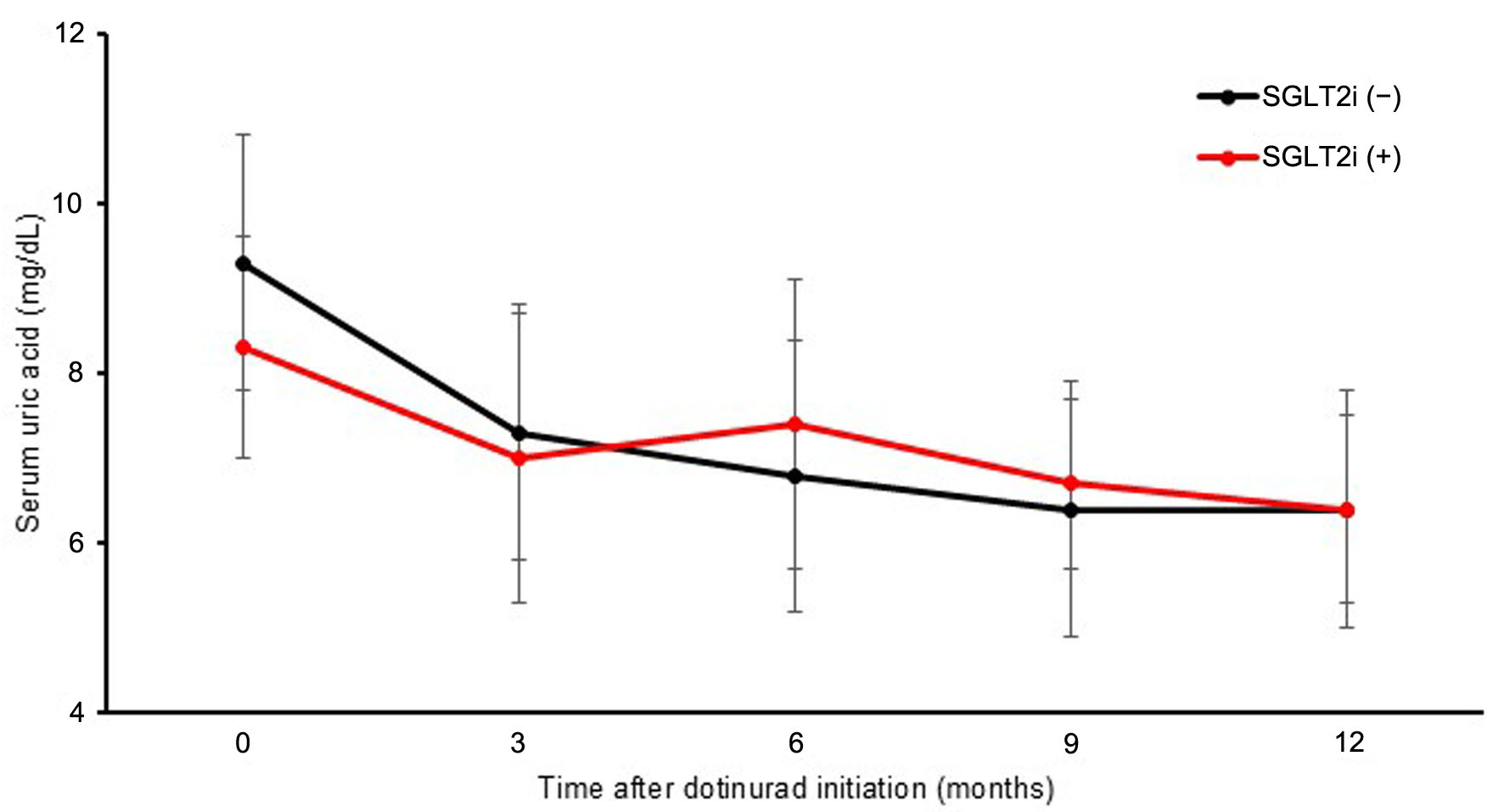 Click for large image | Figure 3. Changes in the serum uric acid levels after initiation of dotinurad treatment according to concomitant SGLT2 inhibitor use. The serum uric acid levels significantly decreased from baseline to 12 months in both patients with and without concomitant SGLT2 inhibitor use. Data are presented as mean ± standard deviation. SGLT2: sodium-glucose cotransporter 2. |
Longitudinal changes in eGFR
The longitudinal changes in eGFR before and after dotinurad treatment initiation are shown in Figure 4. The mean eGFR remained generally stable throughout the study period in both groups. At 12 months, the mean eGFRs were 48.9 ± 22.9 and 46.9 ± 35.1 mL/min/1.73 m2 in the non-SGLT2 inhibitor and SGLT2 inhibitor groups, respectively.
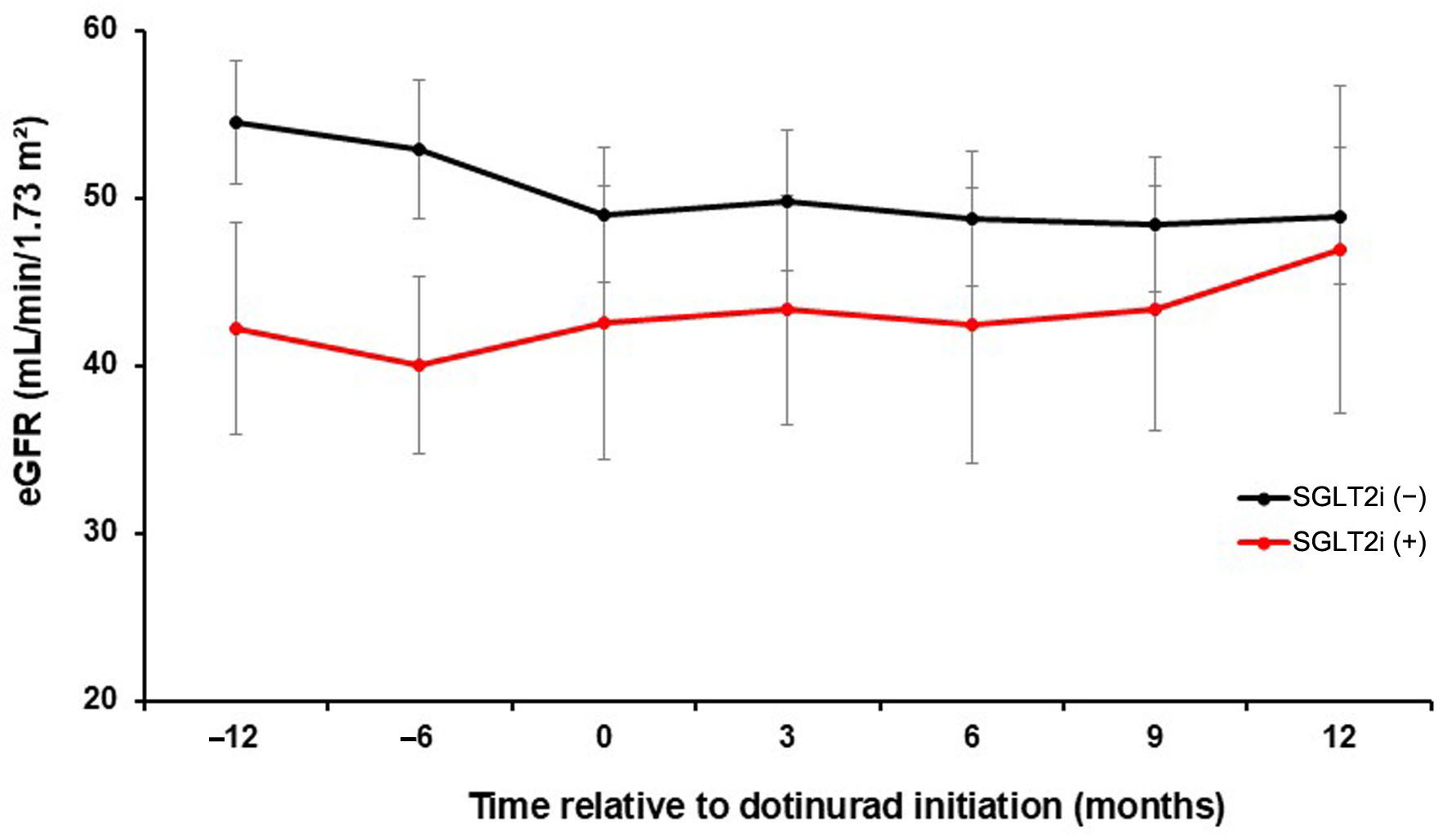 Click for large image | Figure 4. Changes in the estimated glomerular filtration rate before and after dotinurad treatment initiation according to concomitant SGLT2 inhibitor use. The estimated glomerular filtration rate was assessed from 12 months before to 12 months after dotinurad treatment initiation in patients with and without concomitant SGLT2 inhibitor use. Data are presented as mean ± SD. SGLT2: sodium-glucose cotransporter 2. |
Changes in eGFR slope
The changes in eGFR slope before and after dotinurad treatment initiation were compared between the two groups (Fig. 5). No significant between-group difference in the change in eGFR slope was observed (P = 0.837).
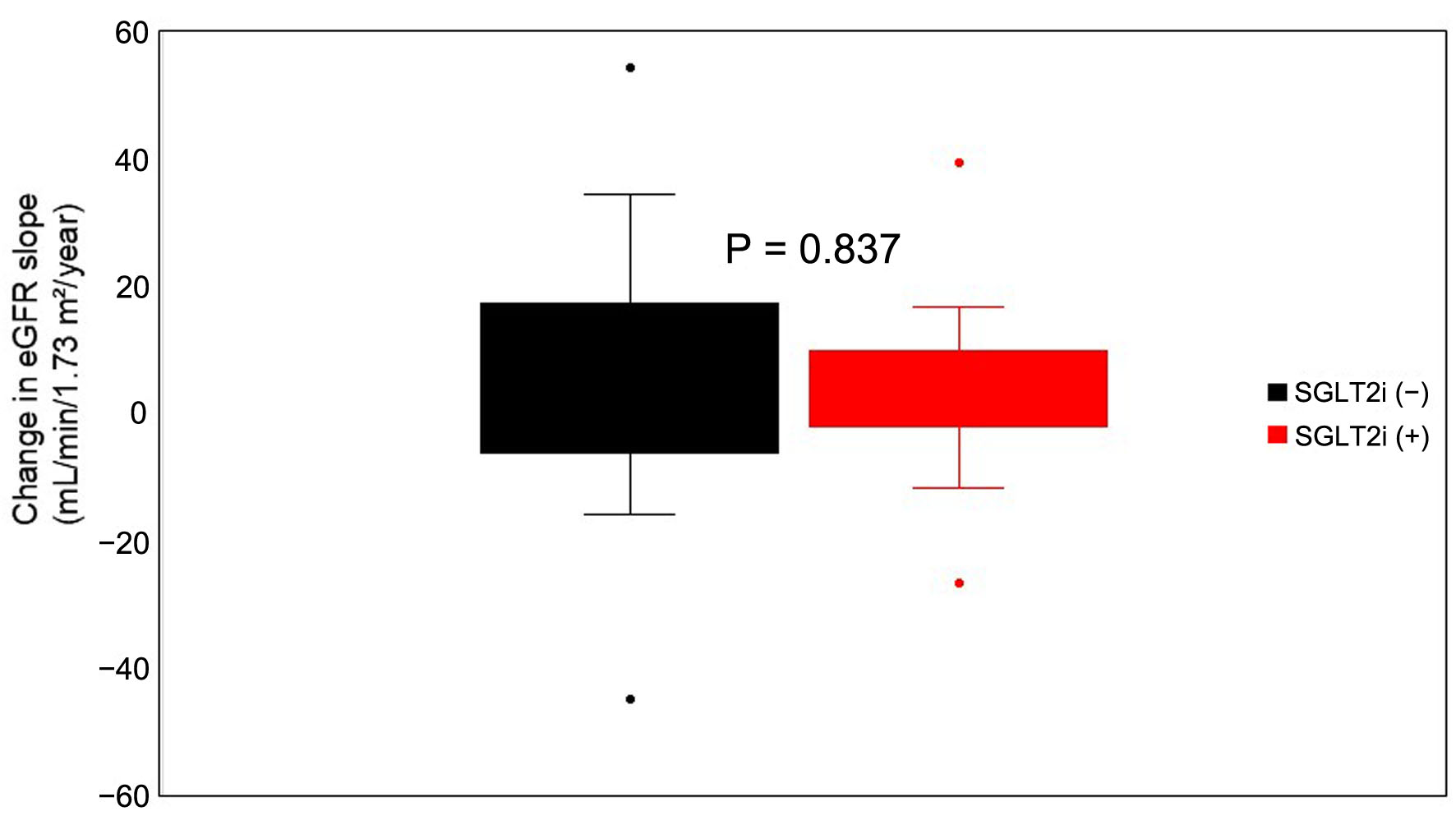 Click for large image | Figure 5. Comparison of the changes in the eGFR slope after dotinurad treatment initiation. No statistically significant between-group difference was observed in the change in the eGFR slope (P = 0.837). eGFR: estimated glomerular filtration rate; SGLT2: sodium-glucose cotransporter 2. |
Final dotinurad dose
The distribution of the final dotinurad doses was similar between the two groups (Supplementary Material 1, jocmr.elmerjournals.com).
Safety and treatment discontinuation
No discontinuation of dotinurad treatment was documented among the 158 patients screened during the study period. Among the 44 patients included in the final analysis, no renal adverse events, including acute kidney injury or hospitalization related to worsening renal function, were documented during the 12-month follow-up period.
| Discussion | ▴Top |
In this retrospective single-center cohort study, the serum UA levels decreased significantly following dotinurad initiation in patients with CKD and hyperuricemia, regardless of concomitant SGLT2 inhibitor use. After adjustment for baseline serum UA level, sex, and diabetes mellitus, the estimated between-group difference in the serum UA level at 12 months was small, although the CI was wide. The changes in eGFR slope were also assessed, but the limited sample size precludes firm conclusions regarding renal outcomes. However, these findings should not be interpreted as evidence of equivalent urate-lowering efficacy or renal safety, particularly given the small sample size and observational study design.
To interpret our study findings, it is important to consider the physiological relationship between URAT1 and SGLT2 in the proximal tubule. Dotinurad selectively inhibits URAT1, a urate transporter encoded by SLC22A12. Previous transcriptomic and immunohistochemical analyses have demonstrated that URAT1 is highly expressed in the kidney and localized to the apical membrane of proximal tubular epithelial cells, consistent with its established role as a major transporter mediating renal urate reabsorption [8, 13]. Similarly, SGLT2, encoded by SLC5A2, is also highly expressed in the kidney and localized to the apical membrane of proximal tubular epithelial cells, where it mediates the majority of renal glucose reabsorption [8, 9]. Consequently, SGLT2 inhibition increases urinary glucose excretion, exposing apical URAT1 to a glucose-rich tubular luminal environment. Additionally, SGLT2 inhibitors have consistently been shown to lower serum urate levels, as demonstrated by a recent meta-analysis of 51 randomized controlled trials, which reported a mean reduction of approximately 0.54 mg/dL compared with placebo [7]. However, it remains unclear whether this altered tubular milieu influences the urate-lowering efficacy of selective URAT1 inhibition. This knowledge gap provided the rationale for the present study.
Although the urate-lowering effect of SGLT2 inhibitors has been consistently demonstrated, its underlying mechanism remains incompletely understood [7, 10]. One proposed mechanism is that increased luminal glucose resulting from SGLT2 inhibition modulates renal urate transport through glucose-sensitive urate transporters [10, 11]. Given that GLUT9 isoform 2 has been proposed to mediate glucose-dependent urate transport through its ability to exchange glucose and urate, increased luminal glucose concentration may facilitate urinary urate excretion by altering GLUT9-mediated urate transport [11]. Additionally, previous experimental studies have suggested that SGLT2 inhibition may influence the activity or expression of other renal urate transporters, including URAT1, although the relative contribution of these pathways remains uncertain [10, 14]. Notably, Novikov et al demonstrated that the acute uricosuric effect of canagliflozin was abolished in URAT1-knockout mice, supporting a functional interaction between SGLT2 inhibition and URAT1-mediated urate transport, although the precise mechanism remains unclear [10]. Collectively, these observations suggest that the urate-lowering effects of SGLT2 inhibitors may involve multiple pathways, although the relative contributions of these pathways remain uncertain. Despite these mechanistic insights, it has remained unknown whether dotinurad maintains its urate-lowering efficacy under these conditions.
In the present study, the serum UA levels decreased significantly following dotinurad initiation in patients with CKD and hyperuricemia, regardless of concomitant SGLT2 inhibitor use. These observations are of clinical interest because SGLT2 inhibition alters the tubular environment in which URAT1-mediated urate reabsorption occurs. One possible explanation is that selective URAT1 inhibition by dotinurad may contribute to the urate-lowering effects despite the SGLT2 inhibitor-induced changes in renal urate handling. Alternatively, the urate-lowering pathways affected by dotinurad and SGLT2 inhibitors may be partly distinct, although the potential interactions between these pathways cannot be excluded [10, 14]. However, the present study did not directly assess these mechanisms, because urinary UA excretion, fractional excretion of UA, and urinary glucose were not measured. Furthermore, the absence of a statistically significant between-group difference should not be interpreted as evidence of equivalent urate-lowering efficacy or the absence of pharmacodynamic interference. Therefore, further mechanistic and prospective clinical studies are needed in the future to clarify the interaction between dotinurad and SGLT2 inhibitors.
Regarding renal function, dotinurad treatment was associated with relatively stable eGFR during the 12-month follow-up period in both groups. No significant between-group difference was observed in the change in eGFR slope after dotinurad treatment initiation. Given that the present study was primarily designed to evaluate the urate-lowering efficacy of dotinurad rather than renal outcomes, the relatively small sample size, baseline differences between groups, and limited follow-up period may have reduced the ability to detect differences in the decline of kidney function. However, these findings should not be interpreted as evidence of renal safety, given the limited sample size and observational nature of the present study. This observation is consistent with previous reports demonstrating that dotinurad can be administered without an apparent deterioration in renal function in CKD patients [4, 15]. Further prospective studies with larger cohorts and longer follow-up are warranted to clarify the long-term effects of concomitant treatment with dotinurad and SGLT2 inhibitors on renal function.
This study has several limitations. First, the present investigation was a retrospective single-center study with a relatively small sample size, particularly in the SGLT2 inhibitor group, which may have limited the study’s statistical power to detect modest differences between groups. Second, the patient’s baseline characteristics differed between the two groups, including the prevalence of diabetes mellitus, sex distribution, and baseline serum urate levels, raising the possibility of residual confounding. Third, because the primary objective of the present study was to evaluate the urate-lowering efficacy of dotinurad, mechanistic parameters, including urinary UA excretion, fractional excretion of UA, and urinary glucose excretion, were not assessed. Consequently, the present findings do not establish whether dotinurad and SGLT2 inhibitors exert complementary urate-lowering mechanisms or whether pharmacodynamic interactions occur between these agents. Fourth, some patients switched from other urate-lowering agents or received concomitant urate-lowering therapy, which may have confounded the evaluation of dotinurad’s urate-lowering efficacy. Additionally, the requirement for 12-month follow-up measurements resulted in the exclusion of patients with insufficient follow-up duration or unavailable data, including those who returned to their referring physicians or died during follow-up. This may have introduced selection bias and limited the generalizability of our study findings. Finally, the 12-month follow-up period may have been insufficient to evaluate the long-term effects of combination therapy on renal outcomes. Therefore, larger prospective multicenter studies with longer follow-up are warranted to confirm our study findings.
Conclusion
Dotinurad was associated with reductions in serum urate levels in patients with CKD and hyperuricemia, regardless of concomitant SGLT2 inhibitor use. Although the adjusted between-group difference in serum urate level at 12 months was small, the limited sample size and potential for residual confounding preclude definitive conclusions regarding comparative urate-lowering efficacy or renal safety. Larger prospective studies are warranted to confirm these findings.
| Supplementary Material | ▴Top |
Suppl 1. Final dotinurad dose at 12 months according to concomitant SGLT2 inhibitor use.
Acknowledgments
Not applicable.
Financial Disclosure
No funding was received for this study.
Conflict of Interest
The authors declare no conflict of interest.
Informed Consent
The requirement for written informed consent was waived because of the study’s retrospective study design, and an opt-out approach was adopted.
Author Contributions
MH designed the study, collected the data, performed the statistical analysis, and drafted the manuscript. SO, KS, and AO contributed to data collection and manuscript revision. SY critically revised the manuscript. All authors approved the final manuscript.
Data Availability
The datasets generated and analyzed during the current study are not publicly available because they contain information that could compromise the privacy of research participants but are available from the corresponding author on reasonable request.
| References | ▴Top |
- Johnson RJ, Bakris GL, Borghi C, Chonchol MB, Feldman D, Lanaspa MA, Merriman TR, et al. Hyperuricemia, acute and chronic kidney disease, hypertension, and cardiovascular disease: report of a scientific workshop organized by the national kidney foundation. Am J Kidney Dis. 2018;71(6):851-865.
doi pubmed - Richette P, Perez-Ruiz F, Doherty M, Jansen TL, Nuki G, Pascual E, Punzi L, et al. Improving cardiovascular and renal outcomes in gout: what should we target? Nat Rev Rheumatol. 2014;10(11):654-661.
doi pubmed - Hosoya T, Sano T, Sasaki T, Fushimi M, Ohashi T. Clinical efficacy and safety of dotinurad, a novel selective urate reabsorption inhibitor, in Japanese hyperuricemic patients with or without gout: randomized, multicenter, double-blind, placebo-controlled, parallel-group, confirmatory phase 2 study. Clin Exp Nephrol. 2020;24(Suppl 1):53-61.
doi pubmed - Takata T, Taniguchi S, Mae Y, Kageyama K, Fujino Y, Iyama T, Hikita K, et al. Comparative assessment of the effects of dotinurad and febuxostat on the renal function in chronic kidney disease patients with hyperuricemia. Sci Rep. 2025;15(1):8990.
doi pubmed - Kidney Disease: Improving Global Outcomes C. K. D. Work Group. KDIGO 2024 clinical practice guideline for the evaluation and management of chronic kidney disease. Kidney Int. 2024;105(4S):S117-S314.
doi pubmed - The E-KCG, Herrington WG, Staplin N, Wanner C, Green JB, Hauske SJ, Emberson JR, et al. Empagliflozin in patients with chronic kidney disease. N Engl J Med. 2023;388(2):117-127.
doi pubmed - Yang S, Hu Q, Liu K, Xiao B, Zhang B, Su N. Serum uric acid reduction through SGLT2 inhibitors: evidence from a systematic review and meta-analysis. Front Pharmacol. 2025;16:1551390.
doi pubmed - Habuka M, Fagerberg L, Hallstrom BM, Kampf C, Edlund K, Sivertsson A, Yamamoto T, et al. The kidney transcriptome and proteome defined by transcriptomics and antibody-based profiling. PLoS One. 2014;9(12):e116125.
doi pubmed - Vallon V, Thomson SC. Targeting renal glucose reabsorption to treat hyperglycaemia: the pleiotropic effects of SGLT2 inhibition. Diabetologia. 2017;60(2):215-225.
doi pubmed - Novikov A, Fu Y, Huang W, Freeman B, Patel R, van Ginkel C, Koepsell H, et al. SGLT2 inhibition and renal urate excretion: role of luminal glucose, GLUT9, and URAT1. Am J Physiol Renal Physiol. 2019;316(1):F173-F185.
doi pubmed - Chino Y, Samukawa Y, Sakai S, Nakai Y, Yamaguchi J, Nakanishi T, Tamai I. SGLT2 inhibitor lowers serum uric acid through alteration of uric acid transport activity in renal tubule by increased glycosuria. Biopharm Drug Dispos. 2014;35(7):391-404.
doi pubmed - Kanda Y. Investigation of the freely available easy-to-use software 'EZR' for medical statistics. Bone Marrow Transplant. 2013;48(3):452-458.
doi pubmed - Chung S, Kim GH. Urate transporters in the kidney: What clinicians need to know. Electrolyte Blood Press. 2021;19(1):1-9.
doi pubmed - Dong M, Chen H, Wen S, Yuan Y, Yang L, Xu D, Zhou L. The mechanism of sodium-glucose cotransporter-2 inhibitors in reducing uric acid in type 2 diabetes mellitus. Diabetes Metab Syndr Obes. 2023;16:437-445.
doi pubmed - Motomura T, Higashi M, Hattori A, Akiyama R, Kai H. Efficacy and safety of dotinurad in patients with advanced chronic kidney disease. Intern Med. 2026;65(6):788-794.
doi pubmed
This article is distributed under the terms of the Creative Commons Attribution 4.0 International License (CC BY 4.0), which permits unrestricted use, distribution, and reproduction in any medium, including commercial use, provided the original work is properly cited.
Journal of Clinical Medicine Research is published by Elmer Press Inc.