

Rhabdomyolysis and Acute Kidney Injury: A Retrospective Cohort Study at a Tertiary University Hospital
DOI:
https://doi.org/10.14740/jocmr6533Keywords:
Rhabdomyolysis, AKI, KRT, Myoglobin, Urine pHAbstract
Background: Rhabdomyolysis is a serious condition caused by rapid skeletal muscle breakdown, releasing substances like creatine kinase (CK) and myoglobin into the blood. If not recognized or treated, it can lead to acute kidney injury (AKI), which significantly increases health risks. This study systematically examines the epidemiology, causes, and key kidney-related outcomes of rhabdomyolysis at a tertiary university hospital.
Methods: We performed a retrospective observational cohort study at the University Hospital Brandenburg, Germany, including hospitalized patients from January 1, 2023, to December 31, 2024. Inclusion required a total CK activity ≥ 500 U/L, a threshold reported in the literature to indicate increased risk for clinically relevant kidney dysfunction. Clinical endpoints were AKI as defined by the Kidney Disease: Improving Global Outcomes (KDIGO) criteria (2012), the need for kidney replacement therapy (KRT) and recovery of kidney function (ROKF).
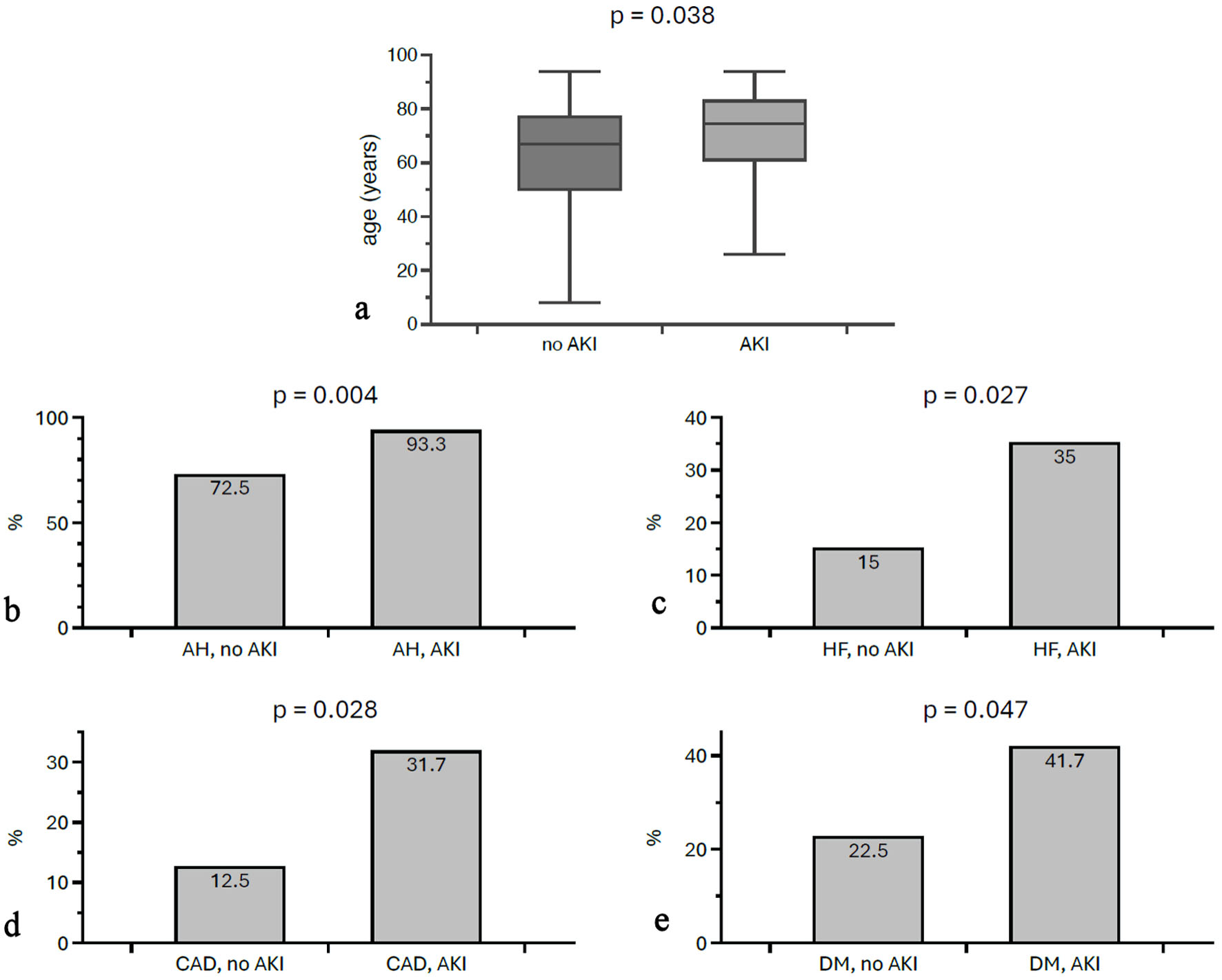
Results: Of 100 included patients (mean age 67.1 ± 19.4 years; 37% female), 60% developed AKI (KDIGO 1: 25.0%, 2: 36.7%, 3: 38.3%). AKI was significantly associated with higher age, cardiovascular/metabolic comorbidities, and elevated inflammatory and myoglobin markers. Lower urine pH in AKI patients suggests a role for aciduria in renal injury. While 49% of AKI patients showed renal recovery, 12% of the total cohort required KRT. KRT requirement was associated with younger age and higher creatinine levels, but not with peak CK or myoglobin values. Absent or incomplete renal recovery was significantly linked only to higher initial and peak creatinine levels.
Conclusions: In this tertiary university care cohort, AKI was common among rhabdomyolysis patients, especially older individuals and those with cardiovascular or metabolic conditions. Inflammatory markers, myoglobin levels, and urine pH were key predictors of AKI. Despite intensive care, many required KRT and experienced incomplete renal recovery. Early diagnosis, risk stratification, and standardized criteria are needed to improve outcomes.
Published
Issue
Section
License
Copyright (c) 2026 The authors

This work is licensed under a Creative Commons Attribution 4.0 International License.