

Efficacy and Safety of Regional Citrate Anticoagulation in Neurocritical Care Patients With Chronic Severe Hypernatremia Undergoing Continuous Renal Replacement Therapy: A Single-Center Retrospective Study
DOI:
https://doi.org/10.14740/jocmr6321Keywords:
Continuous renal replacement therapy, Chronic severe hypernatremia, Neurocritical care patients, Regional citrate anticoagulation, High risk of bleedingAbstract
Background: Hypernatremia is a common complication among neurocritical care patients. This study aimed to investigate the effectiveness and safety of regional citrate anticoagulation (RCA) vs. no anticoagulation (NA) in neurocritical patients receiving continuous renal replacement therapy (CRRT) who also had chronic severe hypernatremia and an elevated risk of bleeding.
Methods: From March 2020 to August 2024, electronic medical records of neuro-critically ill patients who underwent CRRT for chronic severe hypernatremia with elevated risk of bleeding at Henan Provincial People’s Hospital’s neurocritical intensive care unit (ICU) were retrospectively analyzed. Patients were divided into RCA (n = 70) and NA (n = 28) groups. The key effectiveness objective was the mean serum sodium correction, while the primary safety event was the occurrence of common anticoagulant adverse events. Original cohorts were matched using propensity score matching (PSM) between two groups (n = 21). Risk factors impacting the initial filter lifespan were analyzed using Cox proportional risk regression model.
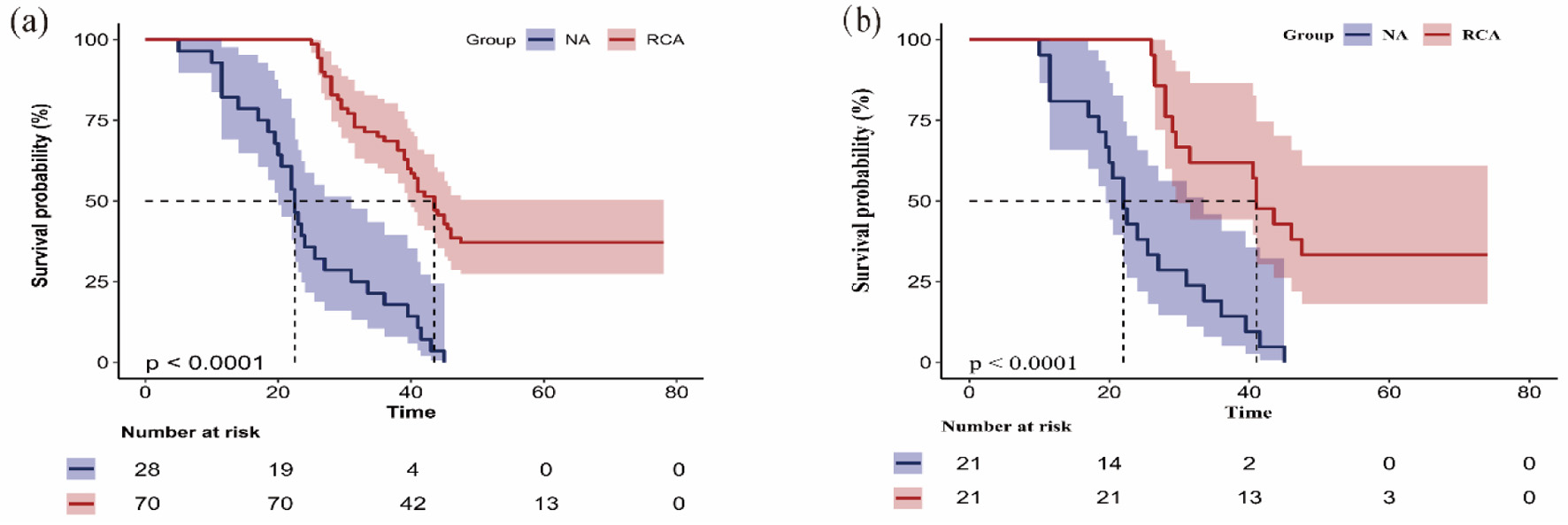
Results: Both groups achieved similar sodium correction rates (0.5 ± 0.1 mmol/L/h). The RCA group had a lower incidence of both hemorrhagic (6/70 (8.6%) and 8/28 (28.6%), P = 0.021) and filter coagulation (0/70 (0%) and 17/28 (60.7%), P < 0.001) adverse events. After performing Kaplan-Meier curve and multivariable Cox regression, RCA was identified as an independent protective factor for first filter lifespan (hazard ratio (HR) = 0.09, 95% confidence interval (CI), 0.05–0.18).
Conclusion: RCA is safer and equally effective as NA for CRRT in neurocritical patients with chronic severe hypernatremia, reducing bleeding and filter clotting risks. While our retrospective study suggests that RCA is a safe and effective strategy in this population, the findings require validation in a large-scale, randomized controlled trial to establish conclusive evidence.
Published
Issue
Section
License
Copyright (c) 2026 The authors

This work is licensed under a Creative Commons Attribution 4.0 International License.