

Usefulness of Blood Rheology as a Predictor of Primary Cardiovascular Disease Events in Patients With Stage G3 Chronic Kidney Disease
DOI:
https://doi.org/10.14740/jocmr6541Keywords:
Blood rheology, Whole blood passage time, Chronic kidney disease stage G3, Cardiovascular events, Augmentation index, Skin autofluorescence, Renin–angiotensin system inhibitor, Prospective studyAbstract
Background: Several studies have highlighted that impairment of blood rheology plays a crucial role in the development of cardiovascular disease (CVD) and arteriosclerosis. However, the value of blood rheology as a potential predictor of the development of CVD in patients with chronic kidney disease (CKD) remains unknown. The objective of this prospective study was to investigate the utility of blood rheology using whole blood passage time (WBPT) as a predictor of primary CVD events in patients with stage G3 CKD, which is often encountered in daily practice.
Methods: This study involved 417 outpatients with stage G3 CKD (male/female: 144/273) without history of CVD. WBPT was measured by microchannel array flow analyzer as a commercial device. Subsequently, the author evaluated the effectiveness of WBPT for the prediction of primary CVD events, which were defined as major adverse cardiovascular events (MACEs, i.e., cardiovascular death, nonfatal ischemic heart disease, and non-fatal ischemic stroke).
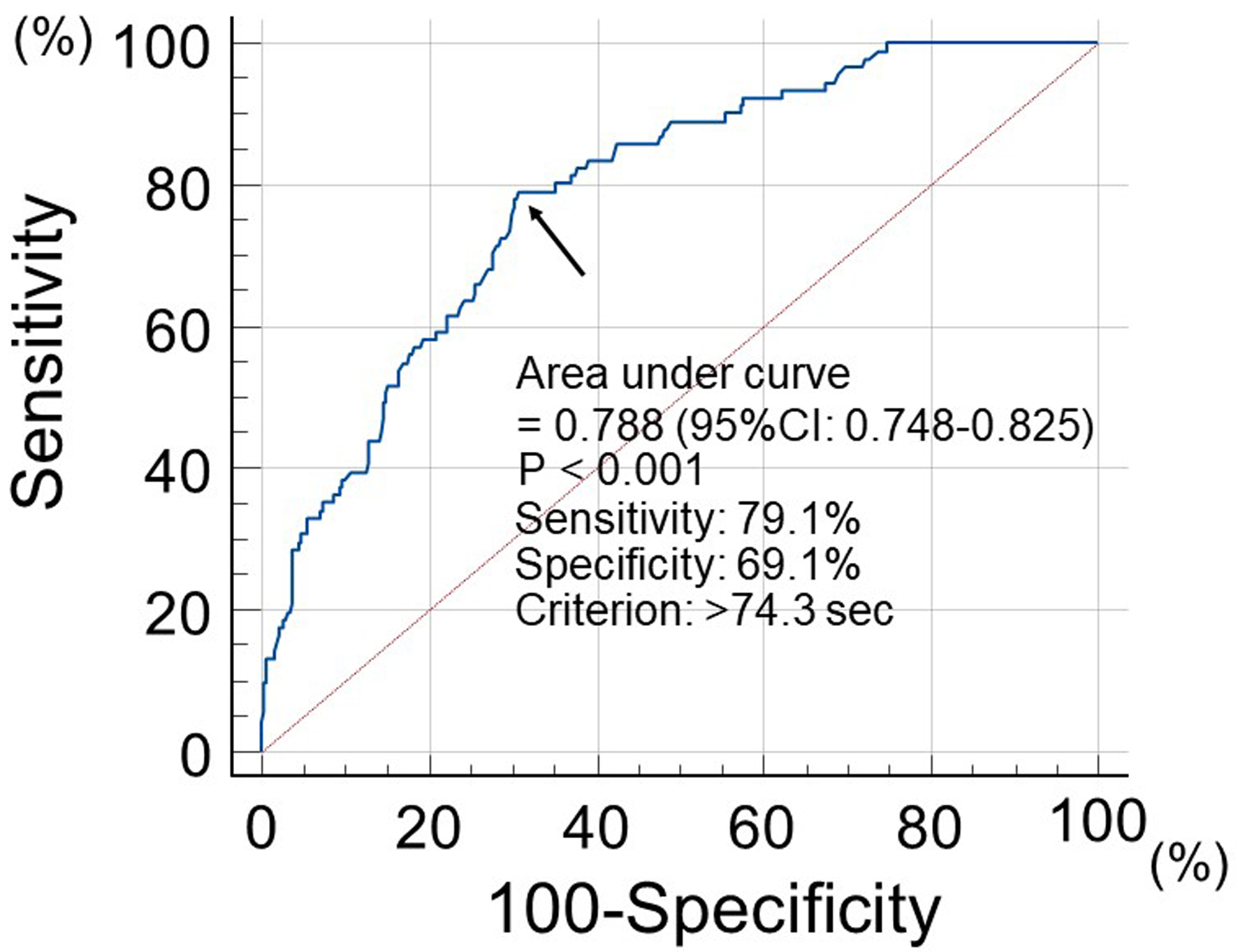
Results: Patients were assigned into two groups according to the WBPT cut-off value, which was estimated by receiver operating characteristic curve analysis: low (group L, WBPT ≤ 74.3 s; n = 255) or high (group H, WBPT > 74.3 s; n = 162). During the median follow-up period of 76 months (range: 2–96 months), MACEs occurred in 74 patients (group L: n = 17 (6.7%) vs. group H: n = 57 (35.2%); P < 0.001, log-rank test). Multivariate Cox regression analysis revealed that patients in group H were at a significantly higher risk of developing MACEs than those in group L (hazard ratio: 3.89; 95% confidence interval: 2.12–7.10; P < 0.001).
Conclusions: The present findings showed that impairment of blood rheology, determined using WBPT, is predictive of primary CVD events in patients with stage G3 CKD. Further large-scale studies are warranted to confirm whether various interventions can reduce the incidence of primary CVD events with improved WBPT in patients with stage G3 CKD.
Published
Issue
Section
License
Copyright (c) 2026 The authors

This work is licensed under a Creative Commons Attribution 4.0 International License.