

Sodium-Glucose Cotransporter-2 Inhibitor–Associated Ketoacidosis in the Real World: Not a Rare Complication
DOI:
https://doi.org/10.14740/jocmr6615Keywords:
SGLT2 inhibitors, Diabetic ketoacidosis, Euglycemic ketoacidosis, Dapagliflozin, Empagliflozin, Type 2 diabetes mellitusAbstract
Background: Sodium-glucose cotransporter-2 inhibitors (SGLT2is) are used for the treatment of diabetes mellitus, heart failure, and chronic renal failure. SGLT2i-associated ketoacidosis (SGLT2i-KA) may present with euglycemia or hyperglycemia and is a rare, life-threatening medical emergency. The aim of the study was to characterize adults hospitalized with SGLT2i-KA and compare their presentation and outcomes with those of patients hospitalized with diabetic ketoacidosis (DKA) unrelated to SGLT2i exposure.
Methods: This retrospective single-center study included 74 adults with SGLT2i-KA and 283 adults with DKA admitted between January 1, 2017, and April 1, 2023. Demographic characteristics, precipitating factors, laboratory findings, treatment complications, length of stay, missed clinical recognition, and in-hospital mortality were compared.
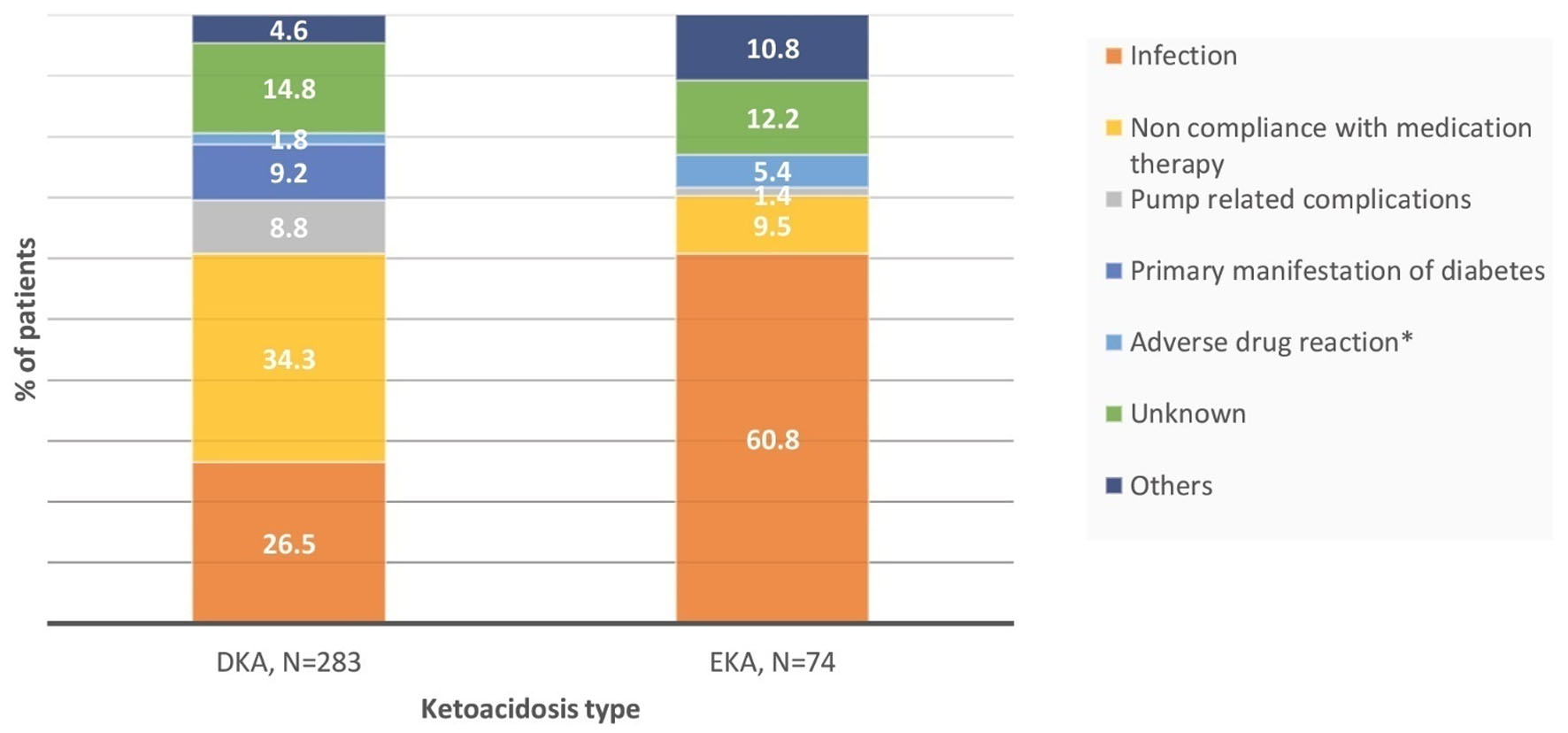
Results: Patients with SGLT2i-KA were older than those with DKA (median 65.0 vs. 34.0 years; P < 0.001) and were more often male (54.1% vs. 34.6%; P = 0.002). Infection was the predominant precipitating factor (60.8% vs. 26.5%; P < 0.001). Presenting glucose was lower in the SGLT2i-KA group (median 240 vs. 467 mg/dL; P < 0.001), while bicarbonate and anion gap did not differ significantly. Hospitalization was longer (median 6.11 vs. 3.83 days; P < 0.001), and unadjusted in-hospital mortality was higher (9.5% vs. 1.4%; P < 0.001). Ketoacidosis was not recognized by the treating team in 27 of 74 SGLT2i-exposed patients (36.5%), however with no effect on length of hospital stay or mortality.
Conclusion: SGLT2i-KA accounted for a substantial proportion of ketoacidosis admissions in this cohort and was frequently unrecognized. Ketone and acid-base assessment should be considered in acutely ill patients receiving SGLT2i even when marked hyperglycemia is absent.
Published
Issue
Section
License
Copyright (c) 2026 The authors

This work is licensed under a Creative Commons Attribution 4.0 International License.