

Comparative Efficacy and Safety of Corticosteroids vs. No Corticosteroids in Septic Shock Intensive Care Unit Patients: A Systematic Review and Meta-Analysis
DOI:
https://doi.org/10.14740/jocmr6631Keywords:
Septic shock, Corticosteroids, Hydrocortisone, Mortality, Meta-analysis, Intensive care, Vasopressor supportAbstract
Background: Septic shock carries a high intensive care unit (ICU) mortality. The role of adjunctive corticosteroid therapy is controversial, with conflicting signals from trial-level meta-analyses, individual patient data syntheses, and large randomized trials. This review aimed to assess the comparative efficacy and safety of systemic corticosteroids versus no corticosteroids in adult ICU patients with septic shock.
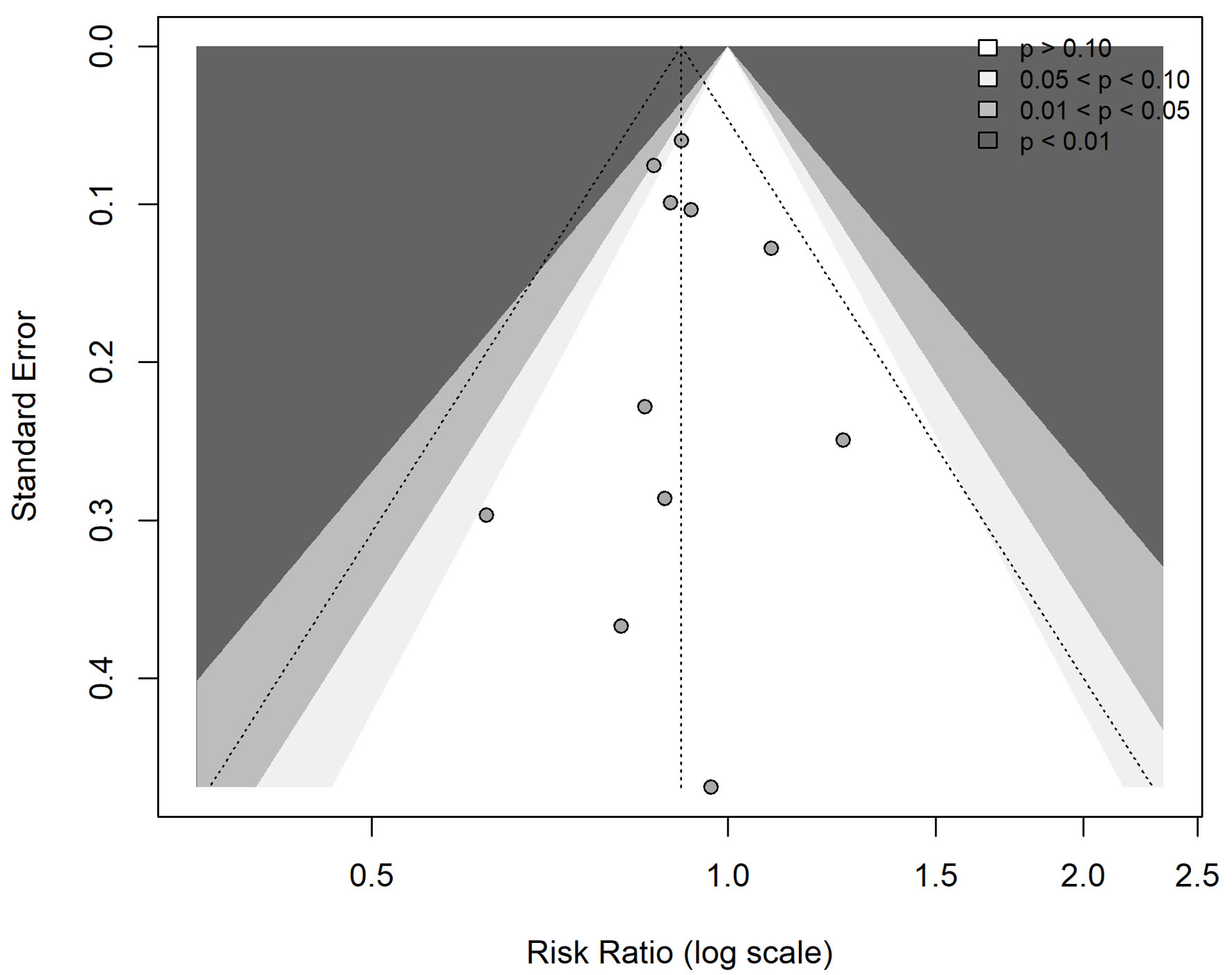
Methods: Following the PRISMA 2020 guidelines, MEDLINE, Embase, CENTRAL, and Scopus were searched from inception, supplemented by trial registry and gray literature searches, for randomized trials of systemic corticosteroids versus placebo or standard care in adults with septic shock. Pooling used a random-effects model with restricted maximum likelihood estimation and Hartung–Knapp–Sidik–Jonkman adjustment. The Risk of Bias 2 and Grading of Recommendations, Assessment, Development, and Evaluation (GRADE) frameworks were used for the methodological appraisal. Heterogeneity was quantified using I2, τ2, and 95% prediction intervals. Publication bias was assessed using contour-enhanced funnel plots, Egger’s regression test, and the Duval–Tweedie trim-and-fill method.
Results: Eleven randomized controlled trials (RCTs) (n = 6,332; 1,929 deaths) were included. Corticosteroids reduced 28-day all-cause mortality by 8.7% relative to control (pooled risk ratio (RR) 0.91, 95% confidence interval (CI) 0.86–0.97; P = 0.008; I2 = 0%; prediction interval 0.84–0.99), corresponding to 27 fewer deaths per 1,000 (10–44 fewer). Time to shock reversal was shortened by 1.25 days (95% CI −2.09 to −0.41), with the standardized mean difference (SMD) sensitivity analysis confirming a robust effect (SMD −0.41, 95% CI −0.51 to −0.32). Shock reversal incidence (RR 1.08, 0.99–1.19) and ICU length of stay (LOS) (mean difference (MD) −2.07 days, −6.50 to 2.36) favored corticosteroids without reaching significance. Hyperglycemia occurred more frequently in the corticosteroid arm of every contributing trial. Egger’s test (P = 0.972) and trim-and-fill imputation provided no evidence of small-study effects. GRADE certainty was moderate for mortality and shock reversal incidence, high for time to shock reversal, and low for ICU LOS and hyperglycemia.
Conclusion: Corticosteroid therapy in adults with septic shock was associated with a reduction in 28-day mortality and with accelerated shock reversal, with no evidence of publication bias. The direction of effect was consistent across pre-specified subgroups but was offset by a consistent excess of hyperglycemia, reinforcing the need for vigilant glucose surveillance during corticosteroid administration.
Published
Issue
Section
License
Copyright (c) 2026 The authors

This work is licensed under a Creative Commons Attribution 4.0 International License.