

Blood Count-Based Inflammatory Indices Do Not Improve Prediction of Acute Kidney Injury in Cardiogenic Shock
DOI:
https://doi.org/10.14740/jocmr6666Keywords:
Acute kidney injury, Biomarkers, Cardiogenic shock, Critical care, Risk assessmentAbstract
Background: Acute kidney injury (AKI) is common in cardiogenic shock and is associated with poor outcomes. Whether routinely available inflammatory indices add useful information for AKI risk stratification in this population remains unclear.
Methods: We performed a retrospective multicenter cohort study using the eICU Collaborative Research Database. Adult intensive care unit (ICU) patients with cardiogenic shock were included if laboratory components required to calculate inflammatory indices were available. All indices were derived from a single set of laboratory values obtained on ICU admission rather than from serial measurements. AKI was defined using creatinine-based Kidney Disease: Improving Global Outcomes criteria and renal replacement therapy status. We evaluated neutrophil to lymphocyte ratio, platelet to lymphocyte ratio, monocyte to lymphocyte ratio, systemic immune-inflammation index, systemic inflammation response index, aggregate index of systemic inflammation, and neutrophil percentage to albumin ratio. Missing covariate data were handled using multiple imputation. Multivariable logistic regression, false discovery rate correction, elastic-net analysis, calibration, and decision-curve analysis were used to assess associations and incremental discrimination.
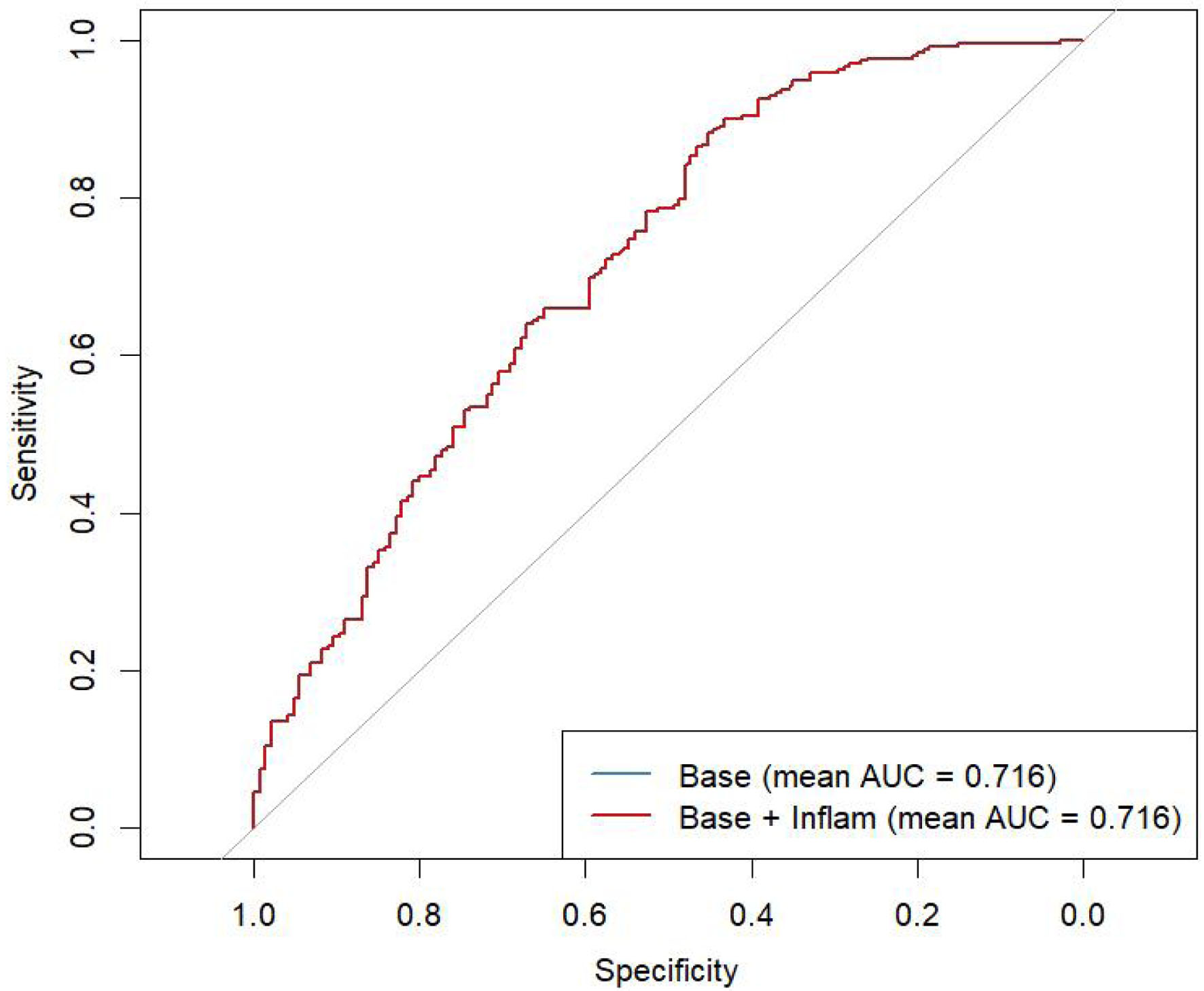
Results: The final cohort included 419 patients, of whom 273 (65.1%) developed AKI. Baseline creatinine was the strongest variable associated with AKI in the primary multivariable model. Chronic kidney disease was associated with AKI when creatinine and blood urea nitrogen were excluded. Inflammatory indices were not independently associated with AKI after multivariable adjustment and false discovery rate correction. The base clinical model had modest discrimination, which improved after adding renal laboratory variables. Adding inflammatory indices provided little to no meaningful incremental discrimination, and inflammatory indices were not consistently retained in elastic-net models.
Conclusion: In this multicenter ICU cohort of patients with cardiogenic shock, AKI was associated mainly with baseline renal dysfunction and illness severity. Routine inflammatory indices did not provide meaningful incremental discrimination beyond established clinical and renal variables for AKI during ICU hospitalization. These findings apply to blood count-derived indices and do not exclude a contribution of inflammation to AKI in cardiogenic shock.
Published
Issue
Section
License
Copyright (c) 2026 The authors

This work is licensed under a Creative Commons Attribution 4.0 International License.