Prediction Model for Detecting Active Pulmonary Tuberculosis in Patients With Head and Neck Cancer Prior to Concurrent Chemoradiotherapy
DOI:
https://doi.org/10.14740/jocmr6634Keywords:
Logistic models, Body mass index, Hemoglobin, Serum albumin, DiagnosisAbstract
Background: Patients with cancer, particularly those with head and neck cancer (HNC), have a higher risk of developing active pulmonary tuberculosis (PTB) than the general population. Radiotherapy or concurrent chemoradiotherapy (CCRT) is a primary treatment modality for HNC. Therefore, the detection of active PTB before treatment is important. However, routine testing in all patients is not feasible. We aimed to develop a diagnostic prediction model for active PTB using routinely available pretreatment clinical and laboratory parameters in patients with HNC prior to radiotherapy.
Methods: We performed a diagnostic prediction study with a retrospective, cross-sectional design using medical record reviews of all patients diagnosed with HNC who underwent radiotherapy at the Radiation Therapy Unit, Buddhachinaraj Phitsanulok Hospital, Phitsanulok, Thailand, from October 2014 to October 2025. Active PTB was defined as the initiation of anti-tuberculosis treatment with microbiological confirmation (acid-fast bacilli smear microscopy, culture, or nucleic acid amplification testing/GeneXpert) and/or chest imaging compatible with active PTB. Multivariable logistic regression was performed to derive the models. Discrimination was measured using the area under the receiver operating characteristic curve (AuROC); calibration was assessed using calibration plots, and internal validation was performed using bootstrap resampling. Decision curve analysis was used to determine clinical utility.
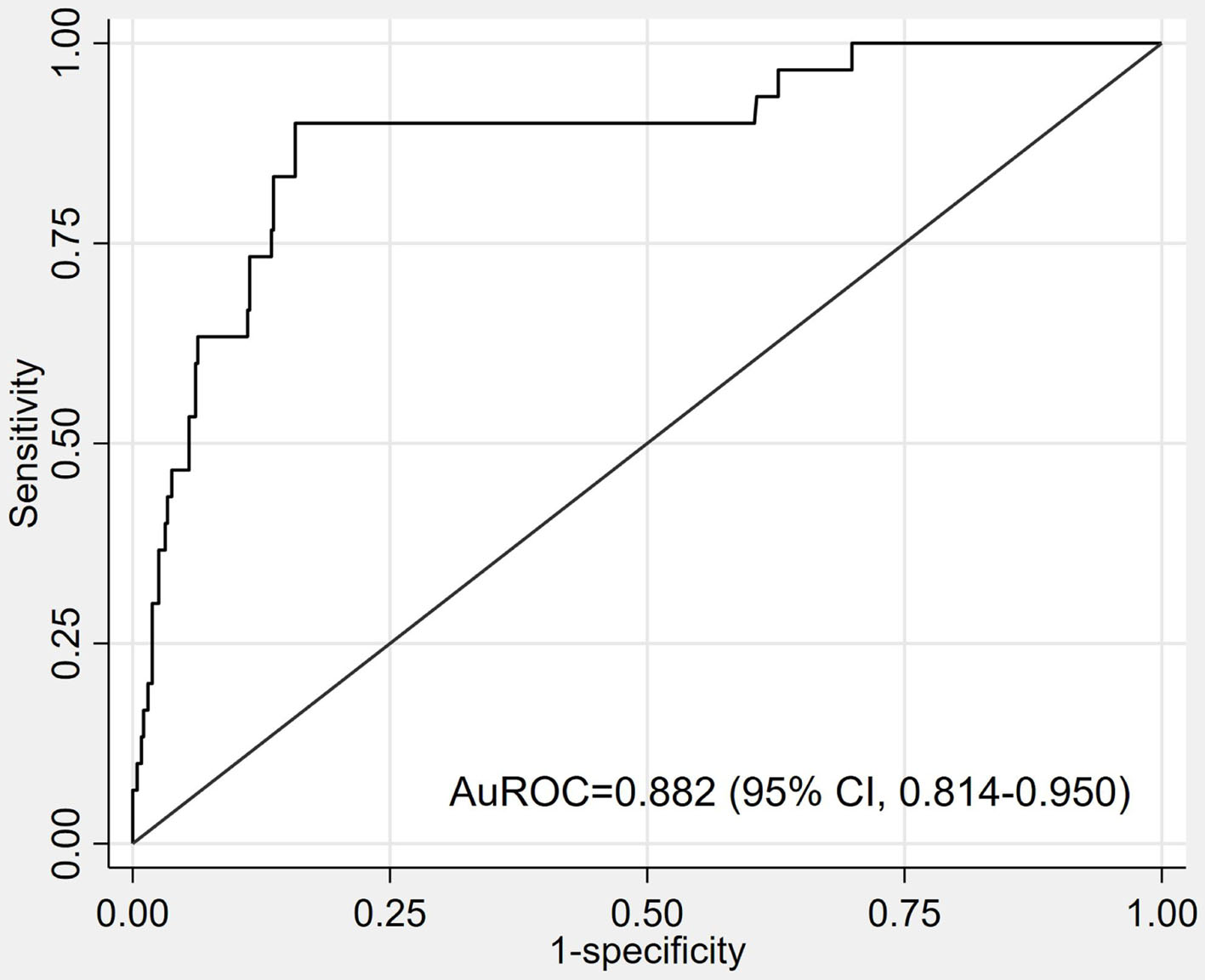
Results: Of the 505 patients with HNC, 30 (5.94%) had active PTB. Four predictors independently associated with active PTB were body mass index (BMI) (odds ratio (OR) 0.86; 95% confidence interval (CI) 0.75–0.99), hemoglobin (OR 0.75; 95% CI 0.58–0.95), albumin (OR 0.25; 95% CI 0.12–0.53), and cancer symptom duration (months) (OR 1.49; 95% CI 1.25–1.76). The model showed excellent discrimination (AuROC 0.882; 95% CI 0.814–0.950) and good calibration (slope 1.000). At a predicted probability cutoff (≥ 5.94%), sensitivity was 90.0% (95% CI 73.5–97.9) and specificity was 82.3% (95% CI 78.6–85.6). The model may reduce the number of patients requiring confirmatory PTB testing, missing only three of 505 patients (0.6%) overall.
Conclusions: In patients with HNC undergoing pretreatment evaluation, a simple four-variable model (BMI, hemoglobin level, albumin concentration, and cancer symptom duration) can estimate the probability of active PTB.
Published
Issue
Section
License
Copyright (c) 2026 The authors

This work is licensed under a Creative Commons Attribution 4.0 International License.