


Klotho Gene Single-Nucleotide Polymorphism and Proteinuria in a General Population
DOI:
https://doi.org/10.14740/jocmr6669Keywords:
Klotho, SNP, Proteinuria, Chronic kidney disease, Genetic epidemiology, JapaneseAbstract
Background: Chronic kidney disease (CKD) is a major condition with a substantial sociomedical and economic burden. Klotho plays a role in renal protection via its antioxidant and anti-inflammatory properties. Proteinuria is an early indicator of CKD. Although experimental studies have demonstrated the biological effects of Klotho in CKD, its clinical relevance to proteinuria remains unclear.
Methods: The present study investigated the association between the A/T alleles of the Klotho gene rs650439 single-nucleotide polymorphism (SNP) and proteinuria in a general Japanese population. Clinical and genotyping data from a total of 916 community-dwelling participants (mean age = 63 years old) were analyzed.
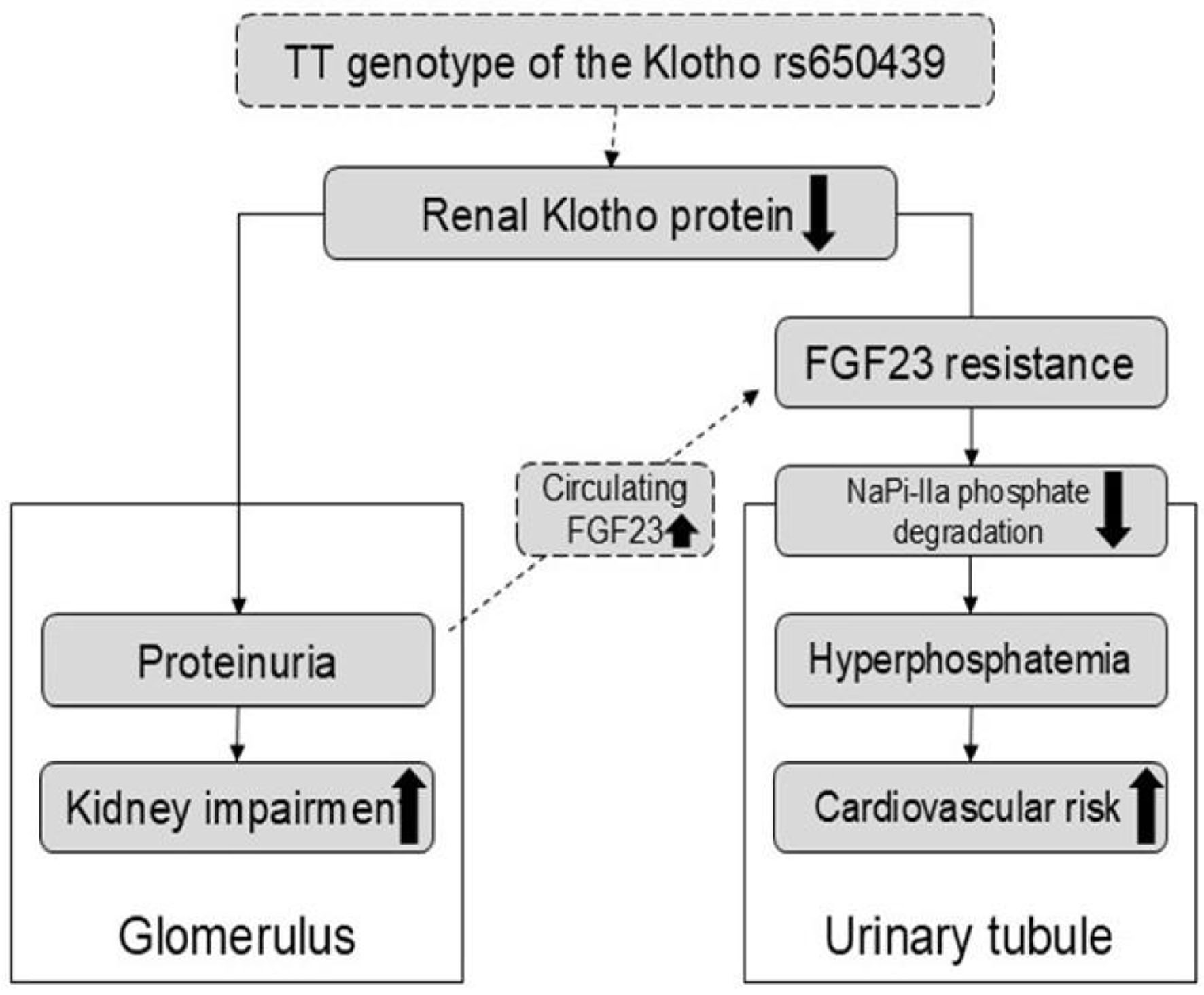
Results: Participants carrying the minor TT genotype accounted for 13.2% of the population. The prevalence of proteinuria was significantly higher in the TT group than in the AA + AT group (15.7% vs. 7.3%, P < 0.01). Logistic regression analysis showed that the TT genotype was significantly associated with proteinuria (crude odds ratio (OR) = 2.37, 95% confidence interval (CI) 1.35–4.14). This association remained significant after adjustment for age, sex, and cardiometabolic factors (adjusted OR = 2.07, 95% CI 1.14–3.77).
Conclusions: These findings suggest that the TT genotype of Klotho gene rs650439 SNP may serve as a genetic marker for early renal proteinuria. Further research is required to confirm the findings.
Published
Issue
Section
License
Copyright (c) 2026 The authors

This work is licensed under a Creative Commons Attribution 4.0 International License.