

Precision Oncology: Cancer Specialists’ Perspectives on Molecular Profiling, Targeted Therapy, and Barriers to Access
DOI:
https://doi.org/10.14740/jocmr6739Keywords:
Precision oncology, Molecular profiling, Targeted therapy, Barriers, Bangladesh, Oncologists, Cancer specialists, Clinical practiceAbstract
Background: Precision oncology has transformed cancer care through molecular profiling and biomarker-guided therapies. However, access remains uneven in resource-constrained settings. In Bangladesh, quantitative evidence characterizing barriers to molecular profiling and targeted therapy remains limited, particularly regarding barriers beyond financial constraints. This study aims to describe oncologists’ perspective regarding current molecular profiling practices and receipt of targeted therapy among eligible patients, and to identify major financial and non-financial barriers and potential strategies for improving access to precision oncology as perceived by the physicians.
Methods: A nationwide cross-sectional survey was conducted from June to July 2026 among cancer specialists actively involved in cancer care in Bangladesh. A structured questionnaire assessed molecular profiling and targeted therapy practices, perceived barriers, and potential strategies for improving access. Data from 52 respondents were analyzed descriptively using frequencies and percentages.
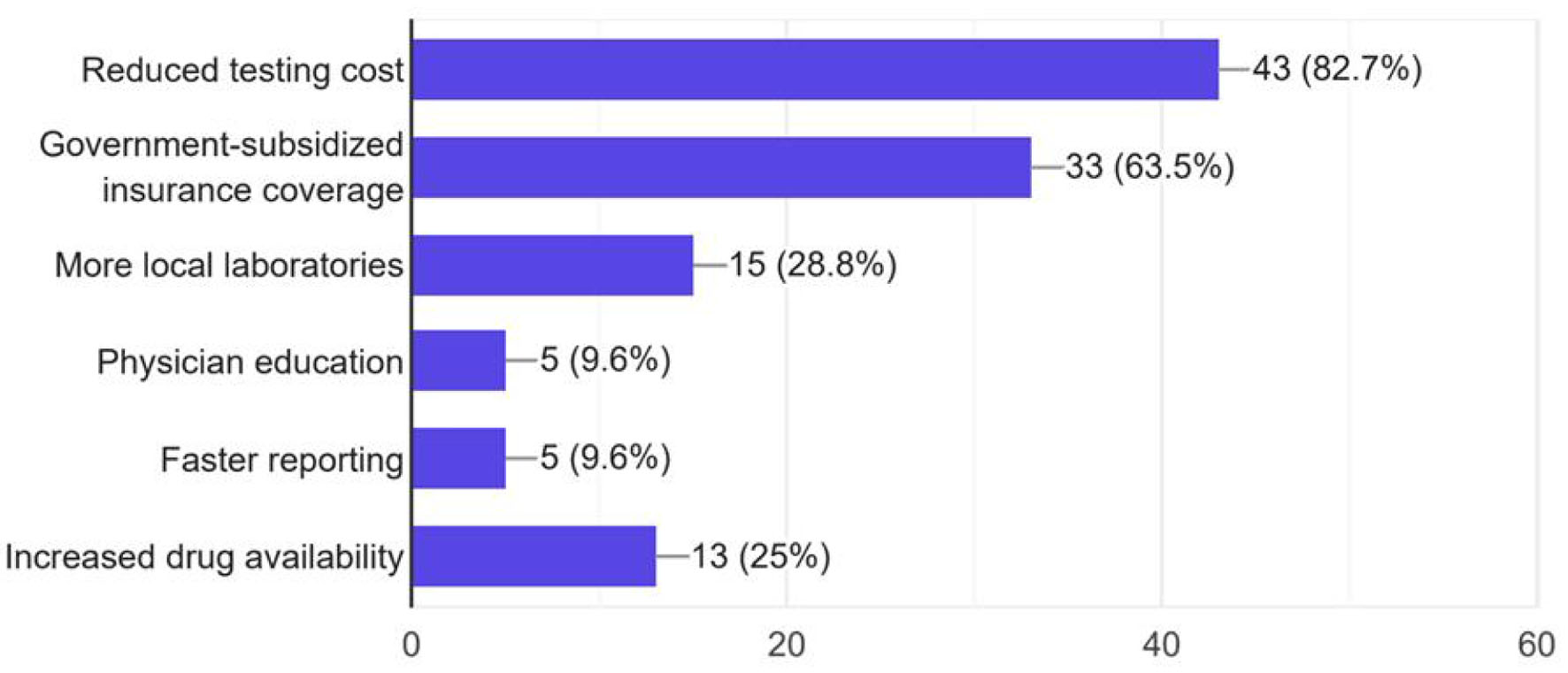
Results: Molecular profiling was recommended often or always by 27 (51.9%) respondents. estrogen receptor/progesterone receptor/human epidermal growth factor receptor 2 (ER/PR/HER2) (90.4%), microsatellite instability/mismatch repair (MSI/MMR) (82.7%), and epidermal growth factor receptor (EGFR) (80.8%) were the most requested molecular tests. However, 45 (86.5%) respondents reported that no more than 25% of eligible patients ultimately received targeted therapy. High cost of targeted therapy was rated as a major or very major barrier by 46 (88.5%) respondents, followed by high cost of molecular testing (45, 86.5%). Among non-financial barriers, limited testing facilities (29, 55.8%), limited patient understanding or acceptance of molecular testing (28, 53.8%), and long turnaround time for molecular testing results (25, 48.1%) were most frequently rated as major or very major barriers. Most respondents (42, 80.8%) agreed or strongly agreed that targeted therapy should become standard practice in Bangladesh where indicated. Reduced testing costs (43, 82.7%) and government-subsidized insurance coverage (33, 63.5%) were the most frequently selected strategies for improving access.
Conclusion: Cancer specialists in Bangladesh reported substantial use of molecular profiling but limited receipt of targeted therapy among eligible patients. Although financial constraints emerged as the most prominent barriers, important non-financial challenges related to testing infrastructure, patient understanding and acceptance, and turnaround time were also identified. In the context of limited existing quantitative evidence from Bangladesh, these findings provide initial insight into the relative prominence of financial and non-financial barriers and may inform strategies to improve access to precision oncology.
Published
Issue
Section
License
Copyright (c) 2026 The authors

This work is licensed under a Creative Commons Attribution 4.0 International License.