Predicting Risk of Postoperative Pneumonia by a Nomogram in Elderly Patients After Hip Fracture Surgery
DOI:
https://doi.org/10.14740/jocmr6514Keywords:
Nomogram, Postoperative pneumonia, Hip fractures, DiureticsAbstract
Background: This study aimed to develop a nomogram, a visual prediction model to predict the risk of postoperative pneumonia (POP) in elderly patients after hip fracture surgery.
Methods: A retrospective analysis was conducted on 711 patients aged 65 and over who underwent surgery for hip fractures. A logistic regression analysis with a nomogram was used to identify independent risk factors for POP.
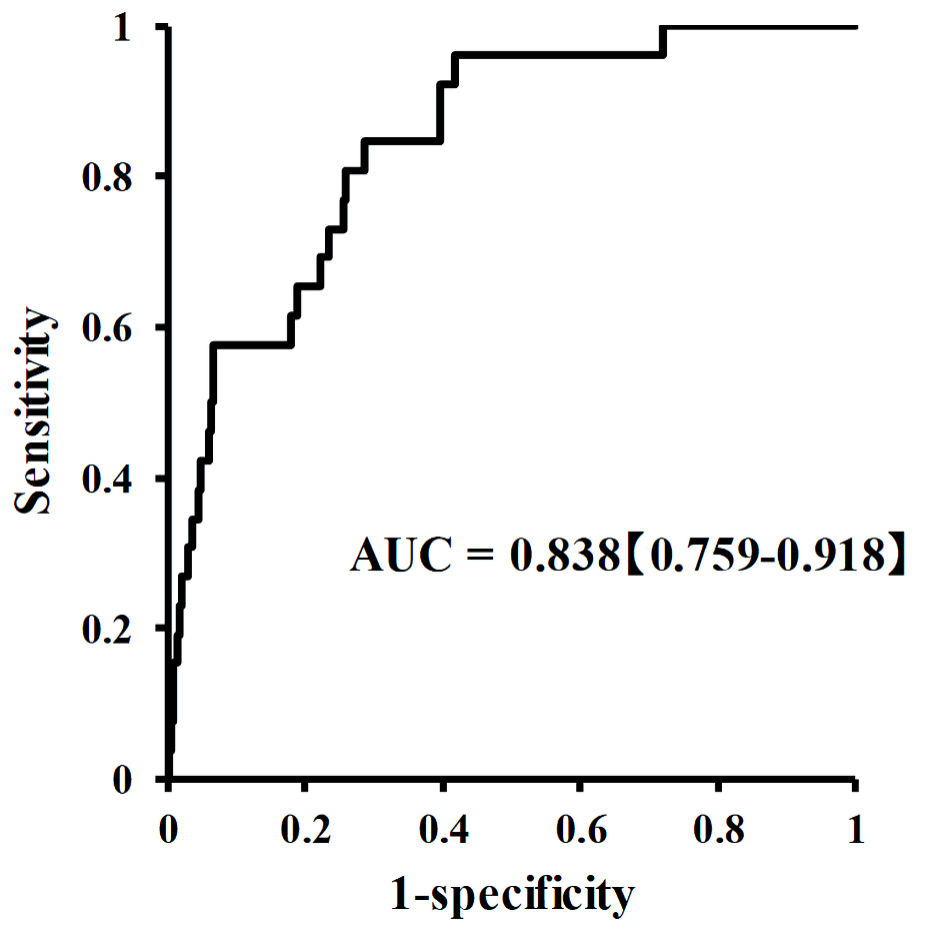
Results: Out of the studied patients, 26 (3.7%) developed POP after surgery. Independent risk factors for POP included age, gender, body mass index (BMI), serum albumin levels, change in inflow E and mitral e’ annular velocities (E/e’), severity of fracture (fractured) and administration of diuretics. The results of both univariate and multivariate logistic regression analyses revealed that age, gender, serum albumin levels and diuretics showed significant increase in odds ratio, whereas no significant differences were found in BMI, E/e’ and fractured in odds ratios in POP patients. The area under the curve (AUC) of the nomogram model was 0.838, indicating discriminative ability.
Conclusions: The nomogram developed in this study predicted the risk of POP in elderly patients with hip fractures. Using this model in clinical practice could allow for appropriate preventive measures to be taken for high-risk patients, potentially reducing the incidence of POP and improving patient outcomes.
Published
Issue
Section
License
Copyright (c) 2026 The authors

This work is licensed under a Creative Commons Attribution 4.0 International License.