

Novel Approaches to Lipid Management: Beyond Statins and PCSK9 Inhibitors
DOI:
https://doi.org/10.14740/jocmr6523Keywords:
Cholesterol, Lipid, Dyslipidemia, Statin, PCSK9 inhibitor, Cardiovascular, Lipid metabolism, Gene-based lipid therapy, Low-density lipoproteinAbstract
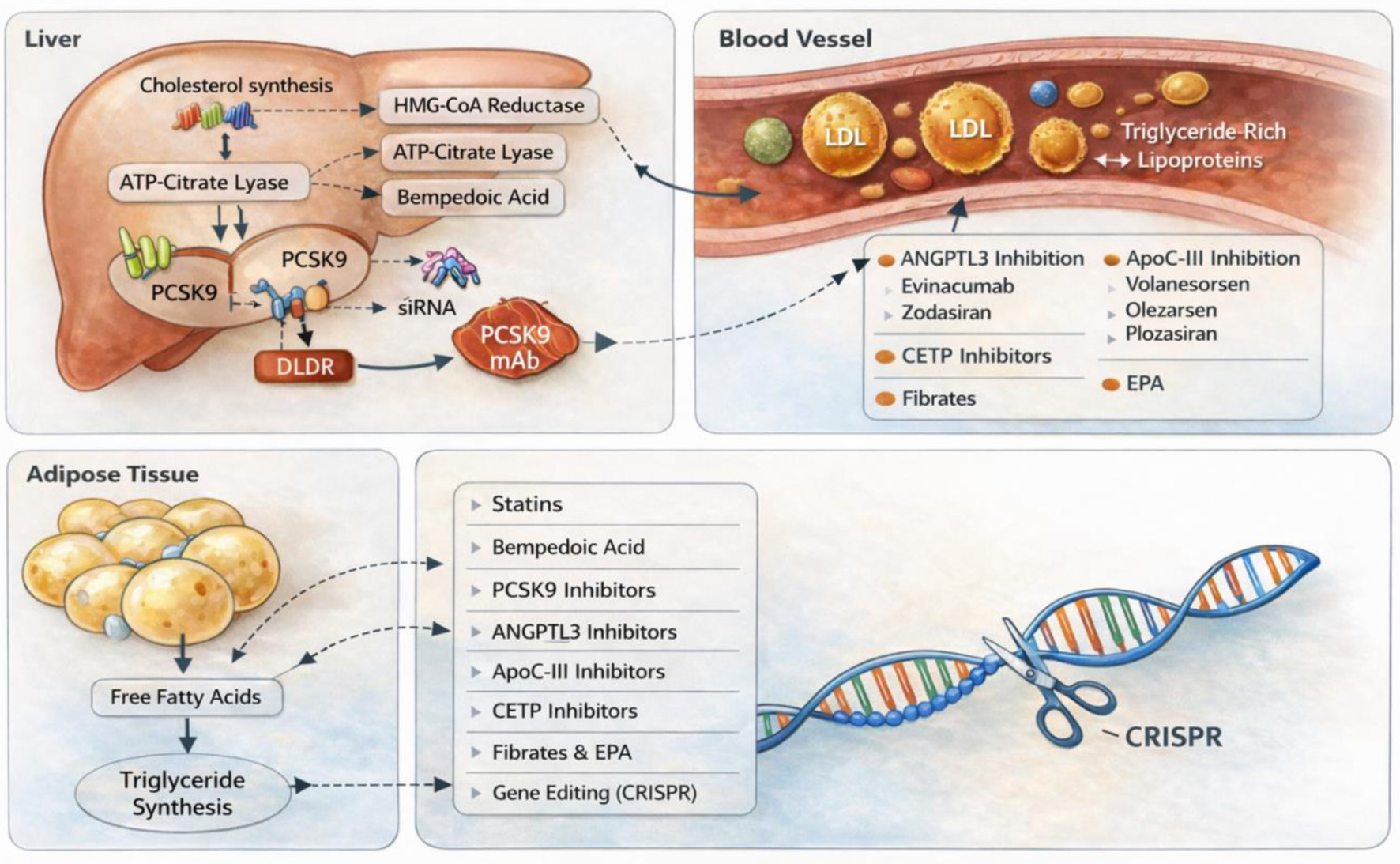
The statins remain the foundation of lipid management because they lower low-density lipoprotein cholesterol (LDL-C) and prevent cardiovascular events, and guidelines recommend stepwise intensification, often with ezetimibe first, when targets are not met or when intolerance limits dosing. This review introduces a mechanism-first, phenotype-guided framework that links add-on therapies to the dominant driver of residual risk, LDL-C, triglyceride-rich lipoproteins, elevated lipoprotein(a), or inherited dyslipidemia while integrating trial evidence with clinical practicality. Proprotein convertase subtilisin/kexin type 9 (PCSK9) monoclonal antibodies remain the best-validated add-on for very high-risk patients. FOURIER and ODYSSEY OUTCOMES demonstrated event reduction with evolocumab or alirocumab on background statin therapy. For patients who cannot tolerate adequate statin doses, bempedoic acid provides liver-selective inhibition of adenosine triphosphate (ATP)-citrate lyase, and CLEAR Outcomes showed fewer major cardiovascular events in statin-intolerant populations. Inclisiran extends PCSK9 pathway suppression through hepatic small interfering RNA (siRNA) and enables durable LDL-C reduction with twice-yearly maintenance dosing, offering an adherence-oriented alternative while outcomes data mature. Angiopoietin-like protein 3 (ANGPTL3)-directed therapies (evinacumab and investigational RNAi agents such as zodasiran) lower atherogenic lipoproteins through largely LDL receptor independent biology. They expand options for refractory disease, including homozygous familial hypercholesterolemia. Apolipoprotein C-III (ApoC-III) inhibitors (olezarsen and plozasiran) drive large triglyceride reductions that can be decisive in severe hypertriglyceridemia and pancreatitis-prone syndromes. Next-generation cholesteryl ester transfer protein (CETP) inhibition (notably obicetrapib) has re-emerged as an oral strategy with substantial lipid effects as outcomes programs progress. High-dose eicosapentaenoic acid (EPA) (icosapent ethyl) has the clearest triglyceride-focused outcomes signal; REDUCE-IT showed significant ischemic event reduction in statin-treated patients with persistent hypertriglyceridemia. Early in vivo PCSK9 gene-editing is considered a potential one-time approach, though safety and durability concerns remain unresolved. Implementation remains rate-limiting. Costs, prior authorization, variable coverage, distribution, injection logistics, and adherence barriers delay initiation and erode persistence. Uninsured patients may face prohibitive out-of-pocket expenses without assistance pathways.
Published
Issue
Section
License
Copyright (c) 2026 The authors

This work is licensed under a Creative Commons Attribution 4.0 International License.