

Advances in the Research of Hypoxia-Inducible Factor-1Alpha and Plasminogen Activator Inhibitor-1 in Vascular-Related Diseases
DOI:
https://doi.org/10.14740/jocmr6330Keywords:
HIF-1α, PAI-1, Vascular remodeling, Hypoxia signal, Fibrinolysis system, Targeted therapyAbstract
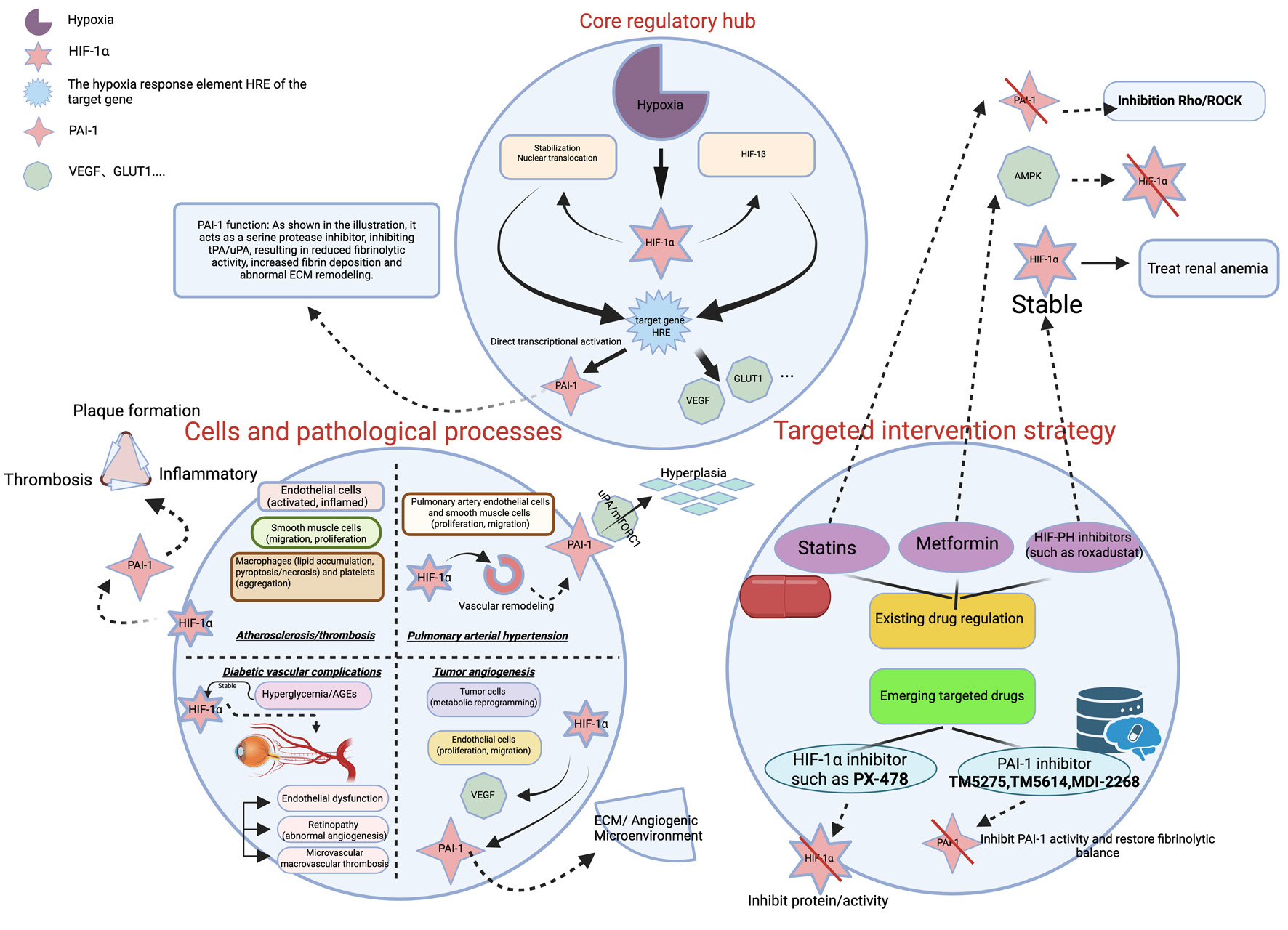
Hypoxia-inducible factor-1α (HIF-1α) and plasminogen activator inhibitor-1 (PAI-1) play crucial roles in vascular homeostasis and pathological remodeling. Their intertwined regulatory network represents a focal point in vascular disease research. Under physiological conditions, HIF-1α and PAI-1 act coordinately to maintain vascular adaptability and repair capacity. However, under pathological conditions such as hypoxia or metabolic dysregulation, their aberrant activation constitutes a significant driver of vascular pathologies, including thrombosis, fibrosis, and atherosclerosis. Consequently, targeting this regulatory network may offer novel therapeutic approaches for vascular diseases. Cellular exposure to stressors such as hypoxia or inflammation induces the expression of key regulatory factors including HIF-1α and PAI-1. As the principal transcription factor mediating hypoxic responses, HIF-1α activates downstream target genes such as vascular endothelial growth factor (VEGF) and glucose transporter 1 (GLUT1), thereby regulating angiogenesis, metabolic reprogramming, and inflammatory responses. PAI-1, a serine protease inhibitor, contributes critically to thrombosis, fibrosis, and endothelial dysfunction through inhibition of the fibrinolytic system and modulation of extracellular matrix (ECM) degradation.
Published
Issue
Section
License
Copyright (c) 2026 The authors

This work is licensed under a Creative Commons Attribution 4.0 International License.