

Radiation-Induced Xerostomia in Patients With Head and Neck Cancer Treated With Comprehensive Salivary Gland-Sparing Helical Tomotherapy Technique Based on a Back Propagation Artificial Neural Network
DOI:
https://doi.org/10.14740/jocmr6633Keywords:
Head and neck cancer, Helical tomotherapy, Radiation-induced xerostomia, Prediction model, Back propagation artificial neural network (BPANN)Abstract
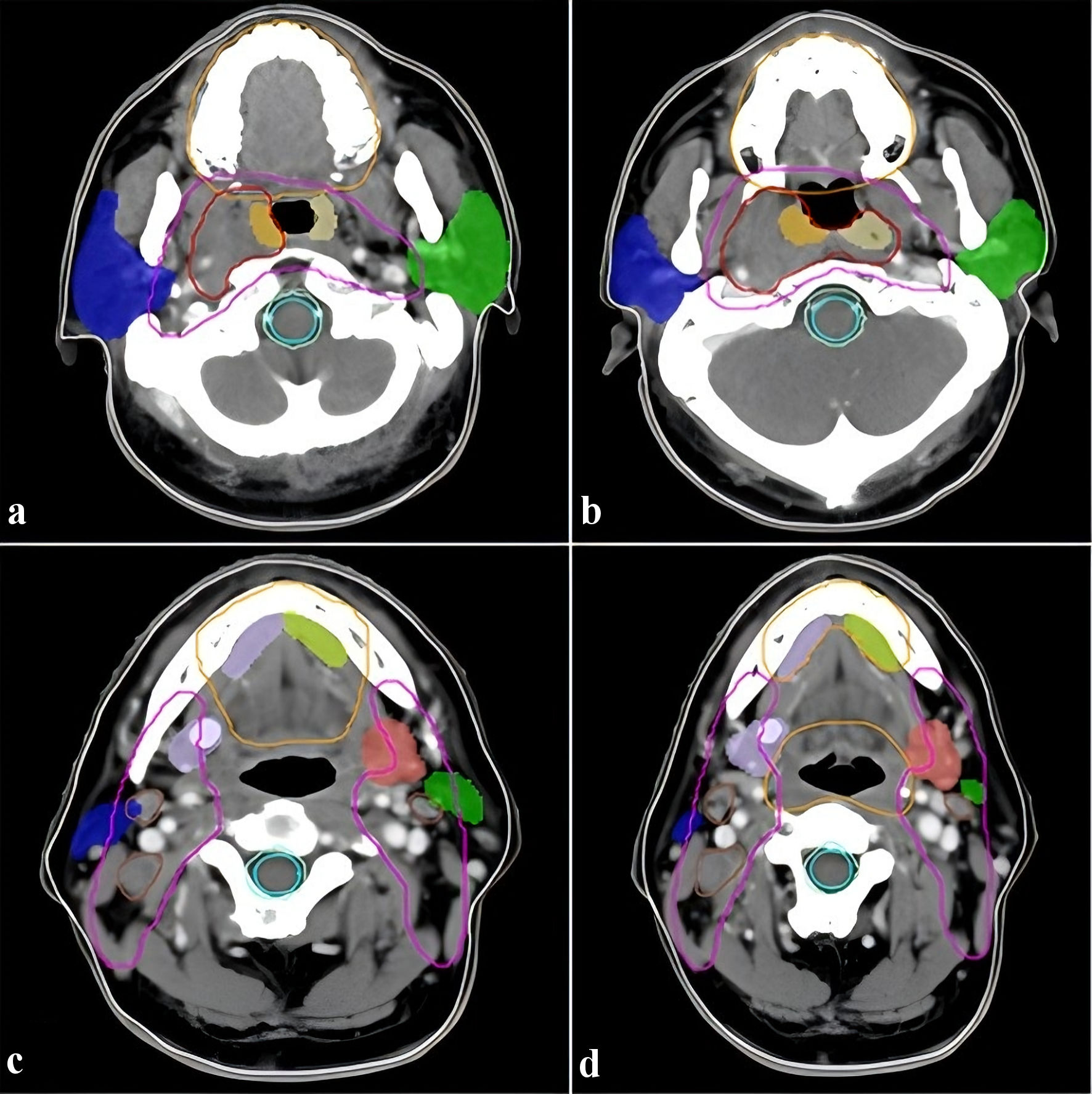
Background: The aim was to create a back propagation artificial neural network (BPANN) model for gauging the risk of developing xerostomia (dry mouth) due to targeted radiotherapy in patients with head and neck cancer (HNC), who underwent comprehensive salivary gland-sparing helical tomotherapy (HT).
Methods: Data from 222 HNC patients treated with salivary gland-sparing HT between November 26, 2016, and December 31, 2017, were analyzed. Potential variables considered included age, gender, tumor type, radiation dose to salivary glands, and xerostomia questionnaire scores. These variables were adjusted using multivariate linear regression. The BPANN model was constructed to predict the likelihood and severity of xerostomia at both 1 and 2 years after radiotherapy. Model evaluation was based on the confusion matrix table and the area under the receiver operating characteristic curve (AUC of ROC).
Results: The BPANN model revealed that the risk of radiation-induced xerostomia could be evaluated using age, gender, tumor type, and radiation dose to specific salivary glands (parotid glands, submandibular glands, oral cavity, and tongue glands). Multivariate analysis indicated that age, gender, and submandibular gland dose were the primary influencing factors for xerostomia. Both prediction models demonstrated strong performance as reflected in the confusion matrix table and the AUC of ROC curve.
Conclusions: BPANN stands as a potential and recommended predictive tool for assessing the likelihood of xerostomia induced by salivary gland-sparing HT.
Published
Issue
Section
License
Copyright (c) 2026 The authors

This work is licensed under a Creative Commons Attribution 4.0 International License.