

Incidence and Predictors of Anticoagulant-Associated Bleeding in Patients With Venous Thromboembolism
DOI:
https://doi.org/10.14740/jocmr6679Keywords:
Venous thromboembolism, Anticoagulants, Bleeding, Southeast Asia, Mortality, PredictorAbstract
Background: Data on anticoagulant-associated bleeding among patients with venous thromboembolism (VTE) in Southeast Asia are limited. We aimed to determine the incidence and predictors of anticoagulant-associated bleeding and evaluate its association with mortality.
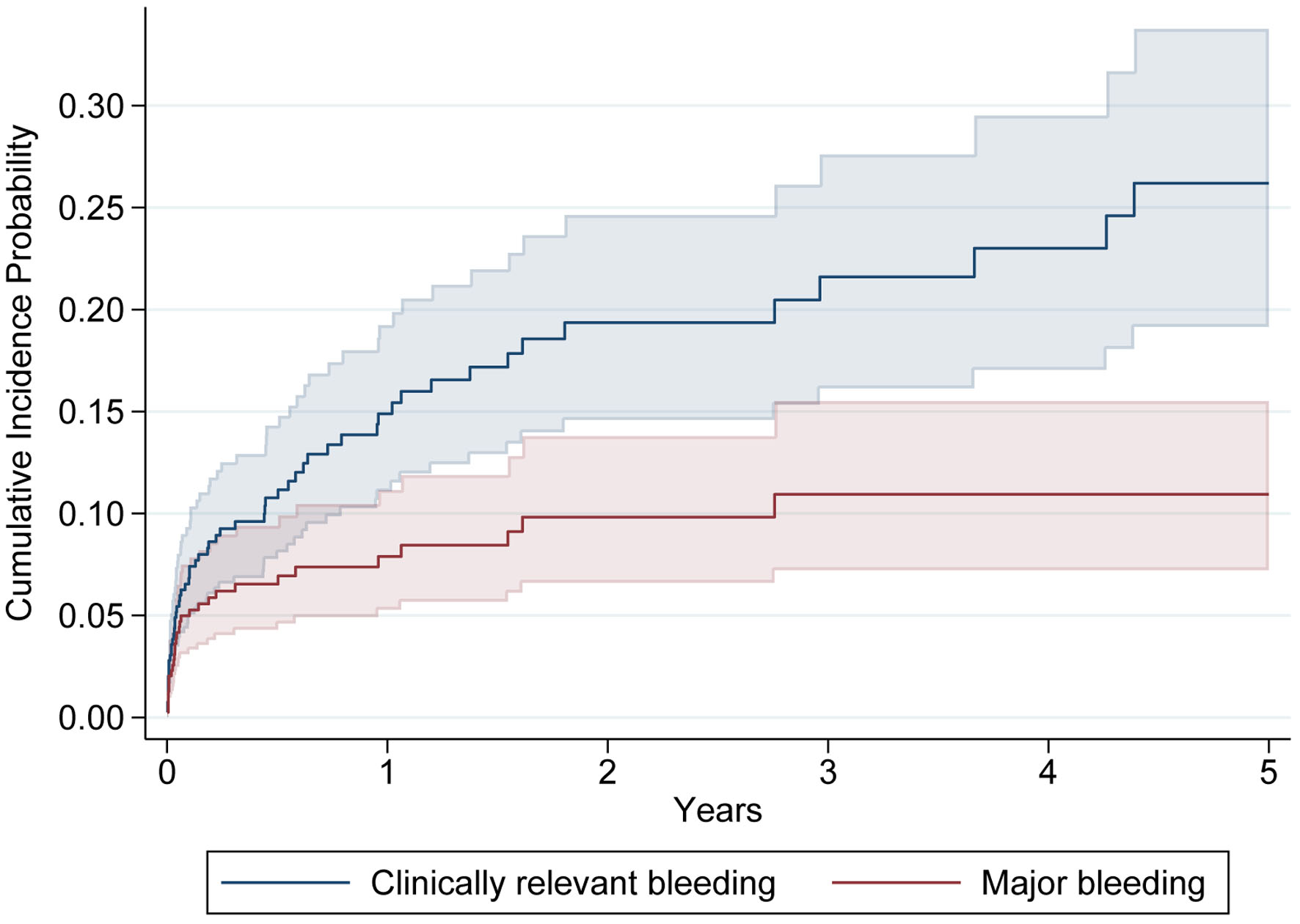
Methods: We conducted a retrospective cohort study of patients with VTE treated with anticoagulants between January 2014 and June 2024. Clinically relevant bleeding (CRB) was defined according to the International Society on Thrombosis and Haemostasis criteria. Cumulative incidence was estimated using the Aalen–Johansen method with death as a competing event, and predictors were identified using Fine–Gray sub-distribution hazard models. The association between bleeding and all-cause mortality was evaluated using time-dependent Cox proportional hazards models.
Results: Among 395 patients (mean age, 60.7 ± 16.2 years; 65.3% female), 43.5% had cancer-associated thrombosis. Low-molecular-weight heparin was the most commonly prescribed initial anticoagulant (39.0%), followed by warfarin (32.7%) and direct oral anticoagulants (25.1%), of which apixaban was the most frequently used (12.7%). During a median follow-up of 0.88 years, 60 patients (15.2%) developed CRB. The 1-year cumulative incidence of CRB was 14.89% (95% confidence interval (CI), 11.09–19.23). Independent predictors of CRB included concomitant antiplatelet therapy (adjusted sub-distribution hazard ratio (aSHR), 3.48; 95% CI, 1.76–6.90), Eastern Cooperative Oncology Group performance status ≥ 2 (aSHR, 3.05; 95% CI, 1.34–6.94), body mass index (BMI) < 20 kg/m2 (aSHR, 2.50; 95% CI, 1.36–4.61), and age ≥ 65 years (aSHR, 1.97; 95% CI, 1.12–3.45). Both clinically relevant non-major bleeding (adjusted hazard ratio (aHR), 3.72; 95% CI, 1.55–8.92) and major bleeding (aHR, 5.62; 95% CI, 2.91–10.85) were independently associated with increased all-cause mortality.
Conclusions: Anticoagulant-associated bleeding is common among Thai patients with VTE and is associated with an increased risk of all-cause mortality. Patients with advanced age, poor performance status, low BMI, or concomitant antiplatelet therapy may benefit from closer monitoring during anticoagulant treatment.
Published
Issue
Section
License
Copyright (c) 2026 The authors

This work is licensed under a Creative Commons Attribution 4.0 International License.