

Usefulness of Phase Angle as an Overall Marker of Muscle Health in Older Patients With Type 2 Diabetes
DOI:
https://doi.org/10.14740/jocmr6721Keywords:
Phase angle, Muscle mass, Muscle strength, Type 2 diabetesAbstract
Background: Sarcopenia is characterized by deterioration of muscle health, loss of muscle mass and strength, and decline of physical performance. Thus, measurement of these markers is needed for the assessment of muscle health. Muscle mass is easily measured by a bioelectrical impedance analysis (BIA) or dual-energy X-ray absorptiometry (DXA), but measurement of muscle strength and physical performance requires trained personnel and specialized settings. Cross-sectional analyses have demonstrated that the phase angle (PhA), which is directly obtained from a BIA, is associated with muscle mass, muscle strength, and the physical function in healthy individuals and patients with type 2 diabetes. However, longitudinal associations between the PhA and these muscle markers have not been fully investigated, and the clinical usefulness of the PhA in patients with type 2 diabetes remains unclear. Therefore, we performed a retrospective longitudinal analysis of changes in PhA, muscle mass and strength, and physical performance over 3 years.
Methods: We analyzed the associations between the PhA and muscle-related parameters in 101 patients with type 2 diabetes without sarcopenia (61 men, 40 women; age at baseline: 60–85 years). We assessed the PhA, appendicular skeletal muscle index (SMI), handgrip strength, leg extension strength, and Short Physical Performance Battery (SPPB) scores at baseline and after 3 years.
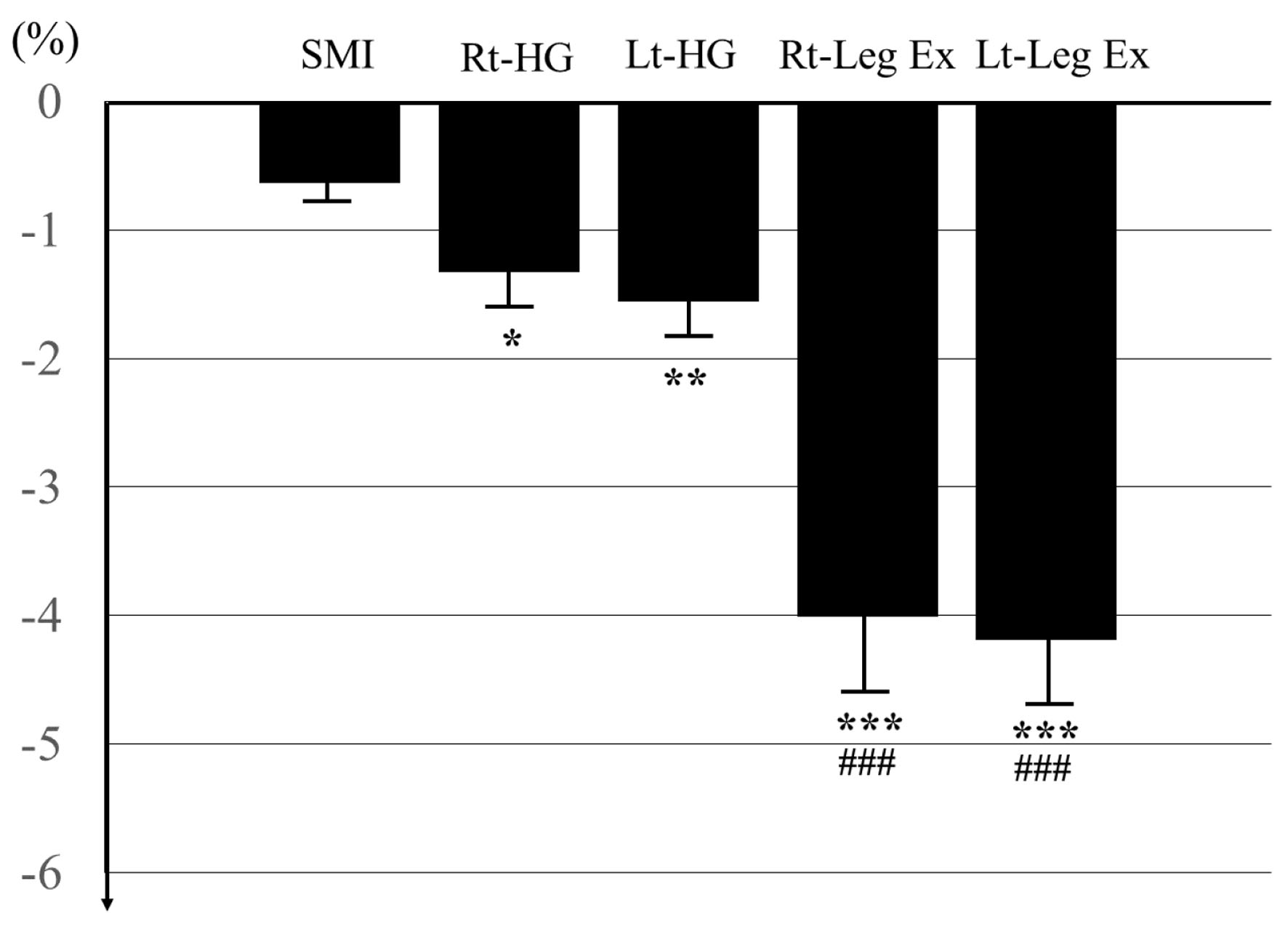
Results: We found that PhA, SMI, and muscle strength decreased over the 3-year period. The rate of decline in muscle strength exceeded that of muscle mass, and leg muscle quality (muscle strength/muscle mass) also decreased. PhA was positively correlated with SMI and muscle strength at both time points. Furthermore, in a linkage analysis, a decline in PhA was associated with declines in SMI, muscle strength, and SPPB score.
Conclusion: PhA, muscle mass, and muscle strength decreased for 3 years in older patients with type 2 diabetes. Declines in PhA were associated with declines in muscle mass, muscle strength, and physical performance. These data suggest the usefulness of PhA as an overall marker of muscle health in patients with type 2 diabetes. Larger prospective studies are needed to confirm these findings and further clarify the clinical utility of PhA in this population.
Published
Issue
Section
License
Copyright (c) 2026 The authors

This work is licensed under a Creative Commons Attribution 4.0 International License.