

Prognostic Significance of Serum Sodium in Patients With Acute Pulmonary Embolism
DOI:
https://doi.org/10.14740/jocmr6664Keywords:
Acute pulmonary embolism, Hyponatremia, Serum sodium, Mortality, Prognosis, Survival analysisAbstract
Background: Hyponatremia has been associated with adverse outcomes in several cardiovascular diseases; however, its independent prognostic value in patients with acute pulmonary embolism (APE) remains uncertain.
Methods: We conducted a single-center retrospective observational study of 105 hospitalized patients with confirmed APE between January 2020 and June 2025. Baseline clinical characteristics were compared between 1-year survivors and non-survivors. Serum sodium levels at the time of APE diagnosis were assessed, and hyponatremia was defined as a serum sodium level < 135 mmol/L. Univariable and multivariable Cox proportional hazards regression analyses were performed to evaluate the association of serum sodium and other potential prognostic factors with 1-year mortality.
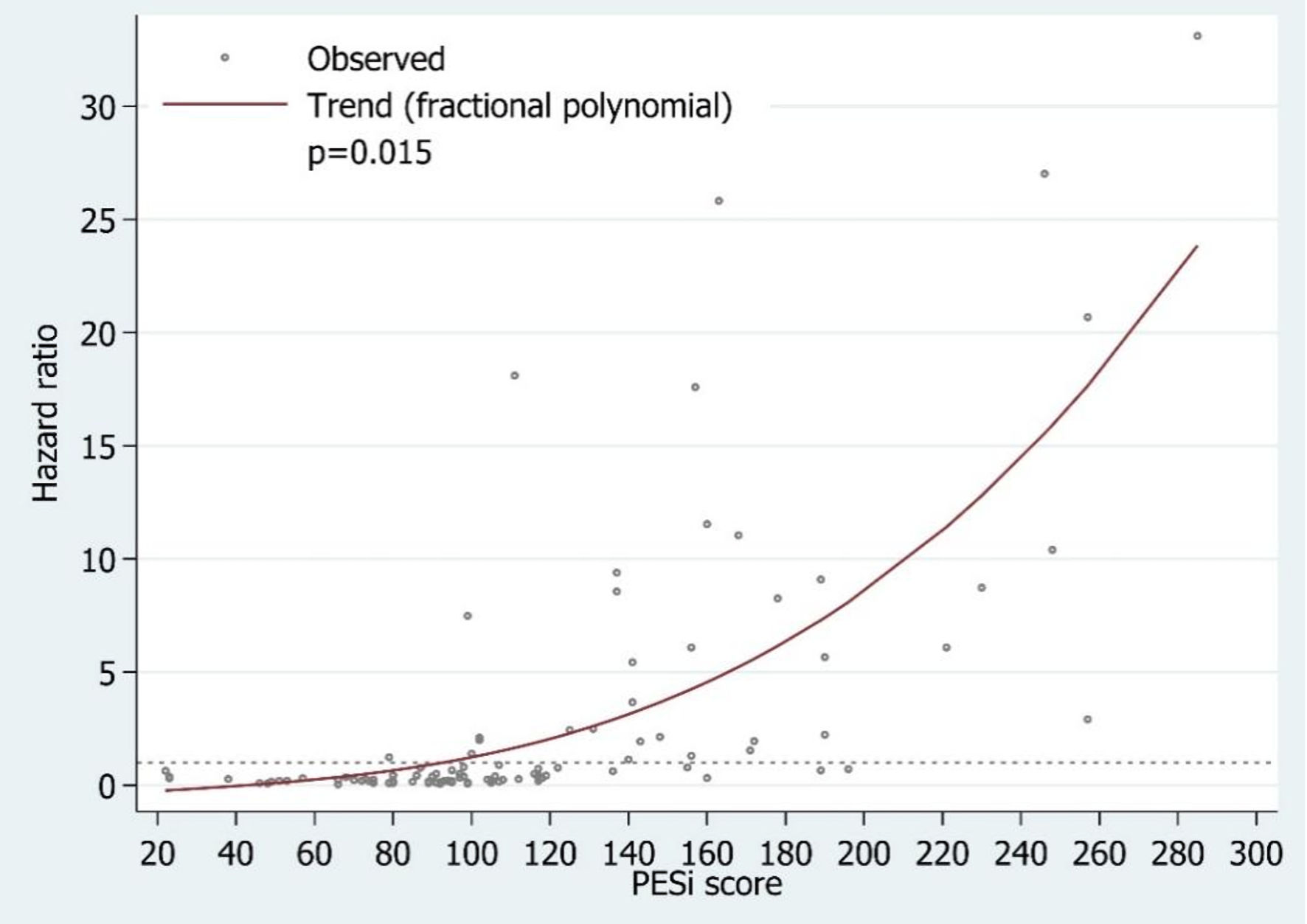
Results: Among 105 hospitalized patients with confirmed APE, 41 (39.0%) died within 1 year. Non-survivors had a higher prevalence of active cancer (61.0% vs. 15.6%, P < 0.001) and chronic obstructive pulmonary disease (COPD) (21.9% vs. 1.6%, P = 0.001), lower systolic blood pressure (108.9 ± 25.9 vs. 130.8 ± 21.6 mm Hg, P<0.001), and higher Pulmonary Embolism Severity Index (PESI) scores (157.3 ± 56.0 vs. 91.0 ± 32.7, P < 0.001) than survivors. Serum sodium at diagnosis was significantly lower in non-survivors than in survivors (130.6 ± 5.9 vs. 136.4 ± 4.4 mmol/L, P < 0.001), and hyponatremia was more frequent among non-survivors (78.1% vs. 35.9%, P < 0.001). In univariable Cox regression, hyponatremia was associated with increased 1-year mortality (univariable hazard ratio (uHR), 4.20; 95% confidence interval (CI), 2.00–8.81; P < 0.001). After adjustment for disease severity and relevant clinical risk factors, serum sodium at diagnosis remained independently associated with 1-year mortality (multivariable hazard ratio (mHR) per 1-mmol/L increase, 0.92; 95% CI, 0.86–0.99; P = 0.043).
Conclusions: Lower serum sodium at diagnosis was independently associated with increased 1-year mortality in hospitalized patients with APE. Hyponatremia may represent a simple and readily available prognostic marker for early risk stratification in APE. Larger prospective studies are needed to confirm these findings.
Published
Issue
Section
License
Copyright (c) 2026 The authors

This work is licensed under a Creative Commons Attribution 4.0 International License.