


The Association Between Triglyceride-Glucose Index and Mortality Risk in Cardiovascular Disease Patients: A Meta-Analysis
DOI:
https://doi.org/10.14740/jocmr6567Keywords:
Meta-analysis, Mortality, Cardiovascular disease, Triglyceride-glucose index, Prognostic marker, Type 2 diabetes mellitusAbstract
Background: The triglyceride-glucose (TyG) index was proposed as a possible indicator with regard to projecting cardiovascular disease (CVD) outcomes. Nevertheless, its capacity to project outcomes in various CVD patient groups, particularly those without type 2 diabetes mellitus (T2DM), remains uncertain. This meta-analysis is intended to assess the relationship that exists between baseline TyG levels and mortality outcomes in hospitalized CVD patients while examining potential variations in this association across different subgroups.
Methods: The authors systematically searched the Embase, PubMed and Web of Science databases for studies evaluating the connection between TyG levels and mortality outcomes in CVD patients. Seventeen studies, including a total of 26,464 participants, were included. The primary findings analyzed were all-cause mortality and cardiovascular mortality. Stratified and sensitivity analyses were performed to evaluate the robustness and generalizability of the findings.
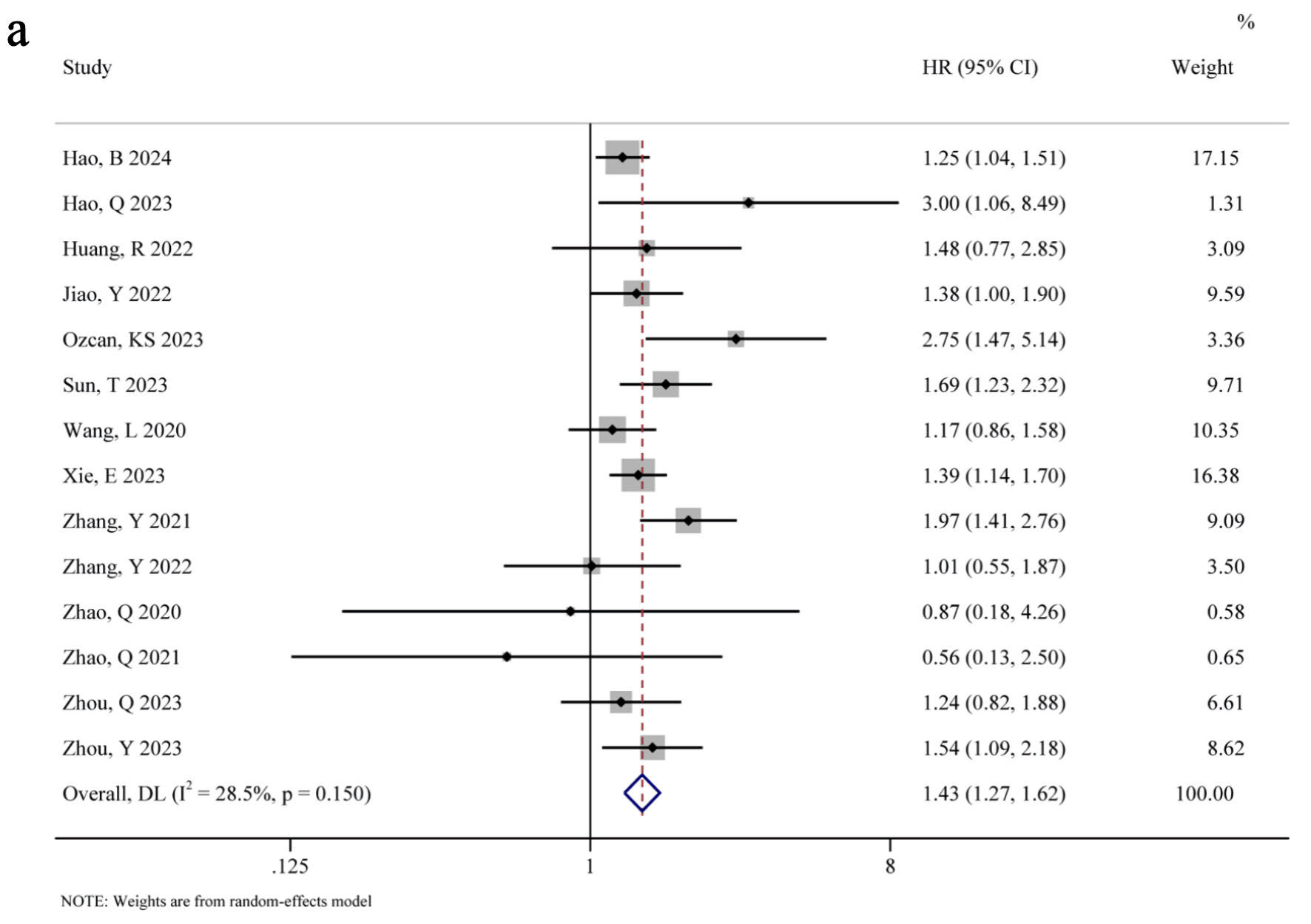
Results: Elevated TyG levels were significantly associated with higher risks of both all-cause mortality (hazard ratio (HR) = 1.43; 95% CI, 1.27–1.62; P < 0.001) and cardiovascular mortality (HR = 1.62; 95% CI, 1.33–1.97; P < 0.001) in patients with acute and chronic CVD. However, this association was not significant in patients without T2DM. Dose-response meta-analysis indicated a linear increase in all-cause mortality risk with higher TyG levels. Sensitivity analyses confirmed the robustness of the results, and no significant publication bias was detected.
Conclusions: TyG could potentially predict mortality risk in CVD patients, particularly within the Asian population. Additional high-quality, large-scale studies across diverse ethnic groups (such as Caucasians) are needed to validate these results’ global generalizability.
Published
Issue
Section
License
Copyright (c) 2026 The authors

This work is licensed under a Creative Commons Attribution 4.0 International License.