

Obesity Severity Differentially Shapes Diabetes-Related Impairment in Cardiorespiratory Fitness: A Cross-Sectional Propensity Score–Weighted Analysis of Middle-Aged Adults
DOI:
https://doi.org/10.14740/jocmr6519Keywords:
Cardiorespiratory fitness, Cardiopulmonary exercise testing, Obesity, Type 2 diabetes mellitus, Propensity score weightingAbstract
Background: Obesity and type 2 diabetes mellitus (T2DM) are each linked to reduced cardiorespiratory fitness (CRF), but it remains unclear whether diabetes-related impairment in exercise capacity depends on obesity severity. This question has been rarely addressed in adults aged 20–50 years, a group in whom obesity and T2DM frequently coexist while advanced cardiovascular complications may still be subclinical.
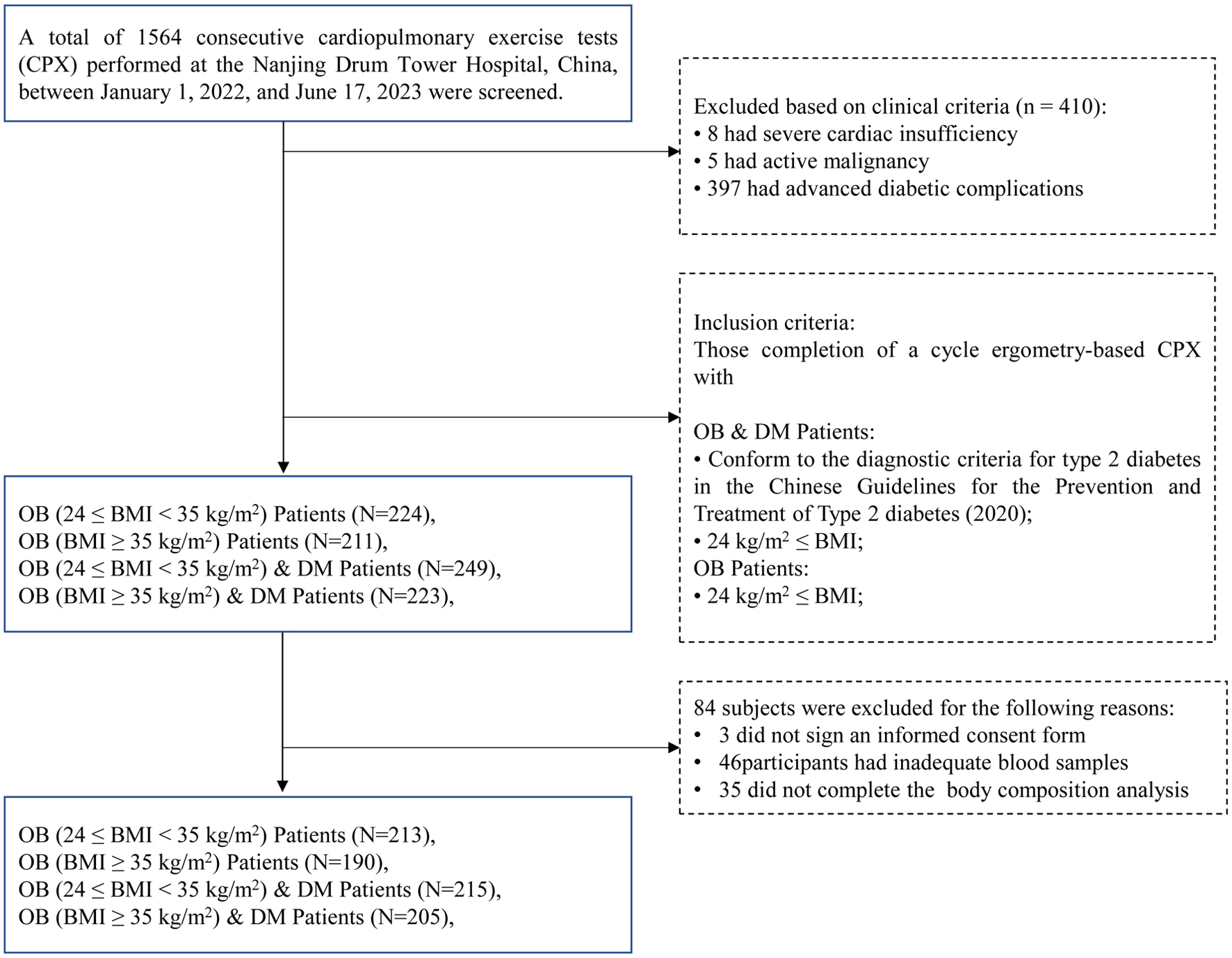
Methods: In this cross-sectional study, we performed a propensity score–weighted analysis of 823 adults aged 20–50 years who underwent cardiopulmonary exercise testing (CPX). Participants were classified by obesity severity (body mass index (BMI) 24 to < 35 vs. ≥ 35 kg/m2) and T2DM status to define four obesity–diabetes phenotypes. We compared peak oxygen uptake (peak VO2) and related CPX indices across phenotypes and explicitly tested for a BMI × T2DM interaction. Associations with body composition and glycemic measures were further evaluated using weighted correlation and regression analyses.
Results: After weighting, obesity severity accounted for the largest differences across most CPX indices. Peak VO2 showed a significant BMI × T2DM interaction (P for interaction < 0.001): diabetes-associated reductions were evident in moderate obesity (24 to < 35 kg/m2) but were markedly attenuated in severe obesity (≥ 35 kg/m2). Lean body mass was the strongest independent determinant of peak VO2, while 2-h postprandial glucose (but not fasting glucose) was independently and inversely associated with aerobic capacity among participants with T2DM.
Conclusions: In middle-aged adults, obesity severity modifies the association between T2DM and CRF. Body composition and postprandial glycemia, rather than diabetes status alone, appear to be central determinants of aerobic capacity. Together, these results support phenotype-informed interpretation of CPX and motivate stratified approaches to cardiopulmonary assessment and intervention in obesity and T2DM.
Published
Issue
Section
License
Copyright (c) 2026 The authors

This work is licensed under a Creative Commons Attribution 4.0 International License.